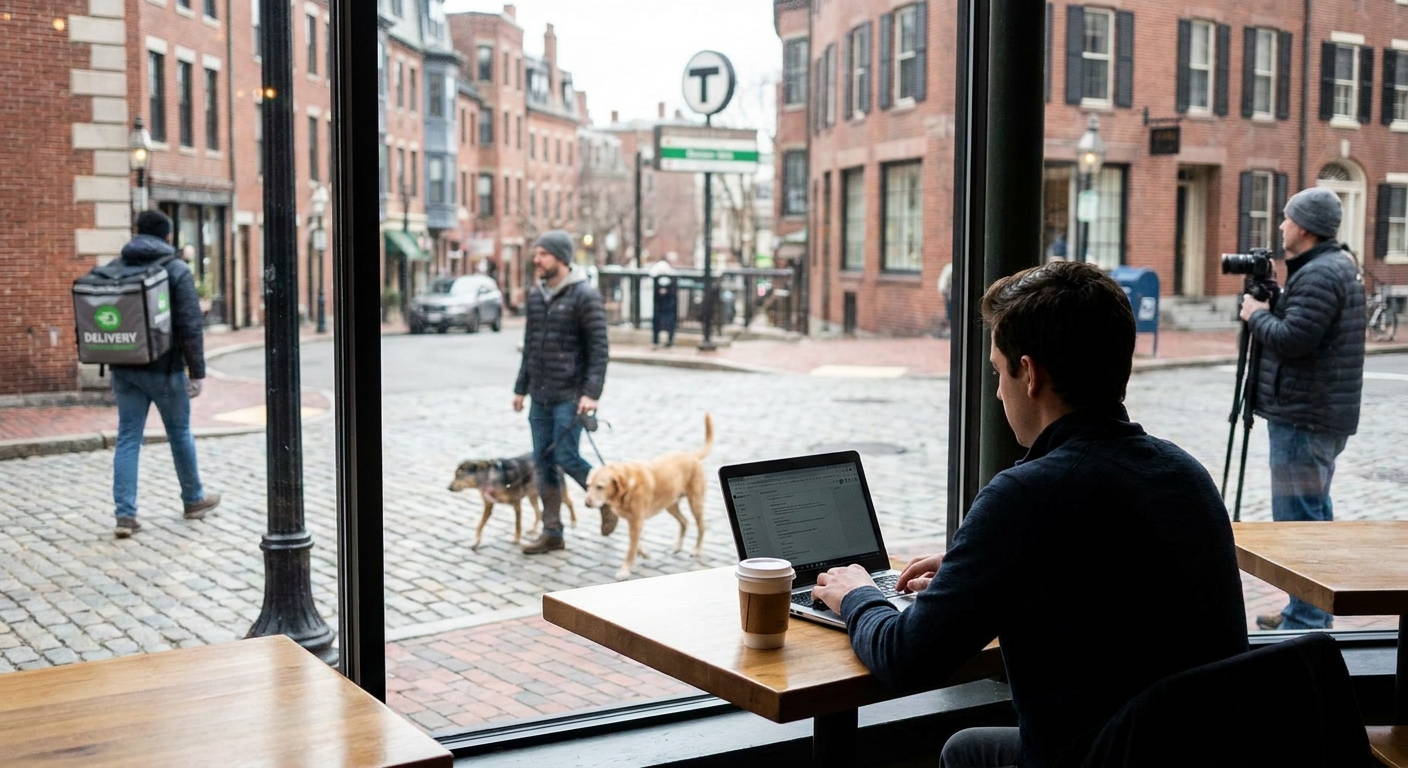
Boston's side hustle economy runs on three things: dense neighborhoods, a rotating cast of 150,000-plus college students, and a resale market fed by triple-deckers full of stuff nobody wants to move twice. The eight options below are ranked for actual weekly cash in your pocket in 2026, not just what sounds fun on a podcast.
TL;DR
Boston isn't Denver or Phoenix — the math is different. Parking costs and tolls cut into driving gigs harder than in most metros, rent pressure pushes people toward fast cash options, and the city's constant churn of students, movers, and renovators creates a resale supply line that never really dries up. Picking the wrong hustle here means losing money to gas and garage fees before you clear a profit. Picking the right one means turning Boston's density into an advantage instead of a tax.
Each hustle got scored on four things that actually matter to someone working nights or weekends in 2026: startup cost, time-to-first-payout, income ceiling in a Boston-specific context, and how much of the work depends on driving through Boston traffic versus working from a neighborhood. Options that required significant upfront inventory spend or a car payment dropped in rank. Options that let you start earning inside a week climbed. The list weighs local demand signals — college density, tourism cycles, housing turnover — over generic national gig averages.
The detail that matters: reps pick up already-returned mattresses, furniture, and fitness equipment from retailers and resell locally, so there's no inventory purchase before the first sale. That flips the usual reselling risk on its head — you're not fronting cash for stock that might not move.
Boston's apartment turnover and constant moving season (May through September, per typical New England lease cycles) keeps demand for secondhand furniture and mattresses high. A Sharetown rep in a market like Boston can pick up a returned mattress, clean and sanitize it, and resell it locally for a profit margin that doesn't depend on retail markup — the item's already been discounted once by the return.
Buy. Low startup cost, weekly cash flow, and a supply chain that doesn't dry up in a city this dense.
The memorable detail: Boston's average commute time runs among the highest of any US metro, and that congestion cuts both ways for drivers — more ride requests, but more time burning gas per trip. Add the Ted Williams Tunnel tolls and resident parking permit zones, and net hourly pay drops fast if you're not routing smart.
Uber, Lyft, and delivery apps still fill real demand around Fenway game nights, Seaport happy hours, and the airport run. Drivers who stick to short, dense routes in Back Bay, the North End, or Cambridge do better than those chasing long suburban fares.
Consider. Works if you already own a paid-off car and can dodge peak-toll windows.
Boston's neighborhoods — Beacon Hill, the South End, Jamaica Plain — pack more dogs per square mile than most sprawling metros, and a lot of owners work full days downtown. A single walk runs $20 to $30 in-market in 2026, and a regular client roster of eight to ten dogs a week adds up without a single dollar of startup cost beyond comfortable shoes.
Buy. Zero inventory, fast client acquisition through neighborhood apps and word of mouth, repeat business by design.
Boston is home to more than 30 colleges and universities, and that student density means tutoring demand for test prep, writing, and intro-level STEM courses barely dips outside of summer break. Rates for subject tutoring in the city commonly run $25 to $60 an hour depending on subject and level, well above national gig averages.
The catch: generic tutoring marketplaces are saturated. Reps who market directly to a specific university's course list — think BU's econ 101 or Northeastern's calc sequence — land clients faster than anyone posting on a national app.
Consider. High ceiling, but you need a marketing angle, not just a profile.
Remote freelance work doesn't care what city you're in, which is both the appeal and the weakness for a Boston-specific ranking. It pays well for people with a portfolio, badly for people without one, and the local advantage is basically zero.
Consider. Solid if you already have clients or samples; skip if you're starting from nothing in 2026 and need income this month.
Fenway Park, TD Garden, and the Boston Marathon weekend generate short bursts of paid staffing work — parking attendants, ushers, vendor crews — that pay same-day or next-day in many cases. It's not a year-round income stream, but it stacks well against another hustle on this list during peak season.
Consider. Good supplemental cash around specific dates, not a primary hustle.
Boston's older housing stock means a steady churn of estate sales, especially in the western suburbs and along the Merrimack Valley, where downsizing families clear out furniture, china, and vintage goods that resell well online. Finding profitable items to resell near you in a market like this comes down to knowing which sales run early Saturday mornings and which apps move inventory fastest.
Buy. Requires more legwork than the Sharetown rep model but rewards people who enjoy the hunt.
If cash flow is the actual problem — not the total ceiling — side hustles that pay weekly beat anything that settles on a 30-day cycle. Several delivery and task-based apps in the Boston market now offer instant or next-day payout options as of 2026, which matters more than the headline hourly rate when rent is due Friday.
Buy. Best for anyone who needs the first paycheck fast, not in three weeks.
Start reselling returns in Boston
Pick up bulky returns from retailers near you and resell for weekly profit.
Sharetown Rep
Rideshare/delivery driving
Dog walking
Tutoring
Freelance writing/design
Seasonal event staffing
Flipping estate/thrift finds
Weekly-pay gig apps
What are the best side hustles in Boston for 2026?
The strongest options for 2026 are Sharetown reselling, dog walking, tutoring Boston's college population, and flipping estate sale finds. Each pays weekly or near-weekly with low startup cost.
Can you make good money driving for Uber or Lyft in Boston?
Rideshare driving can pay well around Fenway games and airport runs, but tolls through the Ted Williams Tunnel and resident parking restrictions cut into margins. It works best as a supplemental hustle, not a primary one.
How much can you make dog walking in Boston?
Dog walks in dense Boston neighborhoods like Beacon Hill and the South End typically run $20 to $30 per walk in 2026. A roster of eight to ten regular clients a week adds up fast with no startup cost.
Is reselling secondhand furniture profitable in Boston?
Yes, Boston's high apartment turnover and moving season from May through September keep secondhand furniture and mattress demand steady. Reselling returned goods through a model like Sharetown removes the upfront inventory risk.
Do you need a car for side hustles in Boston?
No. Dog walking, tutoring, and reselling through pickup-based models don't require a car, which matters given Boston's tolls and parking costs. Driving-based gigs like delivery and rideshare do require one.
What side hustle pays the fastest in Boston?
Weekly-pay gig apps and same-day event staffing around venues like TD Garden and Fenway Park pay the fastest, often same day or next day in 2026. Reselling through Sharetown typically clears a payout within days of a sale.
Is tutoring a good side hustle in Boston?
Tutoring works well given Boston's 30-plus colleges and universities, with rates commonly running $25 to $60 an hour depending on subject. The challenge is standing out on saturated national tutoring marketplaces.
What's the lowest-cost side hustle to start in Boston?
Dog walking and the Sharetown reselling model both require almost no upfront spend. Dog walking needs no inventory at all, while reselling returned goods skips the cost of buying stock before the first sale.
The hustle most people overlook in Boston isn't a new app — it's the moving season itself. Every May through September, thousands of leases turn over across the city's triple-deckers and dorm-adjacent apartments, and a lot of usable furniture and mattresses end up curbside or in a return pile instead of resold. Reps who time pickups around that window in 2026 see more inventory than they do in January, no marketing spend required.