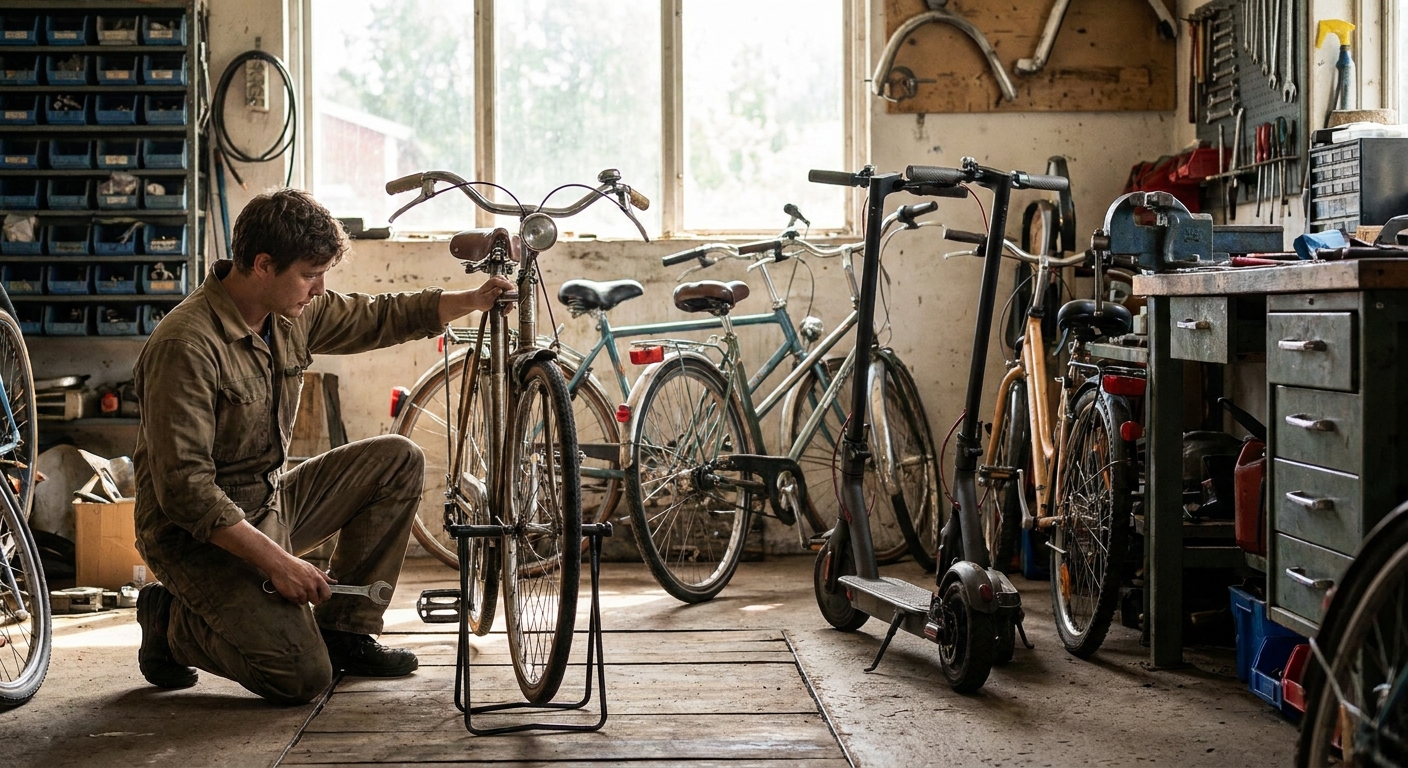
Bikes and scooters move fast, take up less garage space than a sectional, and turn over in days instead of weeks — if you know which ones to buy. This guide breaks down what to look for, which categories flip best, and which ones quietly eat your profit.
TL;DR
Bikes and scooters are some of the highest-return items in the resale world right now because demand never really dips — commuters need them, parents need them for kids who outgrow them every year, and gig workers need cheap wheels. The category is also forgiving to beginners: unlike furniture, you don't need a truck to move most of it, and unlike electronics, a working bike or scooter is easy to verify on the spot.
The catch is that condition and category matter more than brand name. A $600 electric scooter with a dead battery is worth less than a $150 kids bike in great shape. Knowing how to find profitable items to resell near you before you commit cash is what separates people who flip bikes and scooters for profit consistently from people who end up with a garage full of dead inventory.
This guide is built for people who have a little storage space — a garage, a shed, or even a corner of an apartment — and want a side hustle that doesn't require specialized tools or a truck. It works for parents flipping outgrown kids bikes between school years, commuters who spot underpriced scooters on marketplace apps, and anyone already running a reselling side hustle who wants a second category to diversify inventory. If you can test a bike's brakes and gears in under two minutes, you already have the core skill this hustle requires.
On e-bikes and electric scooters, the battery is the single most expensive component to replace and the easiest thing for a seller to hide. Ask for a charge test before you buy — a battery that won't hold a charge past 50% of its rated range in 2026 is a red flag, not a bargaining chip. If the seller can't demonstrate it powering on and moving under its own charge, walk.
Scratched paint doesn't affect ride quality; a bent frame or hairline crack near the weld points does. Run your hand along the tubing and check the fork for any misalignment. A straight frame with ugly paint sells fine after a $10 can of spray primer — a cracked frame is scrap no matter how it looks.
Shift through every gear and squeeze both brakes before you hand over cash. A bike that skips gears or has spongy brakes needs a $20-40 tune-up minimum, and that cost has to come out of your offer. Test this in person every time — sellers rarely mention drivetrain issues in the listing.
A 26-inch mountain bike sells fast in a college town; a kids' 12-inch balance bike sells fast in a family suburb. Match what you buy to what actually moves in your zip code, and check completed listings on local marketplace apps before you commit to a category. Learning to negotiate prices when buying secondhand items to resell only pays off if you're negotiating on inventory people in your area actually want.
Chargers, keys, locks, and kickstands sound minor, but a scooter without its original charger loses buyers fast because replacements run $30-50 and aren't always compatible. Confirm every accessory is included before you agree on a price, and factor a missing charger into your offer.
Bikes and scooters depreciate the longer they sit — a scooter listed in spring sells faster than the same scooter listed in November. Buy with your selling window in mind, not just the deal in front of you.
Want steadier inventory than curbside finds?
See how Sharetown reps pick up and resell returned items for profit.
Electric scooters are the quickest category to turn, often selling within 3-5 days on local marketplace apps because commuters want them immediately. The number that matters here is charge retention — a scooter holding 80% or more of its rated range is worth a premium, while anything under 50% should knock $50-80 off your offer. Verdict: Buy, but only after you've watched it power on and move under its own charge.
These hold value better than almost anything else in the category because the parts market is deep and repairs are cheap. A hybrid bike in working condition typically flips for $40-120 profit depending on brand and component tier. Verdict: Buy — this is the category to build a repeat pipeline around.
Low price points mean low risk, and turnover is constant since kids outgrow bikes every 12-18 months. Margins per flip are smaller, often $15-30, but volume makes up for it and this is the easiest category for anyone starting from scratch. Verdict: Buy for beginners building confidence before moving to pricier categories.
E-bikes carry the highest resale ceiling, sometimes flipping for $200-400 profit, but the battery and motor risk is real and repairs require actual mechanical knowledge or a shop relationship. Only buy one if you can verify the motor engages properly and the battery isn't a third-party replacement. Verdict: Consider — high reward, but only if you can test it thoroughly before buying.
Cargo bikes serve a small but motivated buyer pool of parents and small delivery operators, and they're bulky to store and transport. When demand lines up, margins can beat almost everything else on this list, but slow turnover ties up storage space for weeks. Verdict: Consider only if you already have a buyer lined up or strong local demand confirmed.
Electric scooters
Adult mountain/hybrid bikes
Kids/balance bikes
E-bikes
Cargo bikes
If you want a realistic sense of what this adds up to across a month, the numbers in how much you can realistically make flipping items part-time line up closely with what bike and scooter flippers report for similar time investment.
Is flipping bikes and scooters for profit worth it in 2026?
Yes, especially for electric scooters and adult bikes, which typically flip for $40-150 profit within 3-10 days on local marketplace apps. Kids bikes offer smaller margins but faster, more consistent turnover.
What's the best bike category to start flipping?
Kids bikes and adult hybrid bikes are the easiest entry points because parts are cheap and repairs are simple. Save electric scooters and e-bikes for once you can reliably test battery health.
How much does it cost to start flipping bikes and scooters?
Most beginners start with $50-200 in buying capital, since kids bikes and basic hybrids sell in that range. Add $20-40 for basic tools like a tire pump, multitool, and tune-up kit.
How do I check an e-bike battery before buying it used?
Ask the seller to power it on and ride it under battery power, not just plugged into the charger. A battery that drops noticeably within a short ride is likely holding less than 50% of its rated capacity.
Are electric scooters or bikes more profitable to flip?
Electric scooters sell faster, often in 3-5 days, but e-bikes carry a higher profit ceiling of $200-400 per flip. Scooters suit people who want quick turnover; e-bikes suit people willing to hold inventory longer.
Where should I sell flipped bikes and scooters?
Local marketplace apps outperform shipping-based platforms for this category because buyers want to test-ride before paying. Local sales also avoid the packaging and shipping costs that eat into bike and scooter margins.
What red flags mean I should skip a bike or scooter deal?
Skip anything with a cracked frame, a swapped battery, or no proof of ownership. These issues either cost more to fix than the flip is worth or carry the risk of reselling a stolen item.
How long does it take to sell a flipped bike or scooter?
Electric scooters typically sell in 3-5 days, adult bikes in 5-10 days, and cargo bikes can take 2-4 weeks due to a smaller buyer pool. List with your area's seasonal demand in mind for faster turnover.
The detail most beginners skip: test-ride before you buy, not after. A bike or scooter that feels fine standing still can pull to one side, grind in a gear, or lose power mid-ride — and you won't catch any of that without five minutes on it in the seller's driveway.