There's no fixed number of hours a week Sharetown reps work — the real answer is that it depends entirely on how many pickups you accept and how much of the cleaning, sanitizing, and listing you handle yourself. The bigger hidden cost isn't pickup time at all: it's the reselling work afterward, which routinely takes longer than the pickup that generated it.
TL;DR
Anyone cross-shopping Sharetown against a part-time job or another gig app wants a straight number of hours. Sharetown can't give you one, because pay and workload track pickups accepted, not a punch-in shift. That flexibility is the whole pitch behind deciding to become a Sharetown rep — you can build a route around a day job, a weekend, or a full calendar of pickups.
Mattresses, furniture, and fitness equipment are heavy, bulky returns that retailers want moved fast, and that's exactly the work Sharetown routes to independent reps. The real question isn't "how many hours does Sharetown require" — it's "how many hours does a pickup actually cost me once cleaning, sanitizing, and listing are factored in." That number is more useful heading into 2026 than any generic weekly average, because it shifts depending on the item, your market, and how fast you turn inventory.
Are Sharetown pickups keeping you up trying to plan your week around them? They don't have to — the schedule is yours to set, not one Sharetown hands you.
Weekly hours for a Sharetown rep fall into three rough patterns, and which one you land in depends on how many pickups you accept and how much of the resale process you run yourself.
Occasional
Regular part-time
Full-time
Pickup time itself is often the smallest slice of the job. Loading a dresser or a mattress and hauling it home can be the fastest part of the week — it's cleaning, photographing, writing a listing, and coordinating a buyer handoff for that same item that stretches total hours. Two reps taking the identical number of pickups in the same week can log very different totals: one lists fast and turns inventory quickly, the other spends more time staging photos and negotiating price.
Sharetown doesn't enforce a minimum number of pickups per week, which is the flip side of not enforcing a maximum either. You can go quiet for a stretch and pick back up later without needing to reapply, or ramp up during a season when nearby retailers are processing more returns.
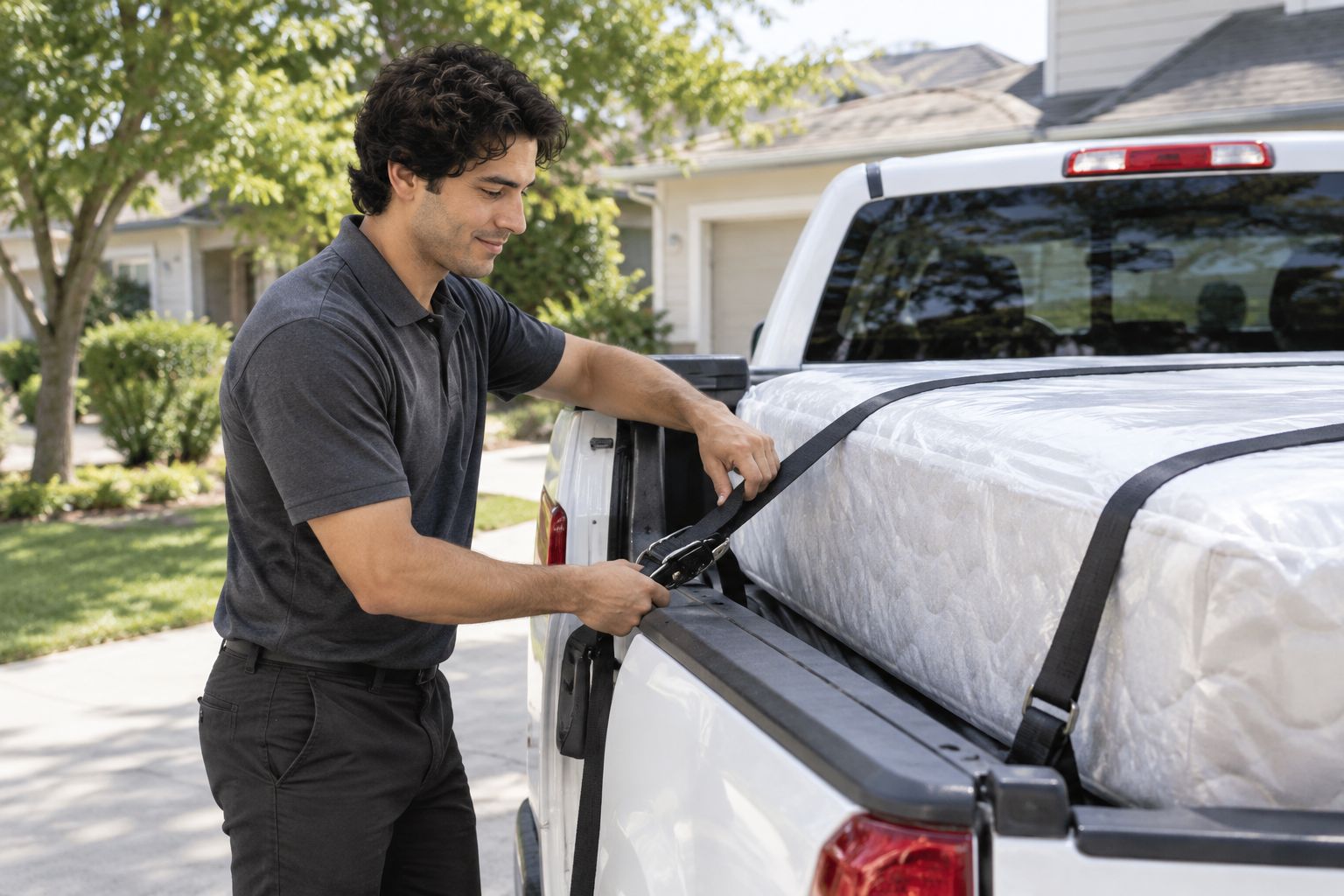
The pickup is often the quickest part of the job — cleaning and listing take longer.
That gap between pickup time and resale time is why an hours estimate for one rep rarely matches another's, even in the same city, working the same retailer routes.
Driving apps like Uber and Lyft pay largely for time spent online and behind the wheel — more logged hours generally means more fares. Sharetown works differently: pay follows pickups completed and items resold, not hours logged. A rep who takes fewer pickups but resells efficiently can end up more productive per hour than one who takes every available job and lets inventory pile up. It's closer to running a small resale business than clocking into a shift.
Six things push weekly hours up or down for any given rep, and none of them are set by a schedule Sharetown hands you:
None of these are fixed by Sharetown itself. You control most of them by choosing which pickups to accept and how much of the resale process you keep in-house versus handing off.
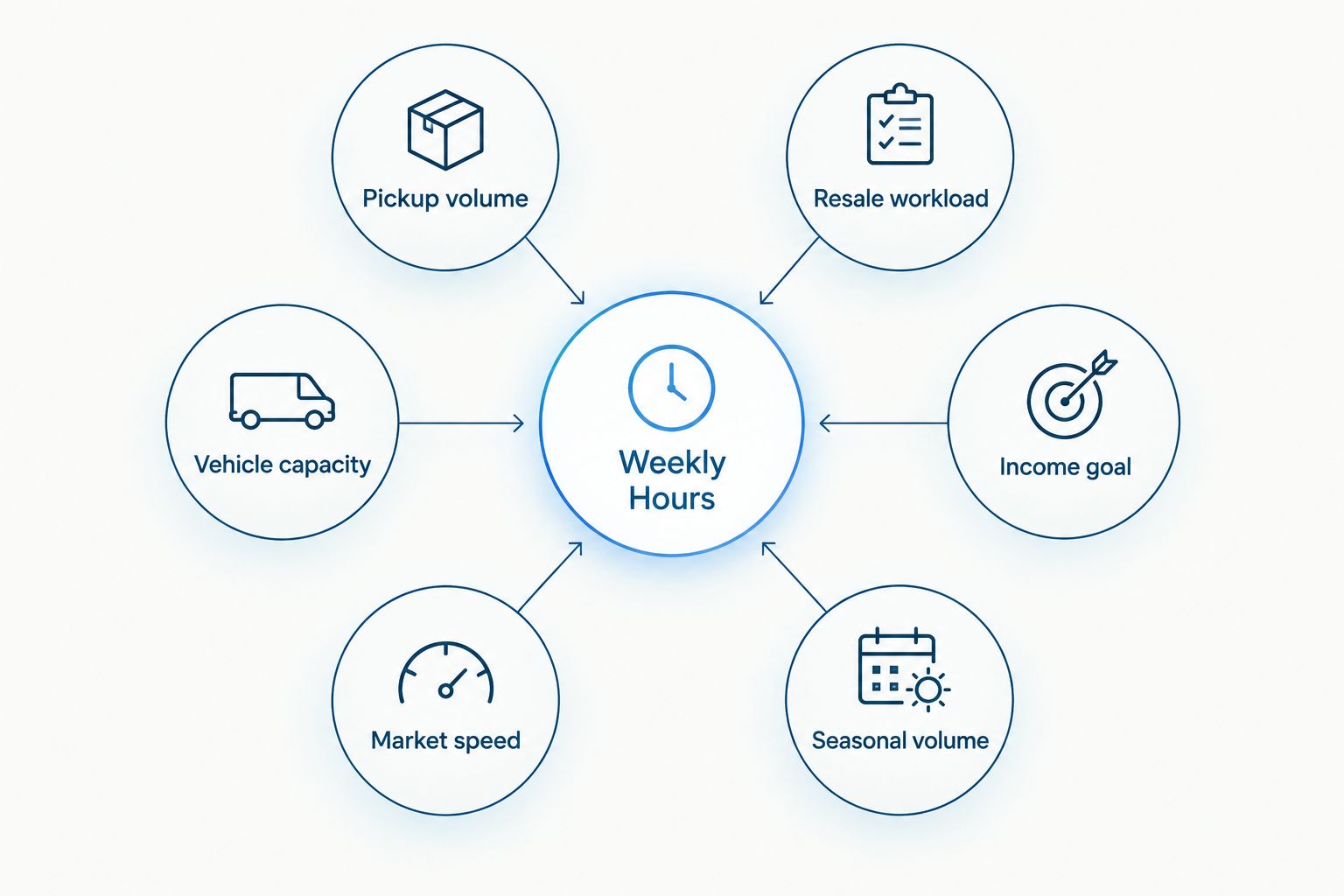
Pickup volume and resale workload swing weekly hours more than any set schedule.
Reps who track their own numbers for a few weeks — pickups taken against hours spent cleaning and listing — usually land on a personal average faster than any generic answer could give them.
A rep treating Sharetown as a side hustle usually keeps pickups to evenings or weekends, taking whatever jobs fit around a full-time job elsewhere. A weeknight pickup, a Saturday morning haul, and some time listing photos on a Sunday is a common shape for this kind of week. The goal isn't maximum volume — it's extra income without disrupting a primary paycheck, so pickups get turned down more often than they get accepted.
A rep running Sharetown as a main source of income structures the week more like running a small business. Mornings might go to pickups and loading, afternoons to cleaning and photographing items, and evenings to writing listings, answering buyer messages, and coordinating handoffs. Storage space and vehicle capacity often become the limiting factor before hours do — once a garage or storage unit fills up, taking on more pickups doesn't help until existing inventory sells.
The factors above stack differently for everyone. A rep with a larger vehicle and a fast-moving local resale market can take on more pickups without adding hours; a rep in a slower market spends more time on the resale side for the same number of jobs. Storage space matters too — reps without a garage or spare room to stage items tend to cap their own pickup volume long before hours become the constraint.
That's the honest version of the hours question: it's a function of your choices, not a Sharetown-set shift.
Yes — Sharetown is built around part-time use, and working Sharetown part-time is the default path for most reps rather than the exception. You accept pickups on the days that fit your schedule and skip the rest without penalty, which is what makes it workable alongside a day job, school, or another gig.
Some reps do treat Sharetown as their main income, running a pickup and resale route daily and reselling at a volume that supports it. How realistic that is depends on pickup density in your market and how efficiently you turn items around — it's a scaling decision, not a switch Sharetown flips for you.
Per-pickup pay depends on the item, the distance, and the local market rather than a flat rate, and how much reps make per pickup breaks down the variables that move that number. Pay per job is one half of the hours equation — the other half is how long that item takes you to resell. Once you know roughly how many hours pickups plus resale take, the answers below fill in the specifics.
See if Sharetown fits your schedule
Check pickup availability in your area and set your own hours.
How many hours a week do Sharetown reps typically work?
There's no fixed number — Sharetown reps work as many hours as the pickups they accept and the resale work behind them require. Side-hustle reps often keep it to evenings and weekends; full-time reps run routes daily.
Is Sharetown a part-time or full-time opportunity?
Sharetown works as both — most reps start part-time and some scale into full-time income as they take on more pickups and resell more efficiently. Which one fits depends on local pickup volume and how much resale work you want to manage.
Does Sharetown require a minimum number of pickups per week?
No, Sharetown doesn't enforce a weekly pickup minimum or maximum in 2026. Reps can slow down during busy weeks and pick back up later without needing to reapply.
What takes more time, the pickup or the resale?
Reselling usually takes more time than the pickup itself. Loading and hauling an item is often quick, while cleaning, photographing, listing, and coordinating a buyer handoff can stretch across several days.
Can two reps share a Sharetown pickup route to cut down on hours?
Some reps pair up to split driving and lifting on a single route, which can lower each person's individual time for the same number of completed pickups. Coordinating a shared route works best when both reps live near each other and split resale duties too.
Do Sharetown rep hours change with the season?
Yes — bulky-item returns like mattresses, furniture, and fitness equipment tend to spike after major shopping periods, which can mean more available pickups some weeks than others. Hours track that return volume rather than staying level all year.
Is Sharetown a good fit for someone with limited weekly time?
Yes — because pickups are optional rather than scheduled shifts, Sharetown fits limited weekly time better than jobs with set hours. The tradeoff is that fewer pickups accepted generally means less income that week.
The best way to answer this for yourself isn't to search for an average — it's to log your own first few weeks. Track pickups accepted against time spent cleaning, photographing, and listing, and you'll have a real personal number instead of a guess. Reps who do this heading into 2026 tend to adjust how many pickups they accept within the first month, rather than after quitting a day job or overcommitting a weekend they didn't have to give up.