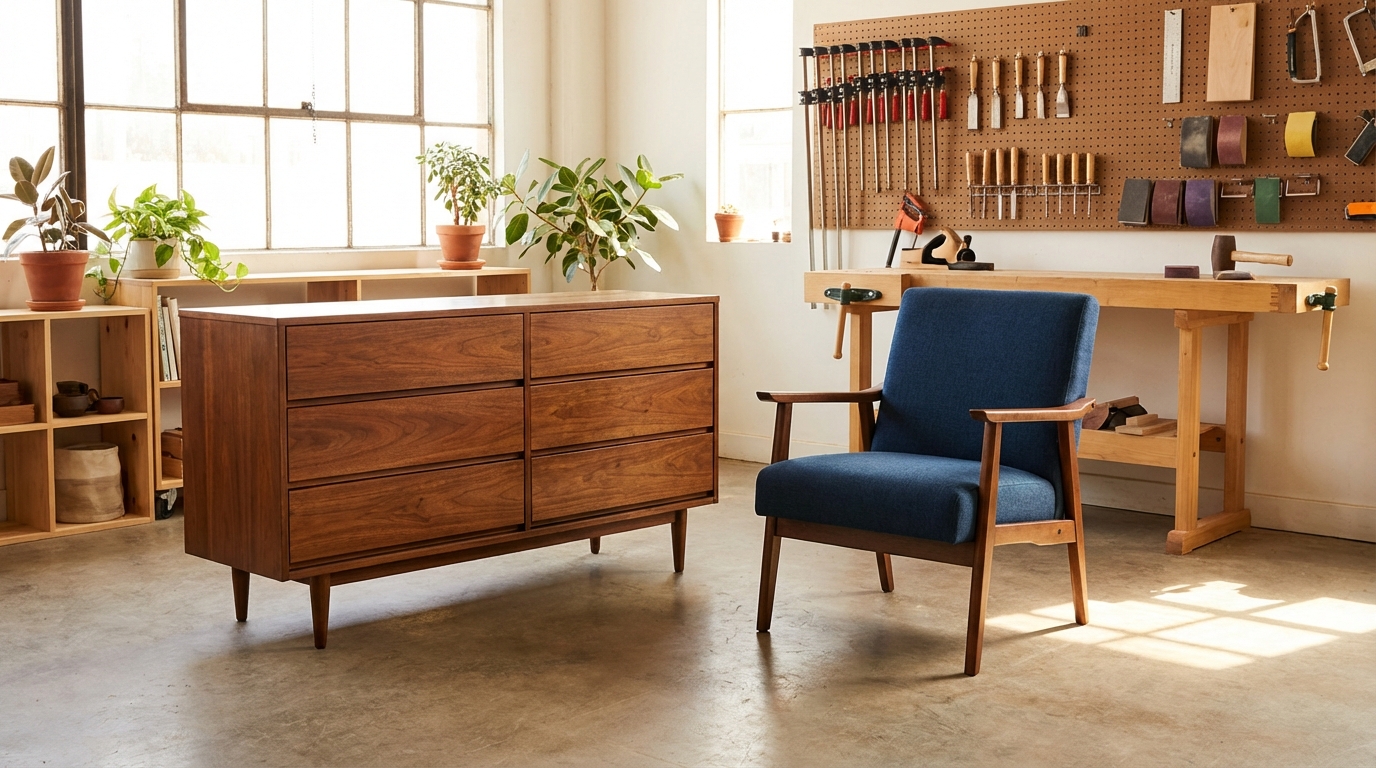
Furniture flipping is one of the most accessible side hustles you can start in 2026. No degree required. No storefront needed. Just an eye for potential, some basic tools, and the willingness to get your hands a little dirty.
The concept is simple: buy undervalued furniture, restore or refinish it, and sell it for a profit. A $20 thrift store dresser can become a $250 statement piece with a weekend's worth of work. A scratched-up dining table from a garage sale? That's a $400 flip waiting to happen.
But there's a gap between "I saw someone do this on TikTok" and actually building a profitable furniture flipping operation. This guide bridges that gap — covering everything from sourcing your first piece to scaling into a consistent income stream.
Before diving into the how, let's talk about why furniture flipping stands out in a crowded side hustle landscape.
Low barrier to entry. Unlike dropshipping, real estate investing, or starting an online course, furniture flipping requires almost no upfront capital. Your first flip can start with a free curbside find and supplies you already own.
High profit margins. The markup on refinished furniture is significant. Industry data shows that well-executed furniture flips typically yield 100% to 500% returns on investment. A piece you source for $30 in materials and $50 in supplies can sell for $300 or more.
Growing demand for sustainable goods. Consumers are increasingly choosing secondhand and upcycled furniture over mass-produced options. The global secondhand furniture market is projected to grow significantly through 2030, driven by sustainability awareness and rising new furniture costs.
Flexible schedule. You can flip furniture on evenings and weekends, during nap time, or as a full-time pursuit. There's no boss, no shift schedule, and no customers to deal with until you're ready to sell.
Tangible, satisfying work. In a world of screen-based jobs, there's something genuinely rewarding about transforming a beat-up piece of furniture into something beautiful — and getting paid for it.
You don't need a professional woodshop to start flipping furniture. Here's what you actually need:
You need a space where you can sand, paint, and let pieces dry. Options include:
A single-car garage is more than enough space to run a profitable flipping operation.
Here's a realistic breakdown for your first month:
| Category | Cost |
|---|---|
| First piece to flip | $0–$50 |
| Basic tools and supplies | $50–$150 |
| New hardware (knobs, pulls) | $10–$25 |
| Listing supplies (nothing — your phone works) | $0 |
| Total startup | $60–$225 |
Compare that to the average franchise fee ($25,000+) or the cost of starting a food truck ($50,000+), and furniture flipping's accessibility becomes crystal clear.
Finding the right pieces at the right price is where profitable flippers separate themselves from hobbyists. Here are seven proven sourcing channels, ranked by value:
Cost: Free | Quality: Variable | Availability: High
Drive through neighborhoods — especially during move-out season (May–September) and around the first of the month. People leave perfectly good furniture on the curb because it's easier than selling it.
Pro tip: Follow local "curb alert" Facebook groups and Nextdoor posts. People often post photos of items they're putting out hours before they hit the curb.
Cost: $0–$50 | Quality: Good | Availability: High
Filter by "Free" or sort by "Price: Low to High" in the furniture category. Many people just want items gone — especially after a breakup, move, or remodel.
Pro tip: Be the first to respond. Write a short, polite message: "Hi! I can pick this up today. What time works?" Speed wins on Marketplace.
Cost: $10–$75 | Quality: Good | Availability: Moderate
Stores like Goodwill, Salvation Army, Habitat for Humanity ReStore, and local thrift shops regularly receive furniture donations. Prices are typically 70–90% below retail.
Pro tip: Build relationships with staff. Ask when new furniture deliveries come in and visit on those days.
Cost: $20–$200 | Quality: Excellent | Availability: Moderate
Estate sales are gold mines for quality wood furniture — pieces built to last that just need cosmetic refreshing. Check EstateSales.net, EstateSales.org, and local auction houses.
Pro tip: Go on the last day of estate sales when everything is discounted 50% or more.
Cost: $5–$50 | Quality: Variable | Availability: Seasonal
Saturday mornings from April through October are prime time. Focus on neighborhoods with older homes — they tend to have higher-quality furniture.
Pro tip: Arrive early. The best pieces go in the first hour.
Cost: $0 (you get paid) | Quality: Good to Excellent | Availability: Consistent
Here's one most people don't know about: Sharetown connects independent contractors ("reps") with returned furniture and mattresses from major DTC brands. Instead of sourcing items yourself, Sharetown dispatches pickup jobs to you — you collect the item, restore it, and resell it on local marketplaces.
The difference? You're not spending time hunting for inventory. The inventory comes to you. And you get paid for the pickup itself, plus you keep a share of the resale profit.
This is especially powerful for flippers who want consistent volume without the sourcing grind.
Cost: Free | Quality: Variable | Availability: Moderate
Local Buy Nothing groups (on Facebook or the Buy Nothing app) are community-based gifting networks. People regularly post furniture they're giving away. Community bulletin boards at coffee shops, libraries, and laundromats also work.
The restoration process is where you add the most value. Here's the standard workflow for most furniture flips:
Before any sanding or painting, clean the piece completely. Use TSP cleaner diluted in warm water to remove grease, grime, and residue. Wipe down with a damp cloth and let it dry fully.
Look for structural issues — wobbly legs, broken drawers, cracked joints. Fix these first:
Sanding creates a surface that paint or stain can adhere to. The approach depends on your desired finish:
Always sand with the grain of the wood, not against it.
If you're painting over a dark finish with a lighter color, or if the piece has stains or tannin bleed (common with oak), apply a shellac-based primer first. Zinsser BIN or KILZ Original are go-to choices.
Apply your finish in thin, even coats. Two to three coats is typical.
Popular paint finishes for flipping: - Chalk paint — Matte, vintage look. Easy application. Great for farmhouse and shabby-chic styles. - Mineral paint — Durable, self-leveling, built-in top coat. Brands like Fusion Mineral Paint are popular. - Latex paint — Affordable, available in any color. Requires a top coat for durability.
For natural wood looks: - Gel stain — Applies evenly over existing finishes. Great for modernizing honey oak. - Danish oil or tung oil — Beautiful natural finish that brings out the grain.
A top coat is essential for durability, especially on high-use surfaces like tabletops and dressers.
Swapping hardware is the easiest way to modernize a piece. A dated dresser with brass pulls from the 1990s becomes contemporary with matte black bar pulls or brushed gold knobs.
Budget $3–$8 per pull. Amazon, Home Depot, and D. Lawless Hardware are reliable sources.
Pricing is where many beginners leave money on the table — or price themselves out of sales. Here's a practical framework:
A good starting formula: your selling price should be roughly 3x your total cost (acquisition + materials + hardware).
| Cost Category | Example |
|---|---|
| Piece acquired | $25 |
| Sandpaper, paint, primer | $20 |
| New hardware | $15 |
| Total cost | $60 |
| Target selling price (3x) | $180 |
Before pricing, search Facebook Marketplace and OfferUp for similar pieces (same style, size, and condition). Sort by "Sold" if available. This gives you a realistic market range.
General market ranges for refinished furniture in 2026:
| Piece | Typical Flip Price |
|---|---|
| Nightstand | $75–$150 |
| Dresser (6-drawer) | $200–$450 |
| Dining table | $250–$600 |
| Accent chair | $100–$250 |
| Bookshelf | $100–$250 |
| Coffee table | $75–$200 |
| China cabinet / hutch | $300–$700 |
| Mid-century modern anything | Premium — add 30–50% |
As you gain experience, track your hourly rate. If a flip takes 6 hours of work and nets $150 in profit, that's $25/hour — solid for a side hustle. If it takes 20 hours for the same profit, you need to either speed up your process or target higher-value pieces.
You've sourced, restored, and priced your piece. Now it needs a buyer. Here are the best platforms for furniture sellers:
Facebook Marketplace — The #1 platform for local furniture sales. Free to list, massive audience, built-in messaging. List here first, always.
OfferUp — Strong for furniture, especially in metros. Easy listing process, shipping option for smaller items.
Craigslist — Still active in many markets. Best for larger pieces where buyers expect to pick up.
Chairish — Higher-end marketplace for vintage, antique, and designer furniture. Takes a 30% commission but attracts buyers willing to pay premium prices.
Instagram — Build a portfolio of your work. Many successful flippers generate 30–50% of their sales through Instagram DMs.
Local consignment shops — Hands-off selling, but they take 40–60% commission. Best for pieces you want sold without effort.
Pro tip: Always list on multiple platforms simultaneously. The more eyeballs, the faster the sale.
The biggest challenge in furniture flipping isn't the restoration — it's the sourcing. Driving around looking for deals, checking thrift stores, refreshing Marketplace — it's time-consuming and inconsistent.
Sharetown solves this problem in a way that most flippers don't know about. As a Sharetown rep, you receive dispatches to pick up returned furniture and mattresses from major DTC brands. These are items that customers returned during trial periods — often in excellent condition.
Here's how the model works:
The key advantage: instead of spending hours sourcing one piece at a time, you get a consistent flow of quality inventory delivered to your pipeline. Many Sharetown reps flip furniture as their primary income source.
It's also a more sustainable model. Sharetown achieves a 97% reduction in waste compared to traditional reverse logistics, and they're the largest Habitat for Humanity donor in their chapter. Every piece you flip as a rep is one fewer item heading to a landfill.
Once you've completed 10–15 flips and have a feel for the process, you can start scaling:
Batch your work. Source multiple pieces in one trip. Sand, prime, and paint in batches. This reduces per-piece time significantly.
Specialize in a style. Flippers who develop a signature style — modern farmhouse, mid-century modern, coastal, industrial — build a following and can command premium prices.
Build an Instagram presence. Document your transformations with before/after photos. This is free marketing that compounds over time.
Invest in better tools. A paint sprayer ($100–$200) cuts painting time by 70% and produces a smoother finish. An orbital sander ($50–$80) eliminates hours of hand sanding.
Diversify your sourcing. Combine free finds, thrift store purchases, and Sharetown rep work for maximum inventory flow. The more consistent your sourcing, the more consistent your income.
Track your numbers. Use a simple spreadsheet to track: acquisition cost, materials cost, time invested, selling price, platform fees, and net profit per piece. This data tells you which flips are worth your time and which aren't.
Most part-time flippers earn $500–$2,000 per month depending on volume and piece selection. Full-time flippers with efficient processes and strong sourcing channels can earn $3,000–$6,000+ per month. Your profit depends on sourcing costs, restoration quality, and local market demand.
No prior experience is required. Basic furniture restoration skills — sanding, painting, minor repairs — can be learned from YouTube tutorials in a weekend. The most important skill is developing an eye for pieces with profit potential, which comes with practice.
Mid-century modern pieces consistently command the highest premiums. Solid wood dressers, dining tables, and accent chairs also perform well. Avoid particle board furniture (IKEA-type pieces) — it doesn't refinish well and buyers know the difference.
A simple paint flip (nightstand or end table) takes 3–5 hours across 2–3 days (accounting for dry time). A more involved restoration (stripping, repairing, staining a dining table) can take 8–15 hours across a week. Efficiency improves dramatically with practice.
Yes — arguably more than ever. Rising new furniture prices, growing demand for sustainable and unique pieces, and the proliferation of local selling platforms have expanded the market. The key is sourcing well and adding genuine value through quality restoration.
Facebook Marketplace is the top platform for most furniture flippers due to its massive local audience and zero listing fees. OfferUp is a strong second choice. For high-end or vintage pieces, Chairish and Instagram attract premium buyers.
Ready to turn furniture flipping into a consistent income stream? Become a Sharetown rep and get quality inventory delivered to your pipeline — no sourcing grind required.