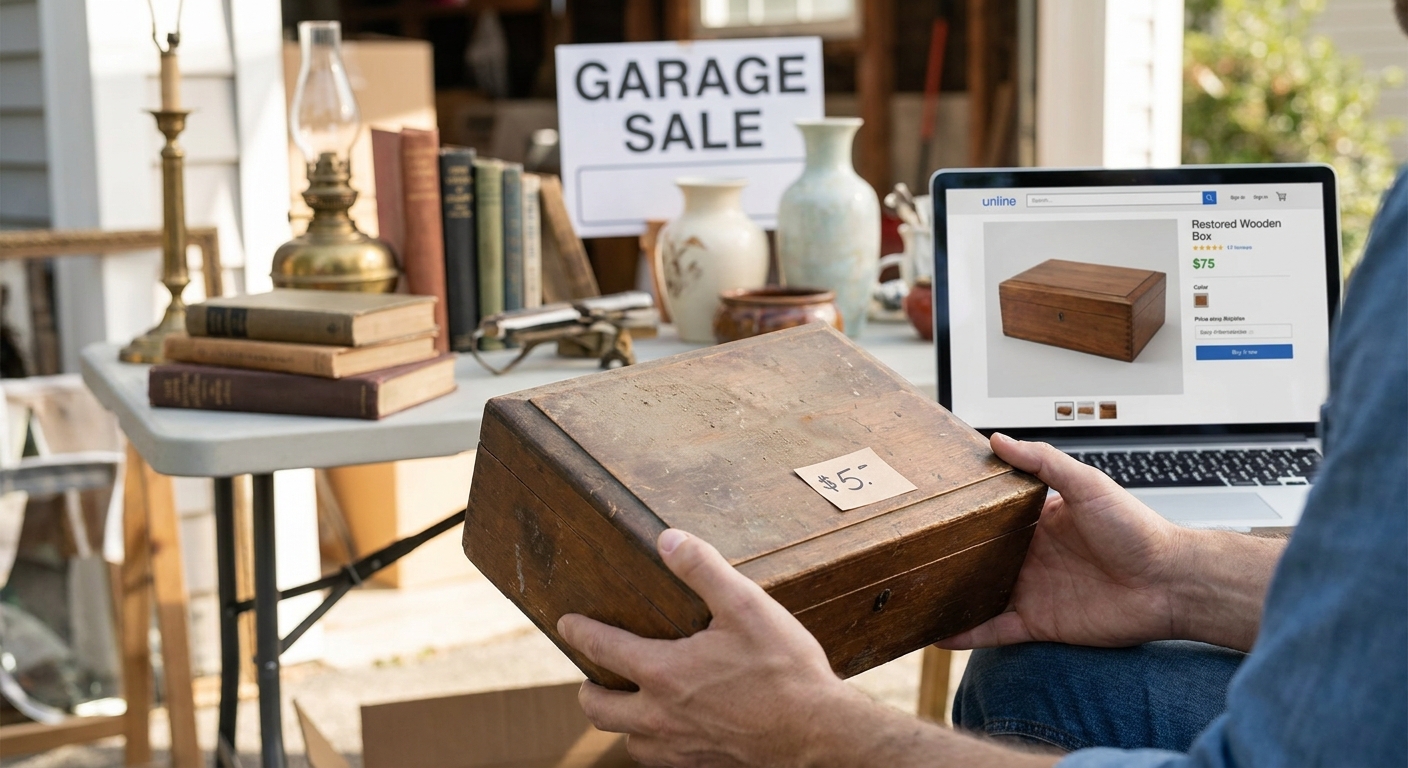
Garage sale flipping turns weekend driving and a folding cash box into real profit if you know which items move fast and which ones sit in your garage until spring cleaning. This guide walks through the exact process for spotting, buying, and reselling finds for a markup in 2026.
TL;DR
Garage sale flipping is one of the lowest-cost ways to start a resale side hustle in 2026 — most items cost under $20, and you're not waiting on wholesale minimums or storage fees. The people who make consistent money at this treat it like a small operation, not a hobby: they know their categories, they show up early, and they have a listing system ready before they even load the car.
This is the same skill set behind starting a resale business from your garage — garage sale flipping is often the entry point, and the good habits you build hunting for $5 finds carry over directly if you scale into bulkier inventory later.
Higher-income zip codes and neighborhoods with a lot of turnover — new listings, moving trucks, estate sales — produce better inventory than random subdivisions. Check listing sites and community apps the night before and map out a route so you're not backtracking across town.
Arrive within the first 30-60 minutes of the posted start time. Early arrival matters more than any other single factor in garage sale flipping — the best furniture, tools, and electronics get picked off in that first window before the crowd shows up.
Common mistake: showing up right at closing time hoping for desperation pricing. Sellers pack unsold items back into the garage more often than they slash prices, so you end up with nothing.
Ask for the price, then counter 20-30% below it on anything over $10. Most garage sale hosts price items to move, not to hold firm, and they'd rather take a lower offer than reload the item into storage.
Bundle multiple items into one offer — buying three things for $15 instead of item-by-item almost always gets you a better blended rate than negotiating each one separately.
Common mistake: negotiating too hard on items already under $5. You'll burn goodwill for pennies and miss the bigger finds elsewhere in the driveway.
Check furniture joints for wobble, test electronics if there's an outlet nearby, and look under cushions and rugs for stains or damage the seller didn't mention. A five-second check saves you from buying something you can't resell.
For anything with moving parts — treadmills, recliners, power tools — cycle it through its full motion if the seller allows it. A jammed mechanism is invisible until you actually move the part.
Common mistake: skipping inspection on "cheap enough it doesn't matter" items. A $3 lamp that doesn't turn on is still a $3 loss and a trip to the trash.
Wipe down surfaces, vacuum fabric, and tighten loose screws before you photograph anything. Buyers judge condition from photos first — a dusty end table photographed as-is reads as neglected even if it's structurally solid.
Shoot photos in daylight against a plain background. Furniture and fitness equipment photographed outdoors or against a clean wall consistently outsell the same item shot in a cluttered garage.
Common mistake: listing items with the same photo the original seller used. Buyers can tell, and it kills trust in your listing.
Search sold listings — not active ones — on Facebook Marketplace and eBay for the same or similar item before you set a price. Active listings show what people are hoping for; sold listings show what people actually paid.
Price 10-15% above your target to leave negotiating room, since almost every buyer on these platforms will ask "is this available" and then lowball.
Common mistake: pricing based on what you paid plus a flat markup instead of what the market will actually bear. A $5 buy on a piece that comps at $20 is a bad flip if you price it at $10 out of habit.
Post the same item on Facebook Marketplace, OfferUp, and a local buy-sell-trade group within 24 hours of getting it home. Items sitting unlisted for a week lose momentum and start feeling stale even to you.
Cross-posting doubles or triples your buyer pool without extra sourcing cost, which is the single biggest lever for turning inventory faster in 2026's resale market.
Common mistake: listing on one platform and waiting. If it hasn't sold in 3-4 days, the fix is more exposure, not a lower price yet.
Ready for steadier resale income?
Sharetown reps pick up bulky retail returns and resell them locally for profit.
Once you've flipped a handful of garage sale finds and know your numbers, the next move is systemizing sourcing so you're not dependent on weekend luck. Starting a resale business from your garage covers how to turn a side hobby into a repeatable weekly operation with better margins than one-off flips.
What's the best time to arrive at a garage sale for flipping?
Arrive within the first 30-60 minutes of the posted start time in 2026 — the best furniture, tools, and electronics sell within that window before crowds arrive.
How much profit can you make flipping garage sale finds?
Most successful flippers target a 3-5x markup on items under $20, meaning a $5 item resold at $20-25 is a solid, repeatable flip.
Is Facebook Marketplace better than OfferUp for reselling?
Facebook Marketplace generally has a larger local buyer pool, but cross-posting to both plus a local buy-sell-trade group sells items faster than relying on one platform alone.
How do you know what price to resell a garage sale item for?
Check sold listings, not active ones, on Facebook Marketplace or eBay for the same or similar item, then price 10-15% above your target to leave room for negotiation.
What items are best for flipping from garage sales?
Furniture, small kitchen appliances, hand tools, and fitness equipment resell fastest in 2026 because demand stays consistent and comps are easy to find online.
How long does it take to sell a flipped garage sale item?
Well-priced, well-photographed items with local pickup typically sell within 3-7 days across Facebook Marketplace and OfferUp combined.
Do you need a business license to flip garage sale finds?
Casual reselling at low volume generally doesn't require a license, but check your local regulations if you're flipping regularly enough to count as consistent income.
What's the biggest mistake new garage sale flippers make?
Buying without checking sold comps first — a cheap purchase is only a good flip if the resale market actually supports a markup.
The items that look the least exciting at a garage sale table — plain wood furniture, basic exercise equipment, name-brand small appliances — are usually the fastest sellers in 2026, not the flashy vintage pieces everyone photographs for social media. Boring sells. Flashy sits.