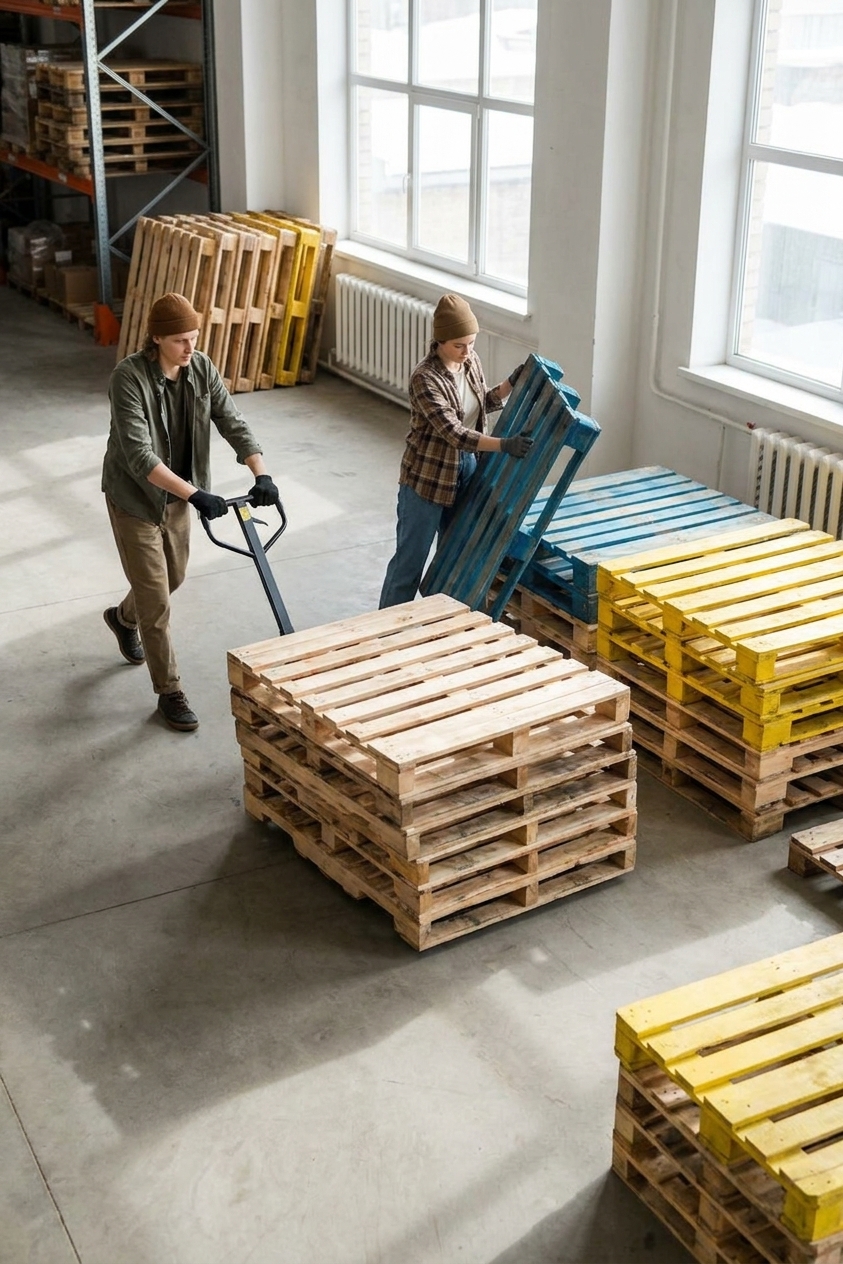
Flipping pallets for profit means buying liquidation pallets stuffed with customer returns and overstock, then reselling the individual items locally for more than you paid. Done right in 2026, a $300 pallet buy can turn into $700-$1,200 in resale within three to four weeks.
TL;DR
Retail returns hit record volume again in 2026, and liquidators move that inventory through pallet auctions faster than most buyers can inspect it. That gap between volume and inspection time is where profit and losses both live.
A side hustler who treats flipping pallets like a real inventory business — inspecting before buying, pricing to the local market, listing within 48 hours — turns a profit most weekends. A hustler who buys on hype loses money on the first three pallets and quits.
General merchandise pallets (mixed home goods, small appliances, tools) sell faster and carry less risk than electronics-only or apparel-only pallets. General merchandise typically resells at 2-3x the pallet cost within 30 days; electronics pallets swing wider because a dead motherboard is dead weight.
Common mistake: buying an electronics pallet on price alone. A $400 electronics pallet with three broken TVs is a $400 loss, not a deal.
Buy from liquidation marketplaces that publish a manifest — an itemized list of what's actually in the pallet — rather than unmanifested "mystery" pallets sold through social media resellers. A manifested pallet lets you calculate expected resale value before you spend a dollar.
Expected outcome: you know your break-even price before the truck leaves the lot. Common mistake: trusting a manifest without checking the liquidator's return policy on damaged pallets — some allow a claim window of 48-72 hours, others allow none.
Unload the same day, cross-reference each item against the manifest, and photograph anything damaged immediately for a potential claim. Power on every electronic item and check every furniture joint for cracks before you store anything.
This step catches 80% of your resale risk in one afternoon instead of discovering a broken item mid-sale two weeks later. Common mistake: stacking unopened boxes in storage and inspecting piecemeal — damage claims typically have a hard deadline.
Check sold listings (not asking prices) on Facebook Marketplace and OfferUp for the same item in your ZIP code from the last 30 days. Price 15-20% under new retail and adjust down if three comparable items in your area are still sitting unsold after two weeks.
Expected outcome: items priced against real local sold data move in 5-10 days versus 30-plus days for wishful pricing. Common mistake: pricing off the manufacturer's MSRP instead of what buyers actually paid last month.
Shoot items in daylight, include a photo of any flaw up front, and list the same day you inspect. Listings posted within 48 hours of pallet arrival outperform delayed listings because Marketplace and OfferUp algorithms favor fresh posts.
Common mistake: batching all photography for a weekend project — a week of delay costs you the algorithm boost and lets storage costs pile up.
Respond to inquiries within an hour when possible, hold a firm floor price at 10% under your listed price, and meet in a public location or your driveway for bulky items. Fast responses convert 2-3x more inquiries into sales than 24-hour reply windows.
Common mistake: holding out for full asking price on furniture and mattresses — bulky items lose buyer interest fast once a cheaper local alternative appears.
Once a category proves profitable — say, small appliances clearing 85% sell-through in 21 days — reinvest the profit into a second pallet in that same category rather than jumping to something untested. Scaling on proof beats scaling on hope.
Expected outcome: by pallet three or four, most flippers have a repeatable category and a repeatable buyer list. Common mistake: diversifying into five categories at once before any single one is proven.
Skip the blind pallet gamble
Pick up specific returned mattresses, furniture, and fitness gear to resell locally instead.
Run your first pallet as a controlled test: one general-merchandise pallet, one 30-day sell-through window, and a spreadsheet tracking every dollar in and out. Judge the hustle on that data, not on the first item you sell.
What does flipping pallets mean?
Flipping pallets means buying a liquidation pallet of customer returns or overstock at a discount, then reselling the individual items locally for a profit. Most flippers work with general merchandise pallets first because they carry less item-by-item risk than electronics.
How much does it cost to start flipping pallets in 2026?
A starter budget of $200 to $1,000 covers your first one or two pallets plus basic tools in 2026. Costs rise fast if you add a storage unit or a trailer you don't already own.
Is flipping pallets profitable as a side hustle in 2026?
Flipping pallets is profitable in 2026 when you buy manifested general-merchandise pallets and price against local sold comps, with margins commonly landing at 2-3x pallet cost. Profit drops fast on unmanifested or electronics-only pallets due to damage risk.
Where do you buy liquidation pallets?
Buy liquidation pallets through manifested online liquidation marketplaces rather than unmanifested social media resellers. A published manifest lets you calculate expected resale value before bidding.
How is flipping pallets different from Sharetown's model?
Flipping pallets means buying a mixed, often unpredictable batch of items sight unseen, while Sharetown has reps pick up specific returned mattresses, furniture, and fitness equipment directly from retailers to resell locally. Sharetown removes the manifest guesswork that trips up new pallet flippers.
How much can you make flipping pallets part-time?
Part-time flippers running one to two pallets a month commonly net $400 to $900 in profit after inspecting, pricing, and reselling within 30 days. Results depend heavily on category choice and local resale demand.
Do you need a business license to flip pallets?
Requirements vary by city and state, so check local reseller and sales tax rules before scaling past occasional sales in 2026. Many areas require a resale certificate once you're buying pallets regularly rather than as a one-off.
What items sell fastest from a liquidation pallet?
Small appliances, tools, and home goods sell fastest, often clearing within 5 to 10 days when priced against local sold listings. Bulky furniture and mattresses take longer unless priced aggressively under new retail.
The flippers who last past month three aren't the ones who found the best pallet deal — they're the ones who tracked days-to-sell on a spreadsheet from pallet one and killed categories that underperformed instead of hoping the next batch would be different. That single habit separates a repeatable 2026 side hustle from a garage full of unsold treadmills.