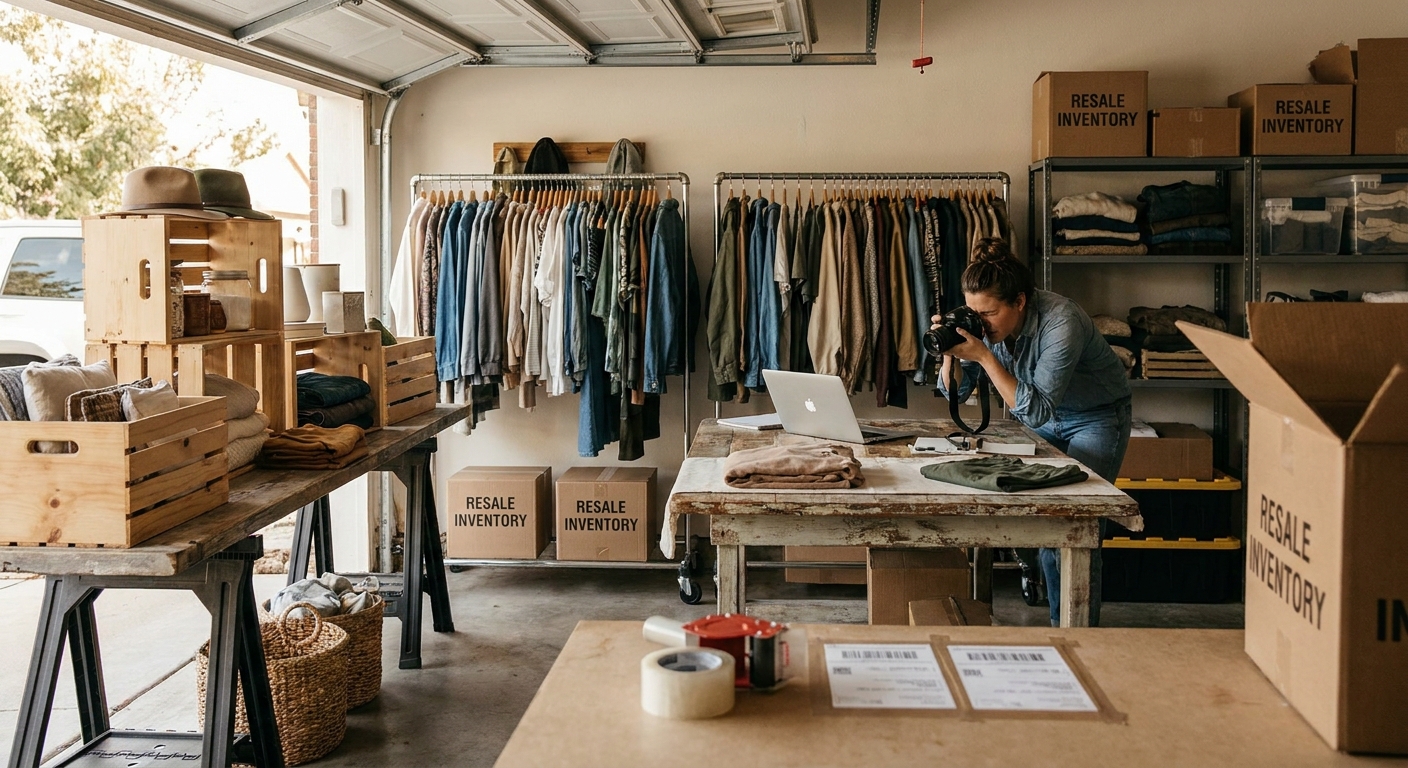
Starting a resale business from your garage costs less than opening a lemonade stand with employees, and it can generate real monthly income once you nail sourcing and turnaround speed.
TL;DR
Most people who try reselling quit in month two because they source badly, not because the market dried up. Garage-based resale works when you treat it like inventory management, not a hobby.
Retailers process billions in returned goods every year — mattresses, treadmills, sectionals, patio sets — and most of that inventory needs a second home fast. That's the gap a garage resale operation fills, whether you're flipping thrift finds or working through a return-pickup network like Sharetown that connects independent reps to retailer returns.
The upside in 2026: shipping costs for oversized goods keep rising, which pushes more retailers toward local resale and recycling partners instead of long-haul returns. That trend favors anyone set up to move bulky items quickly from a home base.
If you want inventory without upfront buying, Sharetown routes returned mattresses, furniture, and fitness equipment from retailers to independent reps who pick up, clean, and resell locally. That model skips the auction-bidding and thrift-store guessing that eats most new resellers' first few weeks.
Generalist resellers burn out comparing categories with zero pattern recognition. Choose one lane — furniture, fitness equipment, or mattresses — and learn its pricing quirks for 60-90 days before branching out.
Mattresses resell fast (often within 7-10 days) because demand is constant and buyers want same-week delivery. Fitness equipment sells slower but at higher margins — a used treadmill that cost you $0-$50 to acquire can list for $200-$400. Common mistake: stocking five categories at once and never building enough repeat-buyer recognition in any of them.
Estate sales and thrift stores work, but they're competitive and inconsistent. Retailer return pipelines are steadier because volume doesn't depend on someone else dying or downsizing.
This is where a structured pickup network changes the math. Sharetown reps pick up returned bulky items directly from premium retailers on a set schedule, which means predictable inventory instead of a Saturday scavenger hunt. Common mistake: relying on one sourcing channel and going inventory-dry the week your best supplier has a slow month.
A sanitized, presentable product photographs better and sells 2-3x faster than one still smelling like someone's living room. Set a 20-minute cleaning standard per furniture piece and 30 minutes per mattress (steam, deodorize, spot-treat).
Inspect for structural issues while you clean — a wobbly frame or broken spring turns into a return dispute later. Common mistake: skipping inspection to save time, then eating a refund plus return-shipping cost on a piece you never should have listed.
Natural light against a plain wall or driveway backdrop outperforms indoor lighting almost every time. Shoot 6-8 angles: full item, close-up of material texture, any wear, and dimensions with a tape measure visible.
Listings with 6+ photos get noticeably more inquiries than listings with 2-3, based on aggregated marketplace seller data from 2026. Common mistake: one blurry photo and a two-word title like "couch, good condition."
Pull 5 comparable active or recently-sold listings within 15 miles before setting your price. Local supply and delivery-distance expectations swing prices 15-30% between metro areas.
Price 10% above your target to leave room for the inevitable lowball offer. Common mistake: pricing off a national retail tag instead of what buyers in your zip code are actually paying for used goods.
Garage space is finite, and slow-moving stock ties up cash and square footage you need for the next batch. Set a hard 14-day rule: if an item hasn't sold, drop the price 15% and refresh the listing photos.
Items sitting past 30 days usually have a pricing or presentation problem, not a demand problem. Common mistake: getting emotionally attached to your original asking price and letting inventory rot in the corner for two months.
Revenue feels good; margin pays your bills. Log acquisition cost (even $0 for a free return pickup), cleaning time, and final sale price for every unit.
A $300 sale on an item that cost you $180 and three hours of labor is a worse deal than a $150 sale on a free pickup that took 20 minutes. Common mistake: counting gross sales as profit and not noticing your effective hourly rate is under minimum wage.
Turn returns into resale income
Become a Sharetown rep and pick up bulky retailer returns to resell locally.
Problem: Listings get views but no messages. Your price is likely 15%+ above local comps, or your photos undersell the item's condition — fix the price first, it's the cheaper test.
Problem: Buyers no-show for pickup. Require a $20-$50 non-refundable deposit via payment app before confirming a pickup window, especially for furniture and mattresses.
Problem: Garage is full and nothing's selling fast enough. Pause sourcing for one week and run a 10% storewide markdown across your current listings to clear space.
Problem: Margins are thinner than expected. Recalculate cost-per-hour including cleaning and photography time — categories like large furniture often eat more labor than mattresses per dollar earned.
Problem: Item arrives damaged from a return pickup. Inspect on pickup, not after you've already loaded it — reject visibly damaged units on the spot instead of hauling them home.
Problem: Local marketplace flags your account for repeat listings. Space out relisting by 48-72 hours and vary your photos and description wording between posts.
Run one full 30-day cycle before you judge whether garage resale works for you: source 10-15 items, track every dollar and hour, and calculate your real margin at day 30. If the numbers hold up, that's your signal to add a second product category or apply as a Sharetown rep for a steadier supply of bulky-item inventory.
How much does it cost to start a resale business from a garage in 2026?
Most garage resale operations start for $200-$500, covering cleaning supplies, a hand truck, and initial inventory. Costs drop closer to $0 if your first inventory comes from free retailer return pickups instead of purchased stock.
What's the best product category for a beginner reseller?
Mattresses and furniture are the strongest beginner categories because demand is steady and turnaround is fast, often 7-14 days. Fitness equipment sells slower but at higher per-item margins once you build buyer trust.
Is a garage resale business better than dropshipping?
Garage resale carries lower financial risk than dropshipping because you're not paying for stock upfront when you source through returns or free local pickups. Dropshipping avoids physical storage but leaves you exposed to supplier delays and thinner margins.
How much space do I need to run a resale business from home?
A 150-250 square foot garage zone comfortably holds 15-25 items at a time for furniture and mattress resale. Smaller spaces work if you commit to the 14-day sell-through rule and avoid overstocking.
Can I make a full-time income reselling from my garage?
Full-time income is possible once you're consistently sourcing and turning 20+ items a month with tracked margins above $50-$100 per item. Most sellers start part-time and scale hours as sourcing and sales cycles get predictable.
What's the fastest-selling item category for garage resellers?
Mattresses typically sell fastest, often within 7-10 days, because buyer demand is constant and delivery expectations are immediate. Furniture sells at a moderate pace, while fitness equipment tends to move slower but at better margins.
Do I need a business license to resell from my garage?
Requirements vary by city and state, so check your local zoning and business licensing rules before scaling past casual marketplace sales. Many sellers start informally, then formalize with a resale license once monthly revenue becomes consistent.
How do I find inventory without buying it upfront?
Retailer return-pickup networks let you source bulky items like mattresses and furniture with no upfront purchase cost. Sharetown connects independent reps to these pickups, which removes the capital risk that stops most new resellers before they start.
The garage resellers who last past year one aren't the best negotiators — they're the ones who tracked cost-per-hour from day one and killed slow categories fast instead of hoping the next sale would fix the math.