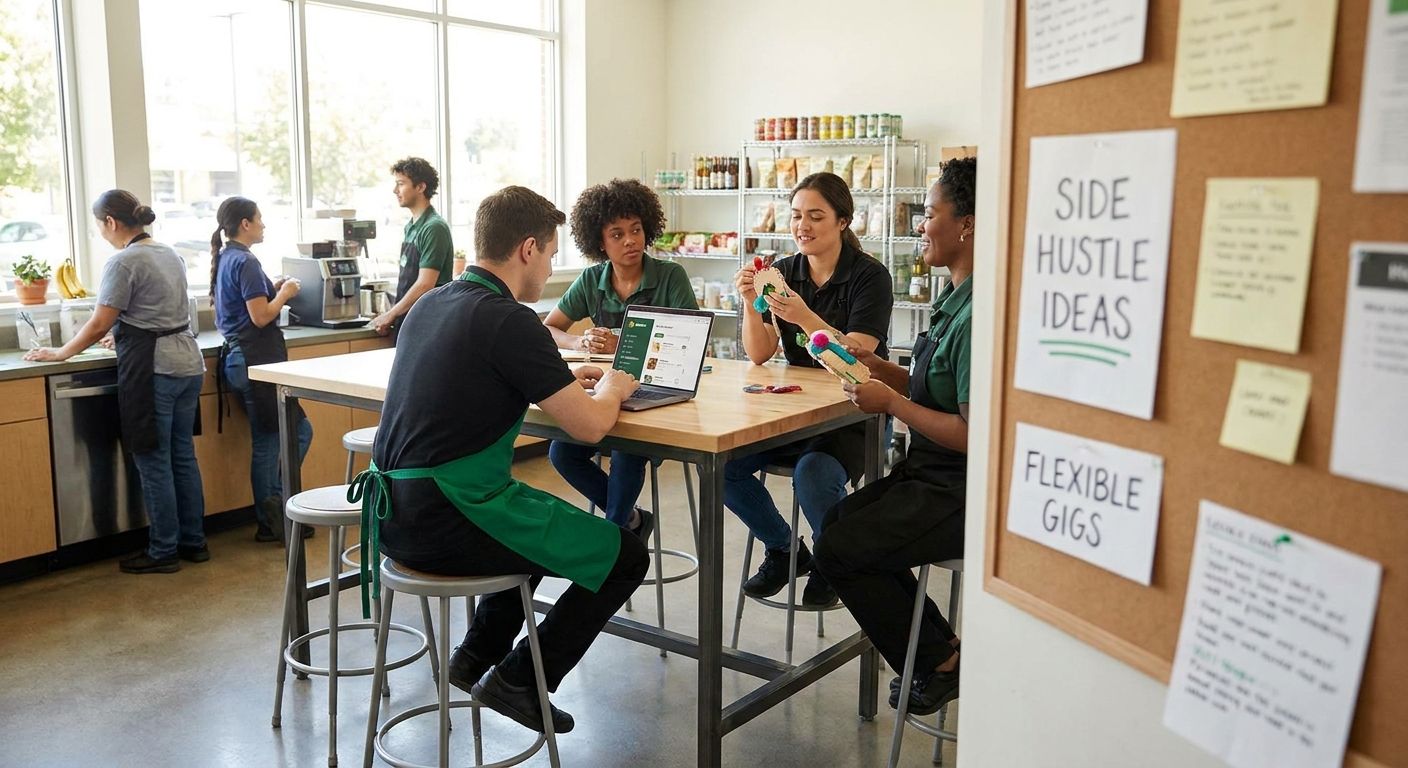
Grocery store shifts rotate, the pay is hourly, and most "side hustle" lists assume you have a 9-to-5 with predictable evenings off. Here's what actually fits a stocker, cashier, or deli clerk trying to add income in 2026 without torching the little free time you have.
TL;DR
Grocery work runs on rotating shifts, split days, and mandatory overtime during holiday rushes. A side hustle that assumes a fixed 9-to-5 or requires you to be online at 2pm on a Tuesday just doesn't survive contact with a real grocery schedule.
The hustles that stick for grocery workers in 2026 share three traits: they flex around whatever shift you got assigned this week, they don't require another eight hours on your feet, and they pay out fast enough to matter before the next paycheck lands.
This guide is built for cashiers, stockers, deli and bakery staff, and department leads working hourly grocery jobs with rotating or split shifts. If you've searched side hustles for retail workers before landing here, the constraints are nearly identical — irregular hours, physical fatigue, and hourly pay that doesn't stretch as far as it used to in 2026.
Grocery scheduling changes week to week, sometimes day to day if someone calls out. Any side hustle that locks you into fixed hours — a set shift at a call center, a scheduled class you teach — will collide with your day job within a month. Look for gig work or resale-based income you can pick up and drop as your grocery schedule shifts.
A side hustle that pays out in 30 or 45 days doesn't help when a bill is due Friday. Weekly or near-instant payout structures matter more to hourly workers than to salaried professionals, because the whole point of the extra work is covering a gap now, not building a nest egg in six months.
Grocery wages don't leave much room to sink $500 into inventory or equipment before you've made a dollar back. The strongest options for this audience require little to no upfront spend, or let you earn against inventory you didn't have to buy yourself.
Eight hours of standing, scanning, and customer interaction wears differently than eight hours of anything else. A hustle that's physically or mentally identical to your day job burns you out twice as fast. Driving, resale, or task-based work uses a different set of muscles — literally and figuratively.
The best side hustles for grocery store workers in 2026 don't force an all-or-nothing choice. You should be able to do five hours a week or twenty-five depending on what your grocery schedule allows that month, without losing momentum or restarting from zero.
Sharetown reps pick up returned mattresses, furniture, and fitness equipment from retailers, then resell locally for profit. There's no fixed shift — you accept pickups when your grocery schedule has a gap, whether that's a weekday morning or a Sunday afternoon. One spec that matters: it's route-based, not shift-based, so a rotating grocery schedule doesn't create a conflict the way a second employer would.
Verdict: Buy. It's built for exactly the scheduling chaos grocery workers deal with.
Apps and platforms built around side hustles that pay weekly solve the cash-flow problem grocery workers hit most: a two-week payroll cycle that doesn't line up with when bills are due. The tradeoff is lower per-hour ceiling than resale work, but the predictability is worth it for someone stabilizing a budget.
Verdict: Buy if cash-flow timing is the actual problem, not the total amount.
Driving for delivery apps during the two or three hours between a morning stock shift and an evening close covers small gaps well. The catch: gas prices and vehicle wear cut real margin, and grocery workers already standing eight hours a day may not want to spend the rest sitting in traffic.
Verdict: Consider — good for filling short gaps, weak as a primary hustle.
For grocery employees on overnight stocking crews, daytime task apps (deliveries, assembly, moving help) fit the hours left over before and after a night shift. It's inconsistent work — some weeks nothing books, some weeks it's steady — so it works better as a supplement than a plan.
Verdict: Consider for overnight crews specifically; Skip if you work standard daytime grocery hours since the task pool thins out.
Grocery workers with an eye for underpriced furniture, appliances, or gear at garage sales and clearance racks can flip items for real margin without any employer relationship at all. It takes longer to build momentum than the other picks here, and profit depends entirely on sourcing skill.
Verdict: Consider if you already enjoy hunting for deals; Skip if you want income starting this week.
Start picking up paid routes
Sharetown reps resell retailer returns on their own schedule, no shift required.
"If a side hustle needs you online at a fixed hour, it's not a side hustle for someone on a rotating grocery schedule — it's a second job."
Sharetown reselling work
Weekly-pay gig apps
Delivery driving
Overnight task apps
Reselling secondhand finds
What are the best side hustles for grocery store workers in 2026?
Resale-based work through Sharetown, weekly-pay gig apps, and short delivery-driving windows top the list for 2026 because they flex around rotating grocery shifts. The common thread is no fixed schedule and fast payout.
Can grocery store workers do side hustles with irregular schedules?
Yes, route-based and gig work built around task or pickup availability rather than fixed shifts fits irregular grocery schedules best. Anything requiring set daytime hours will eventually conflict with a rotating schedule.
How much can a grocery store worker realistically earn from a side hustle?
Earnings depend entirely on hours committed and the hustle chosen — resale-based work scales with the number of pickups accepted, while gig apps scale with hours logged. There's no fixed ceiling since both are volume-driven.
Is delivery driving a good side hustle for grocery employees?
Delivery driving works well for filling short one-to-three-hour gaps between shifts but isn't ideal as a primary hustle once gas and vehicle wear are factored in for 2026 prices. It scores best as a supplement, not a main plan.
Do grocery store side hustles require startup money?
The strongest options for hourly workers require little to no upfront cost — resale work through returned inventory and gig apps both avoid the buy-first model that MLM-style opportunities push. Startup cost should be near zero for anyone stabilizing a tight budget.
What side hustles should grocery workers avoid?
Avoid anything requiring inventory purchased before a sale, fixed daytime scheduling commitments, or "passive income" pitches that actually demand daily upkeep. These conflict directly with rotating shifts and hourly pay constraints.
Are side hustles that pay weekly better than biweekly gigs?
For most hourly workers, yes — weekly payout timing solves the cash-flow gap between a grocery paycheck and bills due mid-cycle. The total earnings may be similar, but the timing difference matters more than people expect.
Can night-shift grocery workers find side hustles too?
Overnight stockers have access to daytime task and errand apps during the hours before and after their shift, which day-shift workers can't use the same way. It's inconsistent work, so it fits best as a supplement rather than a primary income source.
The grocery workers who stick with a side hustle past the first month are almost never the ones chasing the highest per-hour rate — they're the ones who picked something that survives a schedule change without falling apart. Pick the hustle that bends, not the one that pays a dollar more on paper.