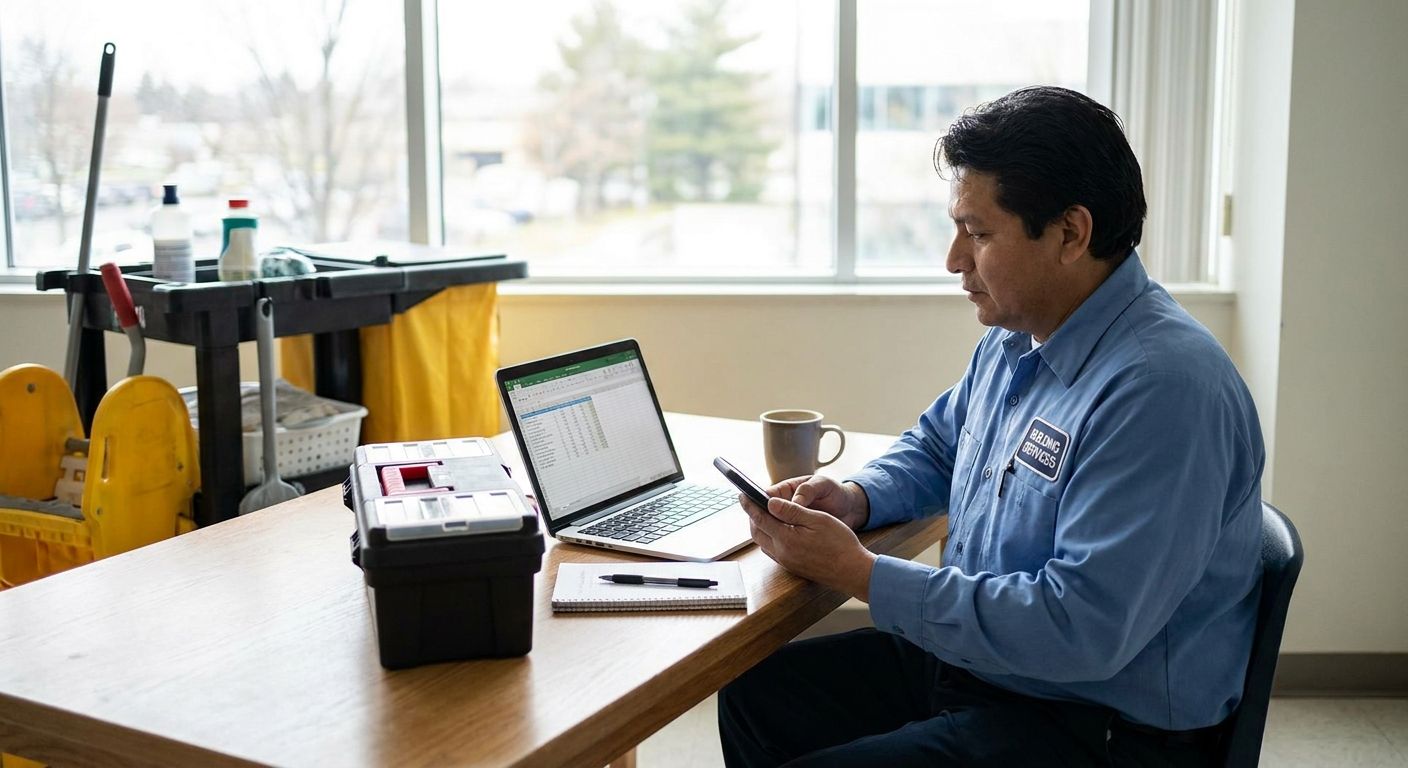
Janitors and custodians already do the physical work most side hustles require — lifting, hauling, working off-hours — which makes the jump into paid reselling or gig work shorter than it looks.
TL;DR
Custodial and janitorial pay tops out fast. Raises are slow, overtime is capped by facility budgets or union contracts more often than not, and the schedule itself — split shifts, overnight blocks, weekend rotations — rules out a lot of standard side jobs.
The work you already do is the advantage. Anyone who's rolled a floor buffer down a loading dock or hauled trash bins at 5 a.m. already has the strength and logistics sense that bulky-item resale demands. Sharetown built its Rep model around exactly that kind of independent, physical work: pick up items retailers can't restock — mattresses, furniture, fitness equipment — and resell them locally for profit.
This guide ranks the side hustles that fit a janitor's calendar and body in 2026, not the ones that just look good on a listicle.
This is built for building janitors, school custodians, and overnight cleaning crews working 15 to 40 hours a week on irregular shifts. You've got access to a vehicle, a strong back, and blocks of daylight or dead-of-night hours nobody else wants. You're not chasing a second W-2 — you want cash that doesn't require sitting behind a register or a screen for four more hours.
Janitorial shifts run early morning, late night, or split blocks that don't match a normal 9-to-5. A side hustle that demands fixed daytime hours is a nonstarter — you need something that flexes around a schedule that's already backwards.
The strongest hustles for this crowd reuse the same muscles and instincts: hauling, lifting, loading, moving heavy items through doorways. Something that adds a totally different skill set on top of an already physical job burns you out faster than it pays.
Most janitors are hourly workers with tight margins. A hustle that requires buying inventory, licenses, or gear before the first paycheck is a bad bet in 2026 — look for models with little to no buy-in.
Bulky-item resale and pickup work need a truck, van, or at minimum a roof rack and a place to stage items for a few days. If you don't have either, cross off anything involving furniture or appliances.
Hourly workers feel cash gaps fast. Some hustles pay same week, others take 30-plus days to close a sale. Know which bucket you're picking before you commit hours to it.
The hook: if you're already awake at 2 a.m., overnight security and monitoring gigs pay for hours you're not sleeping through anyway. Most postings run 8 to 12-hour blocks between 10 p.m. and 6 a.m., the same window a lot of custodial crews work. The catch is real: stacking two overnight jobs back-to-back wrecks your sleep and your day job performance inside a month. Only take this on if your custodial shift and the gig shift don't overlap on the calendar. Verdict: Consider — only if the hours are genuinely separate from your day job. See how the overlap plays out for security guards working the same night-shift math.
The hook: you already know how to move a mattress down three flights of stairs without a scratch — that's the entire job. A Sharetown Rep picks up bulky returns from retailers, cleans and inspects them, then resells locally, with no inventory purchased before a buyer is lined up. Pickups get scheduled around your shift, not the other way around, which is the single biggest reason this fits a custodial calendar better than most gig apps. Verdict: Buy — the lowest cash risk on this list and the closest overlap with skills you already have.
The hook: some platforms cut a check every seven days instead of making you wait on a buyer. That's useful when a paycheck-to-paycheck gap opens up mid-month. The downside is a ceiling — these gigs rarely scale past a few extra hundred dollars a month because the pay-per-task rate stays flat no matter how many you take. Verdict: Hold — good for filling a short-term gap, not a plan to build income around. Compare options in this rundown of side hustles that pay weekly.
The hook: if you've never resold a single item, month one is about learning to spot value and price fast, not maximizing margin. A basic beginner framework gets you through your first five sales without wasting money on the wrong inventory. Most people who start here spend under $100 total before their first sale covers it. Verdict: Buy for month one — then graduate into a route with steadier volume. Start with this beginner reselling guide.
Turn hauling skills into resale income
Apply to pick up and resell bulky retailer returns near you.
Sharetown Rep resale
Security-style overnight gigs
Weekly-pay gig apps
Beginner flipping
What's the best side hustle for janitors in 2026?
A Sharetown Rep side hustle ranks highest for janitors in 2026 because it reuses hauling and lifting skills without requiring inventory bought upfront. Security-style overnight gigs and beginner flipping are solid backups depending on schedule overlap.
Can custodians do gig work around night shifts?
Yes, but only if the gig's hours don't overlap with the custodial shift itself. Stacking two overnight commitments burns out sleep and performance on both within weeks.
Is furniture resale a good fit for janitors?
Furniture and bulky-item resale fits janitors well because it reuses hauling strength and off-hours availability. Access to a truck or van and a small staging space matters more than experience.
How much can a janitor realistically earn from a side hustle?
Earnings depend heavily on hours committed and local demand, so treat any flat number with suspicion. A resale-based hustle scales with volume of pickups and sales, while gig apps stay closer to a fixed hourly rate.
Do I need a truck to start reselling bulky items?
A truck or full-size van makes bulky-item resale practical; without one, stick to smaller items that fit a sedan trunk. Vehicle access is one of the biggest filters for which side hustle actually works.
Is flipping furniture legal without a business license?
Casual resale at low volume generally doesn't require a business license, but rules vary by city and state in 2026. Check local requirements once sales become a regular income stream rather than occasional flips.
How much does it cost to start reselling as a janitor?
Beginner flipping typically runs under $100 to start, covering basic cleaning supplies and listing fees. A Sharetown Rep model keeps upfront cost even lower since inventory isn't purchased before a buyer is lined up.
What side hustles should janitors avoid?
Avoid bulk-buy flipping lots, dropshipping apps with no guaranteed local buyer, and stacking a second overnight gig on top of an existing night shift. All three either tie up cash or wreck the schedule advantage janitors start with.
The janitors who do best at bulky-item resale in 2026 aren't the ones who grind the most hours — they're the ones who already know which loading docks and facility managers see the good returns first. If you've got that kind of relationship from years on the job, it's worth more than any resale app on this list.