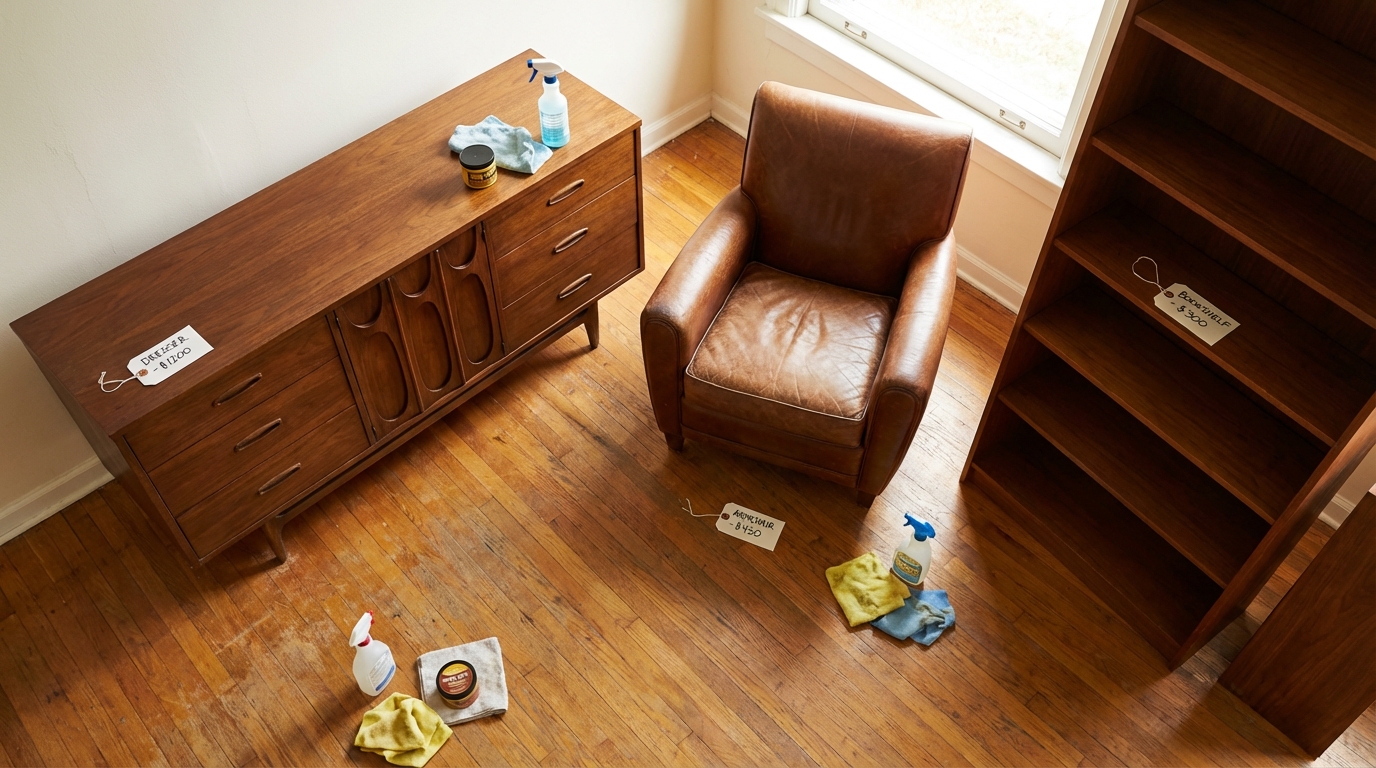
Not all furniture flips are created equal. A quick browse through any thrift store or Facebook Marketplace listing reveals hundreds of pieces for sale — but only certain categories consistently deliver strong profit margins, fast turnover, and manageable restoration effort.
If you're looking for the best furniture to flip for profit, the key is understanding which types of furniture buyers actively seek out, which pieces hold their value on the secondary market, and which ones you can source cheaply and improve without breaking the bank on supplies or time.
Whether you're just getting started with furniture flipping or looking to refine your sourcing strategy, this guide ranks the 10 most profitable furniture categories based on real resale data, average profit margins, and practical considerations like transport and storage.
Before diving into the list, it helps to understand the four factors that separate a great flip from a money pit:
Demand. The best furniture to flip for profit is furniture people are actively searching for. Mid-century modern dressers, solid wood dining tables, and quality mattresses have consistent buyer demand across every major metro area. Niche or overly trendy pieces can sit unsold for weeks.
Margin. Your profit margin is the gap between what you pay (sourcing cost + restoration supplies) and what a buyer will pay. The best flips have wide margins — pieces you can source for under $50 and sell for $200 or more.
Effort. Some furniture requires hours of sanding, painting, and hardware swapping. Others just need a good cleaning and new photos. The best flips balance effort against return — high-margin pieces that don't eat up your entire weekend.
Transportability. Can you move this piece with a truck or SUV? Does it fit through a standard door? Heavy, oversized items can be more profitable (less competition), but you need the right vehicle and possibly a helper. If you already have a pickup truck or access to one, you're at an advantage.
Average sourcing cost: $30–$100
Average resale price: $250–$800
Profit margin: 200%–700%
Mid-century modern (MCM) furniture is the undisputed king of furniture flipping. The clean lines, tapered legs, and warm wood tones of pieces from the 1950s through 1970s are perennially popular — and that demand shows no signs of slowing in 2026.
What makes MCM dressers especially profitable is the gap between what people pay for authentic vintage pieces at retail (easily $800–$2,000 at curated shops) and what you can source them for at estate sales, thrift stores, and curbside finds.
Restoration tips: Most MCM pieces just need a good cleaning, light sanding, and a fresh coat of Danish oil or tung oil. Avoid painting over the original wood grain — buyers want the authentic look. Replace any missing hardware with period-appropriate brass or walnut pulls.
Where to source: Estate sales are your best bet for MCM furniture. Apps like EstateSales.net and local auction houses regularly list mid-century pieces. You can also find them at Habitat for Humanity ReStores and Goodwill outlets.
Average sourcing cost: $50–$150
Average resale price: $300–$900
Profit margin: 150%–500%
Solid wood dining tables are workhorses of the flipping world. They're built to last, they're always in demand, and a scratched-up table that looks hopeless can be transformed with sanding and refinishing.
The key is knowing the difference between solid wood and veneer. Solid wood tables — especially oak, walnut, maple, and cherry — command premium resale prices. Veneer-over-particle-board tables from big-box stores have limited flip potential.
Pro tip: Look for tables with leaves (extensions). Expandable dining tables are harder to find and command higher prices from families who need flexibility. A solid oak table with two leaves can sell for $800+ in good condition.
Restoration tips: Strip and refinish rather than paint. Buyers want to see the wood grain. Use a quality polyurethane or hardwax oil for a durable, food-safe finish.
Average sourcing cost: $0–$50 (through return programs)
Average resale price: $150–$500
Profit margin: 300%–1,000%+
Here's a flip most people overlook entirely: mattresses. The bed-in-a-box revolution means millions of mattresses are returned annually during trial periods. These aren't damaged or worn out — they're essentially new mattresses that simply didn't work for the original buyer.
The challenge has always been sourcing. Where do you find mattresses to flip? This is where platforms like Sharetown come in. Sharetown partners with major mattress brands to manage their returns. As a Sharetown rep, you get mattresses dispatched directly to you — already authorized for resale. You pick up, clean, photograph, and sell on platforms like Facebook Marketplace or OfferUp.
The margins are exceptional because your sourcing cost is effectively zero. You're earning on the pickup itself, plus the full resale price of the mattress.
Why mattresses rank this high: Consistent supply (returns happen daily), high demand (everyone needs a bed), and the profit-per-hour ratio is outstanding compared to furniture that needs days of restoration work.
If you're serious about furniture flipping as income, check out how to become a Sharetown rep — it's one of the most reliable inventory pipelines in the flipping world.
Average sourcing cost: $10–$60
Average resale price: $100–$400
Profit margin: 200%–500%
Accent chairs are the sleeper hit of furniture flipping. They're small enough to transport easily, they're constantly in demand for living rooms and home offices, and they're frequently underpriced at thrift stores because sellers don't realize what they're worth.
Look for chairs with solid wood frames, quality upholstery (velvet, linen, leather), and distinctive shapes. Wingback chairs, club chairs, and tufted armchairs consistently fetch premium prices.
Restoration tips: If the upholstery is in good condition, a deep steam clean and fabric protector spray is all you need. For chairs with worn fabric on quality frames, reupholstering is an option but can get expensive ($150–$400 for professional work). Focus on chairs that need minimal fabric work unless you can upholster yourself.
Average sourcing cost: $15–$75
Average resale price: $100–$350
Profit margin: 150%–400%
Bookshelves are quietly one of the best things to flip because they're functional, they fit in virtually any room, and they're relatively easy to restore. Solid wood bookshelves, particularly those with adjustable shelving and interesting design details, sell quickly on local marketplaces.
The current trend toward "bookshelf styling" and "#shelfie" content on social media has actually increased demand for quality bookshelves. People want substantial pieces they can style with books, plants, and decorative objects — not the flimsy particle-board shelves from budget retailers.
What sells fastest: Tall bookshelves (5+ shelves), lawyer's bookcases with glass doors, built-in-style units, and any MCM shelving. Also look for china cabinets — many flippers convert these into bar cabinets or display units, which commands a premium.
For more ideas on what items deliver strong flipping returns, check out our guide to the best things to flip for profit.
Average sourcing cost: $20–$80
Average resale price: $150–$500
Profit margin: 200%–500%
Remote and hybrid work is here to stay, and that means sustained demand for quality home office furniture. Solid wood desks, executive desks, writing desks, and standing desk frames all flip well — particularly if they're substantial pieces that look good on camera (people care about their Zoom backgrounds).
The sweet spot: Large executive-style desks in dark wood finishes, mid-century writing desks with drawers, and L-shaped desks. Avoid generic folding tables or ultra-modern glass desks — they don't hold value well.
Restoration tips: Most desk flips are straightforward. Clean thoroughly, touch up scratches with wood markers, tighten any loose hardware, and ensure all drawers slide smoothly. A quality desk that functions perfectly sells itself.
Average sourcing cost: $0–$100
Average resale price: $200–$800
Profit margin: 200%–800%
Couches can be intimidating for new flippers — they're large, they're heavy, and they're harder to photograph well. But that intimidation factor is exactly why the margins are so good. Most casual flippers avoid couches, which means less competition and better pricing.
The key to profitable couch flipping is selectivity. Skip anything with structural damage, ripped cushions, or pet damage that's soaked into the foam. Focus on couches with quality frames, clean upholstery, and recognizable brands (Pottery Barn, Crate & Barrel, West Elm, Restoration Hardware).
Where to source: Couches appear on curbside pickup posts constantly. People upgrading their living rooms often put perfectly functional couches on the curb because the hassle of selling isn't worth their time. Your gain.
Like mattresses, couches are a category where Sharetown can provide a steady supply. Furniture returns from DTC brands are dispatched to local reps for pickup and resale — making sourcing completely passive.
Average sourcing cost: $5–$30
Average resale price: $60–$200
Profit margin: 200%–600%
Nightstands are the perfect entry-level flip for beginners. They're cheap to source, small enough to work on in any space, and they sell quickly because people almost always buy them in pairs.
Pro tip: If you find one nightstand from a recognizable set, actively hunt for its match. A mismatched pair of nightstands might sell for $60 total, but a matching set can command $150–$300.
What sells: Solid wood nightstands with drawers, MCM nightstands with tapered legs, and painted nightstands in trending colors (sage green, navy blue, warm white). Hardware upgrades — replacing generic knobs with brass or leather pulls — can add $30–$50 to the resale price with minimal effort.
Average sourcing cost: $20–$100
Average resale price: $150–$600
Profit margin: 200%–500%
Outdoor furniture is seasonal gold. Every spring, demand for patio sets, Adirondack chairs, outdoor dining tables, and quality loungers skyrockets — and prices follow. Smart flippers source outdoor furniture during fall and winter when nobody's buying, then list it in March through May when demand peaks.
Best materials to flip: Teak (extremely durable and in high demand), wrought iron (classic look, easy to refresh with spray paint), and quality wicker or rattan. Avoid cheap resin furniture — the margins aren't there.
Restoration tips: Teak furniture just needs a teak cleaner and oil application to look like new. Wrought iron needs wire brushing, primer, and a fresh coat of rust-resistant spray paint. Both are satisfying, quick projects with excellent returns.
Average sourcing cost: $25–$100
Average resale price: $150–$600
Profit margin: 150%–500%
Fitness equipment occupies a unique space in the flipping world. Dumbbells, weight benches, treadmills, exercise bikes, and home gym systems are in consistent demand — and they're frequently available from people who bought them with good intentions but never built the habit.
The post-pandemic home gym boom means there's a massive supply of lightly-used fitness equipment on the secondary market. At the same time, new buyers continue entering the market as gym memberships get more expensive.
Best items to flip: Adjustable dumbbells (Bowflex, PowerBlock), Olympic weight plates (sold by the pound — always in demand), compact home gym systems, and quality exercise bikes. Avoid treadmills unless you have help moving them — they're heavy and margins are thinner.
Sharetown connection: Fitness equipment is one of Sharetown's three core categories alongside mattresses and furniture. Sharetown reps handle returned fitness equipment from DTC brands — picking up, refurbishing, and reselling pieces that would otherwise end up in a landfill. It's another reliable inventory source for serious flippers.
Knowing what to flip is only half the equation. Here's where to find your inventory:
For a deeper dive into selling channels, check out our guide to where to sell used furniture once you've made your flips.
Pricing is where many flippers leave money on the table. Here's a framework:
Research comparable sales. Before listing, search your item on Facebook Marketplace, OfferUp, and Craigslist. Filter by "sold" listings when possible to see what people actually paid — not just what sellers are asking.
Factor in your costs. Track everything: sourcing cost, materials, transport, and your time. A flip that nets $150 but took 12 hours of work is only paying you $12.50/hour. Aim for at least $25–$50/hour when you account for your time.
Price 10–15% above your target. Buyers negotiate. If you want $200, list at $225–$230. This gives you room to "discount" while still hitting your target margin.
Use quality photos. This isn't a pricing tip in the traditional sense, but better photos command higher prices. Photograph pieces in natural light, from multiple angles, and styled in a clean setting. Buyers pay more for furniture they can visualize in their own home.
If there's one challenge that limits most furniture flippers, it's the inconsistency of sourcing. Some weeks you find five great pieces; other weeks, nothing. That feast-or-famine cycle makes it hard to treat flipping as reliable income.
That's the problem Sharetown solves. As a Sharetown rep, you get a steady stream of returned mattresses, furniture, and fitness equipment dispatched directly to you from major DTC brands. You pick up, refurbish, and resell — with an average pickup distance of just 13 miles.
Here's what makes the Sharetown model different from traditional flipping:
Sharetown is the largest Habitat for Humanity donor in their chapter, and every item you resell keeps it out of a landfill. It's furniture flipping with a purpose.
Ready to see if Sharetown operates in your area? Learn more about becoming a rep.
Mid-century modern dressers and credenzas consistently offer the highest profit margins, often returning 200%–700% on your investment. Mattresses sourced through return programs like Sharetown can deliver even higher margins since the sourcing cost is effectively zero.
Part-time furniture flippers typically earn $500–$2,000 per month, while full-time flippers can make $3,000–$8,000+ monthly depending on volume, sourcing quality, and market. Your income scales with the number of pieces you can source, restore, and sell.
Avoid particle-board furniture from budget retailers (IKEA's lower lines, Walmart basics), heavily damaged upholstered pieces with pet or smoke odors, and trendy pieces that are already declining in popularity. Also avoid anything with structural damage that requires professional repair — the labor cost usually exceeds the profit.
A pickup truck or SUV with folding seats makes furniture flipping significantly easier, especially for larger pieces like couches, dining tables, and dressers. However, many flippers start with smaller items (nightstands, accent chairs, bookshelves) that fit in a standard car. You can also rent trucks from Home Depot or U-Haul for larger pickups.
Facebook Marketplace is the dominant platform for local furniture sales due to its massive user base and zero selling fees. OfferUp, Craigslist, and local consignment shops are strong secondary channels. For higher-end or specialty pieces, Chairish and AptDeco cater to design-conscious buyers willing to pay premium prices. For a full comparison, see our guide to where to sell used furniture.
Start small. Find a free piece on Facebook Marketplace or at a curbside, clean it up, take quality photos, and list it for sale. Your first flip won't be perfect — and that's fine. The goal is to learn the process. For a complete beginner's walkthrough, read our step-by-step furniture flipping guide.