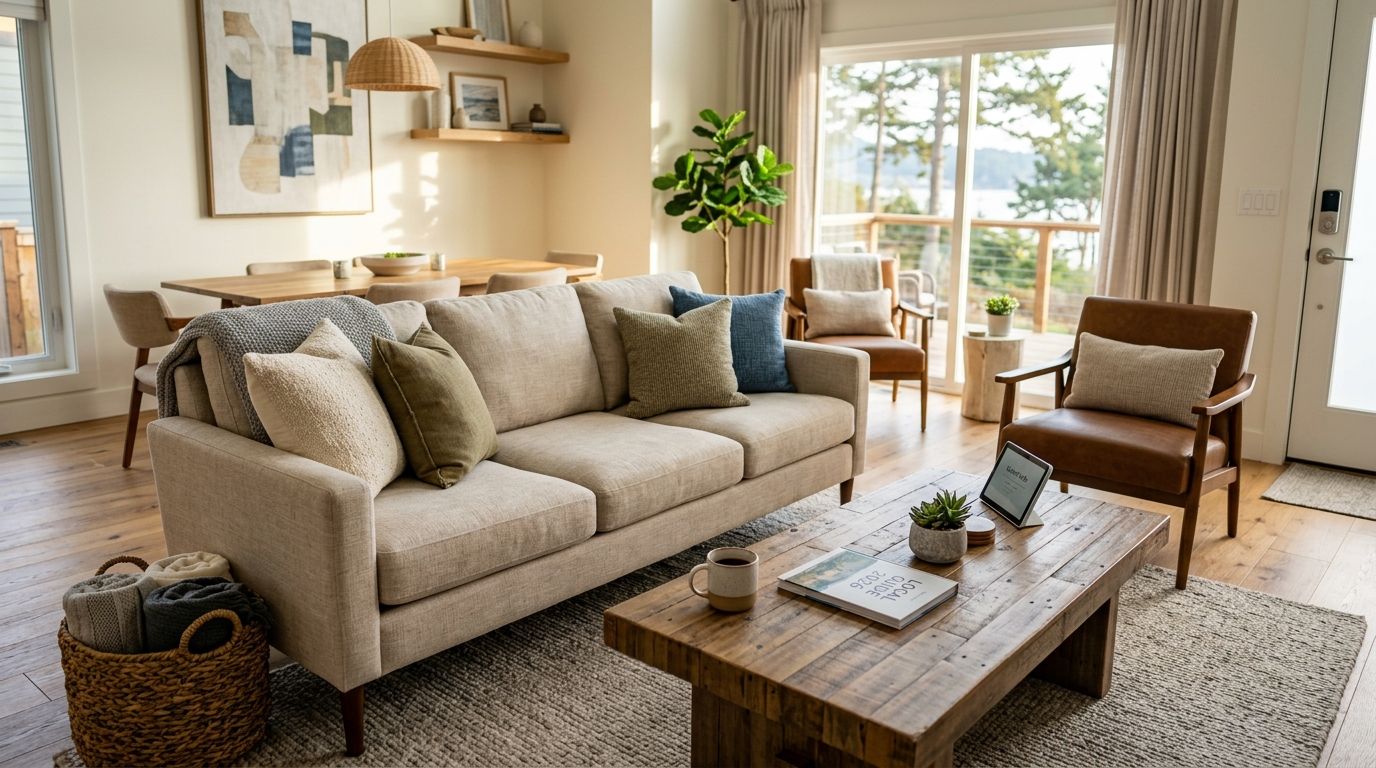
Furniture buying for Airbnb hosts means outfitting a short-term rental for guest turnover, not for a family that lives there year-round. Durability, easy cleaning, and fast replacement matter more than matching a design blog's mood board. A host furnishing a personal home only needs pieces that survive one household; a host running a listing needs pieces that survive dozens of strangers a year.
TL;DR
- Furniture buying for Airbnb hosts in 2026 prioritizes commercial-grade durability over trend-driven design.
- Sharetown connects hosts to returned and liquidated furniture from major retailers at prices below new retail.
- Contract-grade upholstery rated above 30,000 double rubs outlasts residential fabric rated near 15,000 double rubs.
- Stock backup inventory for high-wear items like dining chairs and mattress protectors before the first guest checks in.
Why furniture buying matters for Airbnb hosts
A damaged sofa or a squeaky bed frame shows up in a review before it shows up in your inbox. Airbnb hosts don't get gradual wear — a piece of furniture that takes a decade to break down in a private home can take a single busy season in a rental with back-to-back bookings.
Guests test furniture in ways owners never do: sitting on arm rests, stacking suitcases on ottomans, letting kids stand on beds. The furniture that survives an Airbnb calendar in 2026 is furniture built for commercial use, not residential use — and buying that way from the start saves more in emergency replacements than it costs upfront.
Hosts running more than one unit have another lever most first-timers miss: sourcing furniture through resale instead of new retail. Sharetown works with independent reps who pick up returned mattresses, furniture, and fitness equipment from premium retailers and resell it locally, which puts return-condition and open-box pieces within reach of a host furnishing a unit on a tight timeline.
Step 1: Audit your unit before you shop
Start with a walkthrough, not a shopping cart. You can't set a furniture budget or a sourcing plan until you know exactly what the space needs.
- Count sleeping capacity and match seating to it — a 6-guest listing needs seating for 6, not 4
- Walk the unit and flag every high-touch surface: dining chairs, sofa arms, mattress edges
- Check your HOA, lease, or local short-term rental ordinance for furniture and fire-safety requirements
- Measure doorways and stairwells before buying anything over 30 inches wide
- Note which rooms need furniture that doubles as storage in units with no closets
Step 2: Set a per-room budget that protects your margin
Build the budget around wear, not around what looks good in photos. Bedrooms and living rooms absorb the most guest time, so fund those first.
- Rank rooms by guest time spent — bedroom and living room get funded before the entryway
- Set aside a repair-and-replace reserve before furnishing the rest of the unit
- Buy display and photography pieces last; guests book off photos but complain about the mattress
- Separate "must survive five years" purchases like bed frames and sofa frames from "swap every season" purchases like throw pillows and rugs
Step 3: Source furniture below retail before you pay full price
Full-price retail is the most expensive way to furnish a unit that's going to take a beating. Work down the cost ladder before you place an order.
- Check floor-model and clearance sections at furniture retailers before ordering online
- Browse local marketplace listings from other hosts and property managers exiting a unit
- Ask movers and estate-sale companies to flag furniture before it goes to landfill
- Learn how to negotiate prices when buying secondhand items to resell before you show up to a listing — most sellers price with room to move, and that skill keeps more of your furnishing budget for the pieces that matter
- Work with a local rep to source open-box and returned furniture pulled from major retailers, often at a fraction of new-retail pricing, once you know what "good condition" looks like
Step 4: Vet every piece for durability, not just price
A low price on a weak frame is a repeat expense, not a deal. Test before you buy, every time — new or secondhand.
- Test drawers, hinges, and reclining mechanisms in person before you buy anything used
- Choose solid wood or metal frames over particleboard for anything that gets sat, stood, or jumped on
- Ask about upholstery rub count — contract-grade fabric holds above 30,000 double rubs on the Wyzenbeek scale, versus roughly 15,000 for typical residential fabric
- Learn to identify high-value furniture brands worth flipping so you can spot a solid used piece at a glance
- Skip anything with existing stains, odors, or structural cracks — guests notice in the first five minutes
Step 5: Stock guest-ready bedding, linens, and soft goods
The mattress and frame get the attention, but soft goods are what guests touch, sleep on, and rate you on.
- Buy a mattress protector and two full sheet sets per bed at minimum, so housekeeping never waits on laundry
- Plan on replacing a queen mattress every 7 to 10 years, sooner if the calendar runs hot
- Stock blackout curtains and extra pillows for guests with different sleep preferences
- Match linens to the reviews guests actually leave — cooling bedding sets guests love matter as much as the mattress underneath for any host running units in a warm climate
- Keep one spare of every soft-good item in a closet so a stained duvet doesn't cancel a same-day turnover
Step 6: Furnish for fast cleaning and quick turnover
Every piece you buy either speeds up or slows down your cleaning crew. Buy for the reset, not just for the check-in photo.
- Choose washable or wipeable upholstery — performance fabric, leather, or slipcovers — over delicate textiles
- Skip glass tables and light-colored rugs in units that book young-guest groups
- Use furniture with fewer crevices and exposed screws that trap dust and slow a cleaning crew
- Keep a repeatable furniture layout across units if you manage more than one listing, so cleaners don't relearn the space each time
Step 7: Maintain furniture on a replacement schedule
Furniture in a rental isn't a one-time purchase. Treat it like an operating cost with a maintenance calendar attached.
- Walk every unit quarterly in 2026 and flag wear before a guest does
- Track which pieces fail first — usually dining chairs and mattress edges — and order the replacement before the current one fails completely
- Keep one backup chair, one backup lamp, and one spare remote per unit so a broken item doesn't kill a same-day turnover
- Log furniture age and condition per unit if you run more than one property, so replacement isn't a surprise expense two years in
Comparing sourcing options for Airbnb furniture
Big-box retail (new)
- Best for: Hosts furnishing one unit fast with warranty support
- Key limitation: Highest per-item cost, longer lead times on custom orders
Outlet or clearance sections
- Best for: Hosts wanting new furniture at a lower cost
- Key limitation: Limited selection that changes weekly
Returns and liquidation resale
- Best for: Hosts furnishing multiple units or replacing high-wear pieces often
- Key limitation: Availability varies by local rep and market
Local marketplace listings
- Best for: Hosts with time to negotiate and inspect in person
- Key limitation: No warranty, quality varies piece to piece
Furniture rental packages
- Best for: Hosts staging a unit or running a short-term project
- Key limitation: Ongoing cost, you never own the furniture
Source rental-ready furniture near you
Local reps resell returned furniture from major retailers in your area.
Explore Sharetown
Common mistakes Airbnb hosts make buying furniture
- Buying for photos, not for turnover — matching showroom sets that guests wear out within months
- No backup inventory — one broken chair means an empty seat until the next supply run
- Skipping local furnishing rules — fire-rated mattress tags and multi-unit fire codes vary by city
- Treating furniture as a one-time purchase instead of a recurring cost baked into nightly pricing
- Ignoring cleaning turnaround — furniture that looks great but takes housekeeping twice as long to reset
Verdict: the fastest way to lose money furnishing an Airbnb in 2026 is buying new, full-price, single-use furniture for a space that sees more wear in a season than a home sees in a decade.
FAQ
What's the best furniture for Airbnb rentals in 2026?
The best furniture for Airbnb rentals in 2026 is contract-grade or performance-fabric pieces with solid wood or metal frames, chosen for wipeable surfaces and fast cleaning rather than trend. Prioritize the bed frame, mattress, and sofa first since guests spend the most time on those pieces.
Is buying used furniture safe for Airbnb hosts?
Yes, as long as you inspect the frame, joints, and upholstery in person and skip anything with stains, odors, or structural cracks. Returned and open-box furniture from major retailers is often lightly used and priced well under new retail.
How often should Airbnb hosts replace furniture?
Plan on quarterly wear checks and replace high-touch items like dining chairs and mattress edges as soon as damage appears, not after it worsens. A queen mattress typically lasts 7 to 10 years in a private home, sooner in a unit with steady bookings.
Should Airbnb hosts buy mattresses or rent furniture packages?
Buying usually wins for hosts running a unit long-term, since rental packages carry an ongoing cost and you never build equity in the furniture. Rental packages fit short staging projects or units you plan to sell soon.
What furniture materials hold up best to guest turnover?
Performance fabric, leather, and solid wood or metal frames hold up best because they resist stains and structural failure under repeat guest use. Contract-grade upholstery is rated above 30,000 double rubs versus roughly 15,000 for typical residential fabric.
Where can Airbnb hosts buy furniture cheaply?
Outlet and clearance sections, local marketplace listings, and returns or liquidation resale from major retailers all run below new-retail pricing. Negotiating on every secondhand purchase adds another layer of savings.
Is sourcing furniture through resale reps a good option for Airbnb hosts?
Yes, for hosts furnishing multiple units or replacing high-wear pieces on a schedule, since resale reps carry rotating inventory of returned and open-box furniture from premium retailers. Selection depends on the local market and what's come through recently.
How much furniture does a two-bedroom Airbnb need?
A two-bedroom unit generally needs seating and sleeping capacity matched to your listed guest count, plus one backup chair, lamp, and remote per unit. Furnish the bedrooms and living room first since they absorb the most guest time.
One last thing
The piece hosts underbuy every time isn't the couch or the bed — it's the dining chair. Guests test upholstery seams and joint strength on chairs before anything else in the unit, and a wobbly chair generates a complaint faster than a slightly firm mattress. Buy one spare chair per dining set in 2026 and keep it in a closet; it's the cheapest turnover insurance in the whole furnishing budget.
Related guides