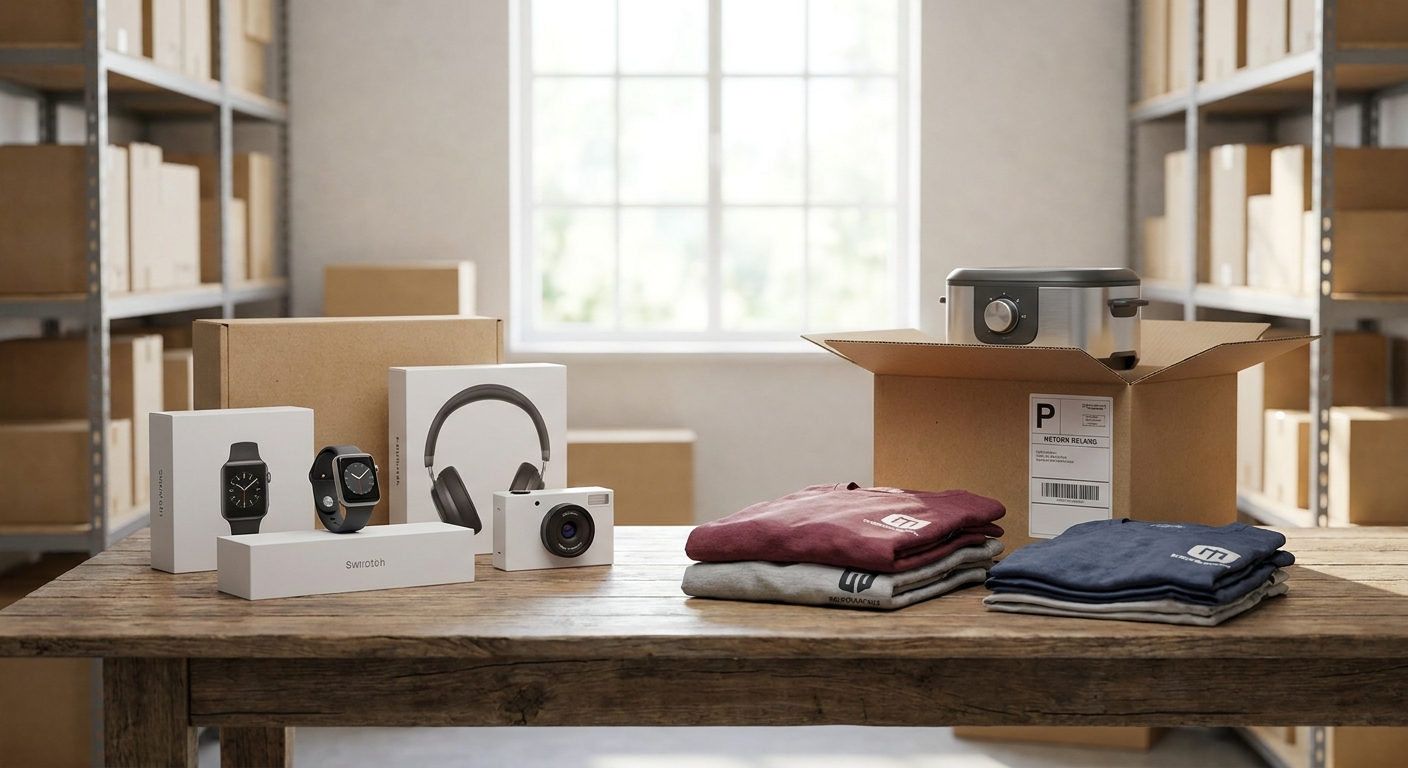
Retailers process billions of dollars in returns every year, and most of that inventory does not go back on the shelf. It gets liquidated, and the most profitable items retailers return are the ones an independent reseller can pick up cheap and flip fast in 2026.
TL;DR
Retailers return oversized items at high rates because customers order sight-unseen and change their minds once the piece arrives. Furniture, mattresses, and fitness equipment are too expensive to restock, inspect, and repackage profitably, so retailers route them into liquidation channels at a fraction of retail price.
That gap between what a retailer recovers and what an item is actually worth is where resale profit lives in 2026. The categories below aren't ranked by hype — they're ranked by how consistently they sell, how much margin survives after pickup and cleaning, and how much competition you'll face from other resellers chasing the same pallets.
Each category is scored on three factors: typical resale price relative to acquisition cost, how fast the item moves once listed, and how much labor or space it demands before it's sale-ready. Categories where retailers dump volume but resellers avoid the hassle — bulky, heavy, hard to ship — score highest, because that's where per-unit competition drops and margin holds up. Categories that look profitable on paper but flood every local marketplace, like small electronics, score lower even when unit economics look fine.
Mattress returns are one of the most consistent categories flowing out of premium retailers in 2026, driven by trial periods that let shoppers return a mattress after 30, 60, or even 100 nights of use. A queen mattress that retailed at $900-$1,400 typically resells locally for $150-$400 depending on brand and condition, and demand rarely dries up because every new renter and every new apartment needs one.
The catch is sanitation. Buyers expect a cleaned, stain-free mattress, and skipping that step tanks your listing response rate. Verdict: Buy — steady volume, low seasonality, and a buyer pool that never disappears.
Fitness equipment returns spiked hard after the 2021-2022 home-gym boom and retailers are still working through that backlog into 2026. A treadmill that retailed at $1,000-$2,500 commonly resells for $300-$900 once cleaned and tested, and most competitors avoid the category because moving a 200-pound treadmill without a truck or two extra hands is a real barrier.
That barrier is exactly why margin holds. Test the belt, check the incline motor, and confirm the console powers on before you commit — a full guide to reselling a used treadmill for profit walks through the inspection checklist. Verdict: Buy.
Sofas and sectionals carry some of the fattest dollar margins on this list — a $1,800 sectional can move for $500-$800 locally — but they eat storage space fast and take longer to sell than smaller furniture. Fabric condition and pet-odor issues are the two things that kill a listing, so inspect cushions and frames before you buy the pickup.
Verdict: Consider if you have covered storage; otherwise the holding cost erodes the margin.
Dressers and nightstands are the fastest-moving category on this list because they're small enough to transport in a minivan, cheap enough to buy in bulk, and easy to refresh with a $20 can of paint or new hardware. A dresser that retailed at $400-$700 typically flips for $100-$250 within a week of listing.
A step-by-step breakdown on how to flip dressers and nightstands for profit covers which cosmetic fixes are worth the time and which aren't. Verdict: Buy — low risk, fast turnover, minimal cash tied up.
Washers, dryers, refrigerators, and ranges get returned constantly for scratches, wrong dimensions, or a buyer who simply changed their mind about color. These units retail at $600-$2,000 and resell for $200-$800 once function-tested, and demand from renters and landlords stays constant year-round in 2026.
The guide to the best used appliances to flip for profit breaks down which models hold value best. Verdict: Buy — high dollar margin, and buyers rarely negotiate hard on a working appliance.
Outdoor sets returned after a failed backyard project retail at $500-$1,500 and resell for $150-$400, but demand crashes outside of spring and summer. This category rewards timing more than skill — buy in the off-season, sell as soon as temperatures turn.
Verdict: Hold unless you're buying in late winter for a spring sale window.
Air fryers, stand mixers, and small electronics get returned in high volume, but resale margins are thin — $40-$100 items resell for $15-$40 — and every casual seller in your area is already listing the same items. This category works as a bundle-in with a bigger pickup, not as a standalone business.
Verdict: Hold as a supplement, Skip if it's your only category.
Turn returns into local resale income
Sharetown connects reps with retailer pickups near them.
Mattresses
Treadmills / fitness equipment
Sofas / sectionals
Dressers / nightstands
Major appliances
Patio furniture
Small kitchen electronics
What are the most profitable items retailers return in 2026?
Mattresses, treadmills and fitness equipment, and major appliances top the list in 2026 because they resell for $150-$900 locally while facing less reseller competition than small electronics.
Are mattress returns actually resellable?
Yes, once cleaned and sanitized. A queen mattress that retailed at $900-$1,400 commonly resells for $150-$400, and demand stays steady because renters and new movers always need one.
Is flipping treadmills worth the effort?
Yes if you can transport one. A treadmill retailing at $1,000-$2,500 resells for $300-$900, and the 200-pound weight keeps most casual sellers out of the category, which protects your margin.
How much can you make reselling appliance returns?
Function-tested major appliances typically resell for $200-$800 against a $600-$2,000 retail price, and demand from renters and landlords holds steady through 2026 regardless of season.
What retailer returns should you avoid reselling?
Small kitchen electronics and low-value gadgets carry thin margins of $15-$40 per item and face heavy competition from casual sellers, making them a poor standalone category.
Do patio furniture returns sell year-round?
No. Outdoor sets resell for $150-$400 but demand drops outside spring and summer, so buying in late winter for a spring sale window is the only way to make the category work.
How do you find retailer returns to resell locally?
Independent reps get matched to pickups directly from premium retailers rather than sorting through mixed liquidation pallets, which keeps item condition predictable before you commit a pickup.
What vehicle do you need to resell bulky retailer returns?
A minivan handles dressers and small furniture, but treadmills, sofas, and major appliances need a cargo van or truck bed to move safely and protect resale condition.
The categories that look the least glamorous — mattresses, appliances, dressers — outperform flashy electronics precisely because most resellers skip them for being heavy or unsanitary. In 2026, that avoidance is the whole opportunity: less competition on the exact items with the most reliable local demand.