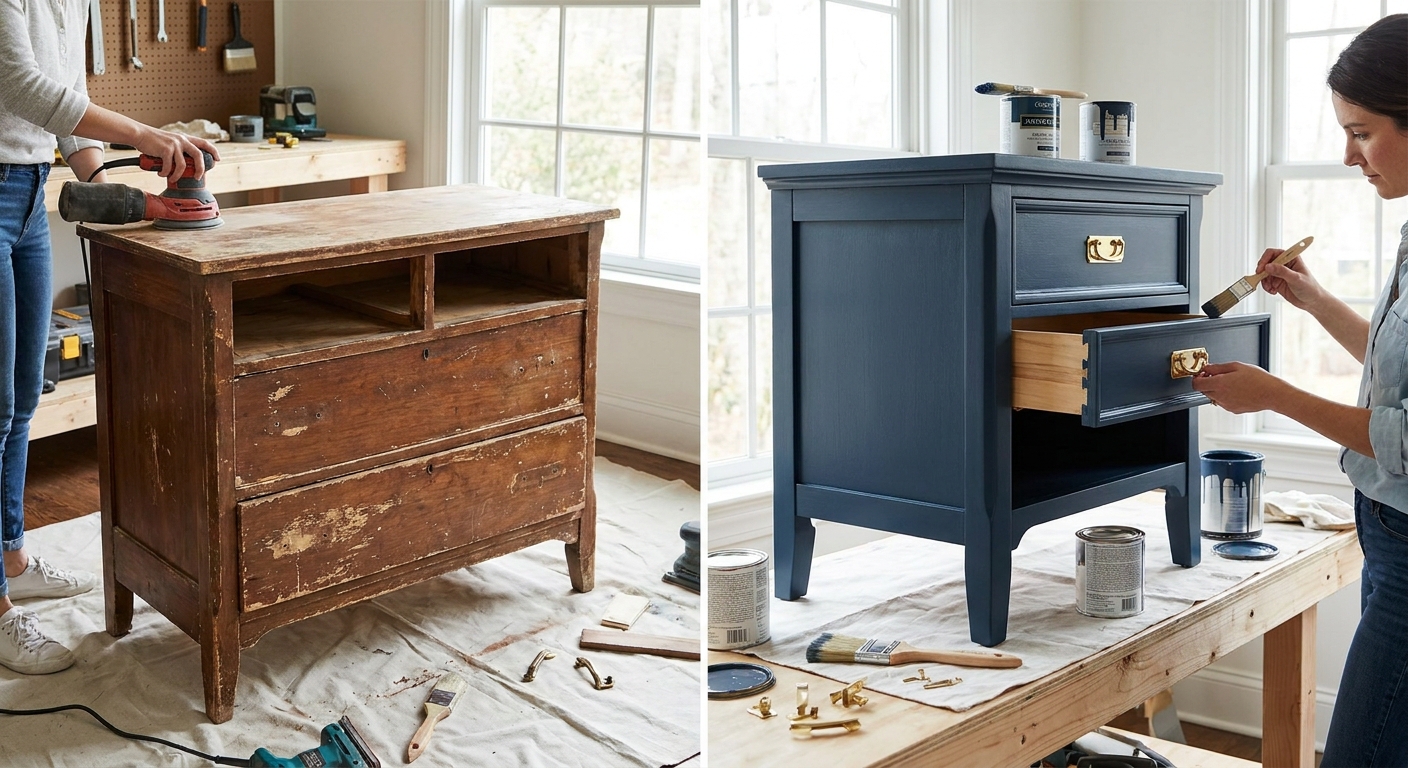
Furniture flipping turns curbside dressers and clearance-rack nightstands into steady cash, and dressers specifically hold their resale value better than almost any other secondhand category because buyers need storage year-round. This guide walks through sourcing, repairing, pricing, and selling so your first flip doesn't eat your profit.
TL;DR
Dressers and nightstands sell fast because everyone needs somewhere to put clothes and a lamp. Unlike electronics, they don't go obsolete, and unlike sofas, most buyers can move them without a moving crew.
The catch: bulky items eat margin if you don't control sourcing cost and transport. A $20 dresser that costs $60 to haul and store isn't a $20 dresser anymore. Finding the right pieces near you before you ever touch a paintbrush is what separates a profitable flip from a garage full of regret.
In 2026, secondhand furniture demand is holding up even as new furniture prices climb, which means well-restored dressers hold their asking price longer than they did a few years back.
Solid wood dressers hold repairs and refinishing far better than particleboard or laminate pieces, and they resell for two to three times more in 2026. Check drawer boxes for dovetail joints — that's the fastest tell for solid construction versus a big-box veneer piece.
Skip anything with swollen particleboard bottoms or water-damaged veneer that's already peeling. Common mistake: buying based on style alone and ignoring the drawer glides, which are expensive to replace and often signal a bigger repair job underneath.
Open every drawer, check for square corners (a racked frame means structural damage), and smell for mustiness that signals mold or long storage in damp conditions. A wobble in the frame usually means a loose joint you can fix with wood glue and clamps — a wobble plus cracked wood usually means walk away.
Expected outcome: a five-minute inspection tells you whether you're looking at a $20 flip or a $20 mistake.
Most sellers list dressers 20-30% above what they'll actually accept, especially on marketplace apps where haggling is expected. Come with cash, point to specific flaws (scuffed top, missing knob, sticky drawer), and negotiate the price before you commit to hauling it.
Common mistake: agreeing to a price over text, then trying to renegotiate in person. Sellers remember that, and it kills future deals with the same person or group.
Degrease every surface first — old furniture wax and grime keep new finishes from bonding. Tighten hinges, replace stripped screws, and fill gouges with wood filler, letting it cure fully (usually 24 hours) before sanding flush.
If the drawer slides stick, a light coat of paste wax on the wood runners often fixes it without buying new hardware. Skipping this step is the single most common reason a flip photographs great but gets return complaints.
Sand with 120 grit to remove the old finish, then 220 grit to smooth before stain or paint. Two-tone finishes — painted body, stained top — are outselling single-color pieces in most local markets through 2026 because they photograph better online.
Expected outcome: a properly sanded and sealed piece should hold its finish for years, not months, which matters for word-of-mouth repeat buyers.
Search sold listings (not active ones) for the same style and size within 15 miles. Price 10-15% above your target to leave room for the haggle you'll get anyway.
Common mistake: pricing based on how many hours you put in. Buyers don't pay for your time — they pay for what the piece looks like and what similar ones sold for.
Shoot in natural light, open every drawer in at least one photo, and include a close-up of any hardware. Cross-post to Facebook Marketplace and a local buy/sell group simultaneously — bulky items move faster with more eyes, not more platforms.
Expected outcome: a well-photographed dresser in a decent local market typically gets its first serious inquiry within 48-72 hours.
Log purchase price, materials cost, and sale price for every piece. This tells you which styles and price points actually make money instead of guessing. Realistic part-time income from flipping comes from repeating what worked, not chasing every deal you see.
Skip the sourcing hunt entirely
Sharetown reps pick up returned furniture from retailers before it's listed anywhere else.
Once dressers are profitable, most flippers add nightstands as a matching add-on sale, then expand into other bulky categories. Starting flipping as a complete beginner walks through building that pipeline without overextending your storage space or budget in 2026.
How much profit can you make flipping dressers?
Most flippers net $50-$150 per dresser after materials and time, with well-restored solid wood pieces reaching $200-$300 in 2026. Profit depends heavily on how low you buy and how fast you sell.
What's the best way to find dressers to flip?
Facebook Marketplace free and cheap listings, estate sales, and retailer return pallets are the three most reliable sources in 2026. Checking listings daily beats waiting for the perfect find to come to you.
Is flipping nightstands as profitable as dressers?
Nightstands sell for less individually but move faster and often sell in matched pairs for a combined premium. A matched nightstand pair can add $40-$80 to a bundled sale with a dresser.
How much does it cost to refinish a dresser?
Materials typically run $15-$40 per piece for sandpaper, stain or paint, and hardware in 2026. Costs rise if you replace drawer slides or hardware, which can add $10-$20 per drawer.
Do you need woodworking experience to flip furniture?
No — most dresser flips only require sanding, gluing loose joints, and applying a finish, all learnable from a single afternoon of practice. Structural repairs like broken frames are the only jobs that call for real woodworking skill.
How long does it take to sell a flipped dresser?
Well-priced, well-photographed dressers typically sell within 3-10 days on local marketplace apps in 2026. Pieces priced above local comps can sit for a month or longer.
Should you paint or stain a dresser for resale?
Painted dressers with a stained top currently outsell single-finish pieces in most local markets because the two-tone look photographs better online. Solid wood pieces with attractive grain are often worth staining instead to show off the wood.
Can flipping dressers become a full side income?
Yes — flippers who source consistently and track cost-per-piece often turn dresser and nightstand flips into a repeatable weekly income stream. Scaling further usually means adding storage space and a second sourcing channel.
The dressers that sit unsold longest aren't the ugly ones — they're the ones priced 20% above local comps because the seller remembers what they paid plus labor. Buyers only care what it's worth today, in your market, in 2026.