A mattress that still smells like someone else's sleep won't sell no matter how good the coils are underneath — cleaning it right, before a single photo gets taken, is what turns a free retailer return into cash in 2026.
TL;DR
Buyers scroll past listing photos in seconds. A mattress with visible stains or a musty smell in the description reads as a health risk, not a bargain, and it sits unsold while newer listings jump the queue. Reps who move retailer returns for a living know the mattresses that sell fastest in 2026 are the ones where the seller can honestly write "deep cleaned and sanitized" and mean it.
This isn't a cosmetic step. Sweat, dust mites, and body oil sit in the top layer of any used mattress, returned or not. Cleaning it properly protects the next buyer and protects your margin — a mattress that gets returned again because it smells is money you don't get back. If you're picking up returns and reselling locally, become a Sharetown Rep and this cleaning routine is the difference between a two-day sale and a two-week one.
Pull off any sheets, protectors, or plastic wrap and check every panel under good light. This is where you decide if the mattress is even worth cleaning — deep mold, torn ticking exposing coils, or a broken frame means it's a recycle candidate, not a resale one. Common mistake: inspecting only the top panel and missing side seam damage that kills the sale later.
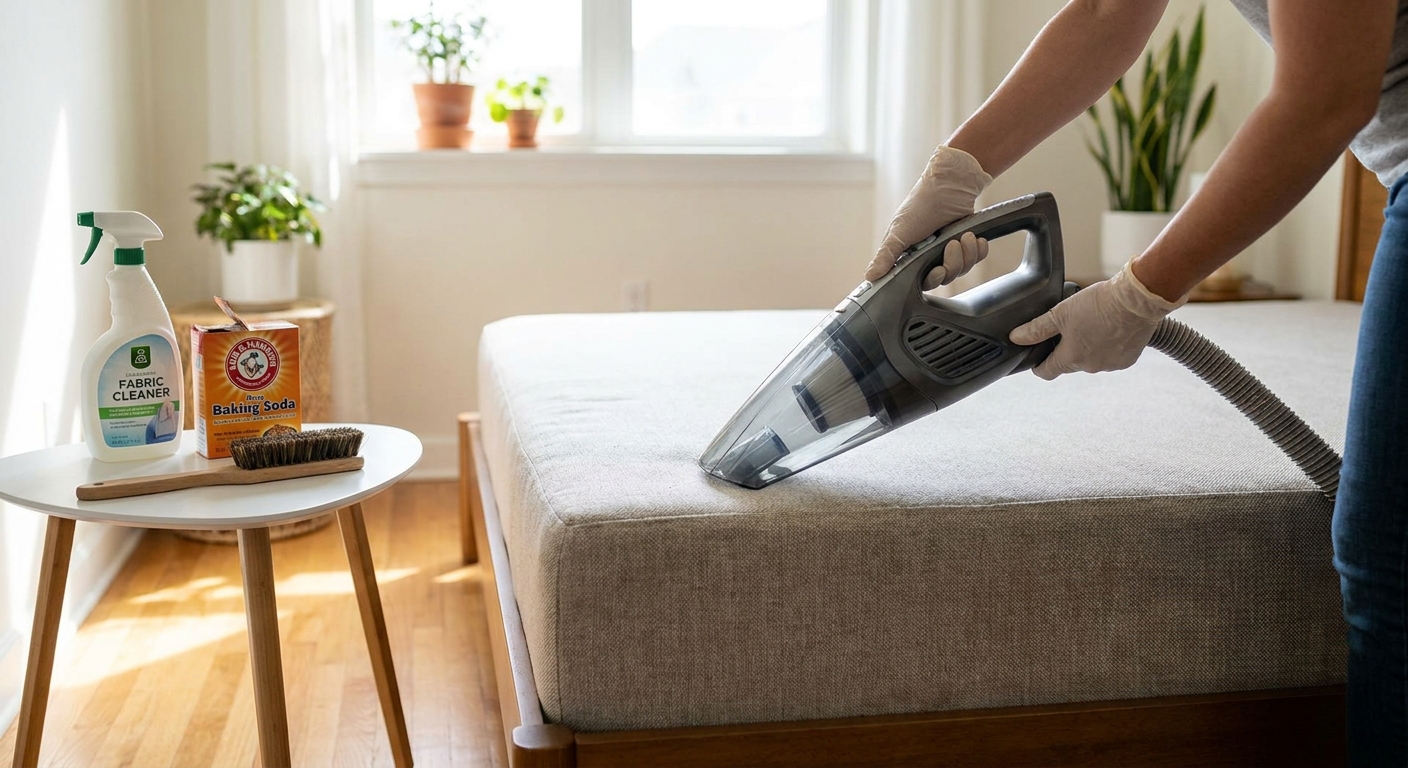
Run the upholstery attachment over the top, sides, and bottom in slow, overlapping passes — this pulls loose dust, hair, and dead skin cells out of the fabric before you introduce any liquid. Do this for a full 5-10 minutes per side; rushing it means you're rubbing dirt deeper into the fibers in the next step. Common mistake: skipping the bottom panel because "nobody sees it," which leaves dust mites intact.
Mix one part hydrogen peroxide, a few drops of dish soap, and a tablespoon of baking soda, or use a store-bought enzyme cleaner built for organic stains. Dab, don't soak — blot with a microfiber cloth working from the outside of the stain inward so you're not spreading it. Let it sit 10-15 minutes before blotting dry. Common mistake: pouring liquid directly onto the mattress, which oversaturates the foam and adds hours to drying.
Sprinkle an even layer of baking soda across the entire top surface and let it sit for at least 2 hours — longer if the odor is strong, up to 8 hours works fine. Baking soda pulls moisture and neutralizes odor at the source instead of masking it. Common mistake: vacuuming it up after 20 minutes, which isn't enough dwell time to do anything.
Focus a light spray of your enzyme cleaner or a diluted rubbing alcohol solution on the areas that see the most contact: center, edges near the headboard, and any zippered cover seams. Wipe with a clean microfiber cloth immediately after. Common mistake: using bleach on memory foam or hybrid tops — it discolors the fabric and can weaken foam structure.
Go over the entire surface again with the vacuum to lift the baking soda along with whatever odor and moisture it absorbed. You should see a visible color change on lighter fabrics where the residue lifts. Common mistake: leaving baking soda residue in the seams, which shows up in close-up listing photos.
Prop the mattress on its side or set up a fan pointed directly at the surface for at least 8 hours, up to 24 hours in humid climates or after a heavier stain treatment. A mattress needs to be bone dry before it goes into a plastic mattress bag for transport or storage — trapped moisture in a sealed bag is how mold shows up two days later. Common mistake: bagging a mattress that feels dry to the touch on top but is still damp 2 inches into the foam.
Turn Cleanup Skills Into Cash
Pick up, clean, and resell returned mattresses locally as a Sharetown Rep.
Odor is still there after the baking soda pass. Repeat the treatment with a longer dwell time — 8 hours instead of 2 — and check for a source stain you missed on the underside panel.
Yellow stains won't lift. Sweat and oil stains oxidize over time and set into fabric. A second peroxide-and-soap pass usually lightens them; complete removal on an older stain isn't always possible, and that's worth noting honestly in your listing.
You find mold after pulling back the cover. Stop the cleaning process. Mold in the foam layer isn't a surface fix — that mattress should go to recycling, not resale.
Still damp after 24 hours. You oversaturated a section during stain treatment. Move it to a drier room, increase airflow, and add another 12 hours before bagging — never rush this part.
Cleaning multiple mattresses at once. Stagger your baking soda dwell times so you're vacuuming one while another sits, and always let each fully dry on its own — stacking damp mattresses spreads moisture between them.
Once the mattress is clean and fully dry, pricing is the next lever that decides how fast it moves. Check how to start a resale business from your garage for the full setup if you're building this into a repeatable operation rather than a one-off flip.
How do you clean a used mattress before selling it?
Vacuum the entire surface, treat stains with a hydrogen peroxide and dish soap mix or an enzyme cleaner, deodorize with baking soda for at least 2 hours, then vacuum again and let it dry 8-24 hours before bagging. Skip bleach and steam on memory foam.
Can you use bleach to clean a mattress?
No, bleach discolors mattress fabric and can weaken foam layers over time. Hydrogen peroxide mixed with dish soap handles most stains without the damage.
How long does a mattress need to dry before storing it?
Plan for 8-24 hours depending on humidity and how much liquid was used during stain treatment. A mattress bagged while still damp inside is how mold shows up days later.
What removes odor from a used mattress fastest?
A full baking soda pass left to sit for at least 2 hours, then vacuumed off, neutralizes most odor at the source. Longer dwell times of 6-8 hours work better on stronger smells.
Is it safe to resell a used mattress with stains?
Yes, as long as stains are treated and disclosed honestly in the listing. Buyers accept minor set-in discoloration on a heavily discounted mattress when the listing is upfront about it.
How much does it cost to clean a mattress for resale?
Supplies run under $20 per mattress in 2026 for baking soda, an enzyme cleaner or peroxide, and cloths. A vacuum and fan are typically already on hand.
Do you need a steam cleaner to clean a used mattress?
No, and it's not recommended on memory foam or hybrid tops since heat can break down the foam structure. Cold-water treatments with peroxide or enzyme cleaner work better and dry faster.
What mattresses should you skip reselling entirely?
Any mattress with visible mold in the foam layer, broken coils poking through the fabric, or bed bug evidence should go to recycling instead of resale in 2026, regardless of how clean the surface looks.
Most sellers treat stains and skip the drying step's real time cost — that's the single biggest reason cleaned mattresses come back with a mold complaint. Give it the full 24 hours in a humid room even when it feels dry on top; the extra day costs you nothing and saves the sale.