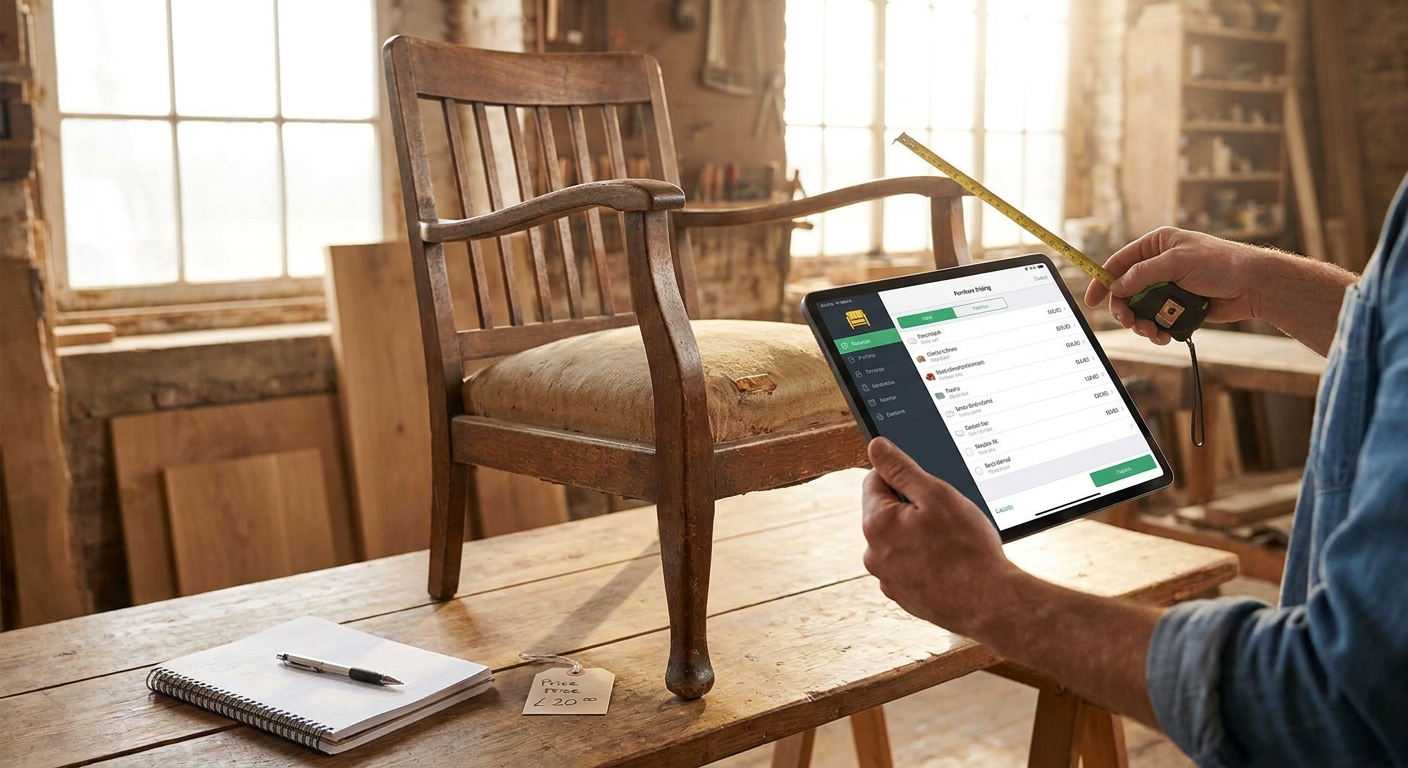
Pricing used furniture wrong either kills your sale speed or your profit margin — there's rarely a middle ground. This guide breaks down the comp-checking math and depreciation logic that resale flippers use to price furniture correctly in 2026, whether you're clearing a garage or running pickups as a side hustle.
TL;DR
Most people price furniture off a gut feeling, then wonder why it sits for six weeks or sells in four hours for way less than it should have. Neither outcome is random — it's a pricing mistake. A dresser priced 20% over local comps can sit for three weeks; the same piece priced right often moves in four to five days. That gap in speed is exactly why comp research beats guessing every time (see the full breakdown on flipping dressers and nightstands for a worked example).
Furniture resale margin lives or dies on the first number you post. Price too high and you train buyers to lowball you. Price too low and you leave money on the table you'll never get back. In 2026, with more retailers routing bulky returns into local resale channels, the volume of used furniture hitting Marketplace and OfferUp is higher than it was even two years ago — which means comps are easier to find but competition for buyer attention is tighter too.
A vague listing gets vague offers. Look for a manufacturer tag, model number, or stamped logo on the underside of drawers or the back panel of a sofa frame. Solid wood, leather, and named brands hold 10-20% more resale value than laminate, polyester, or unbranded pieces in the same category. Common mistake: skipping this step and pricing a $900 West Elm sofa the same as a $400 big-box equivalent.
Search the exact model name plus "used" or "local pickup only" and note the asking price on three active listings within 25 miles. Active listings, not sold ones — sold data is often hidden on these platforms, so active asking prices are your best proxy. Common mistake: comparing your item to a brand-new retail listing instead of a resale one.
Furniture under 2 years old in solid condition typically resells at 40-60% of its original retail price in 2026. Pieces 2-5 years old drop to 25-40%, and anything past 5 years — unless it's a recognized vintage or solid-wood brand — usually lands under 25%. A $600 dresser at 18 months old should land in the $240-$360 range before condition adjustments. Common mistake: applying the same depreciation rate to a $150 particleboard nightstand as a $1,200 hardwood bedroom set.
Buyers discount for flaws whether you disclose them or not — the only question is whether they discount before or after showing up. Deduct 10-15% for visible wear like scuffs or fading, 20-30% for structural issues like a wobbly leg or torn upholstery, and don't list at all if there's mold, odor, or broken joinery you can't fix cheaply. Common mistake: photographing only the good angle and hoping nobody notices the stain on the cushion.
Gas, cleaning supplies, and your own time all eat into margin if you don't account for them upfront. If a pickup costs you $20 in fuel and 30 minutes of cleaning, that's a real cost against your final sale price — treat it like one. Common mistake: calculating "profit" off the sale price alone and ignoring what it cost you to get the piece resale-ready.
Decide your walk-away number before a single message comes in, not while you're mid-negotiation with someone offering half your asking price. If your comps and depreciation math put fair value at $280, a reasonable floor sits around $220-$240 — enough to cover costs and still profit. Common mistake: caving to the first lowball offer because the listing has been up for a week.
List 5-10% above your comp-based target to leave room for negotiation, then commit to a markdown schedule: 10% down every 7-10 days if you get zero serious inquiries. A $300 listing with no bites after 10 days should drop to $270; another 10 days with no movement takes it to $243. Common mistake: leaving a stale price up for a month and wondering why views dried up — Marketplace and OfferUp algorithms both deprioritize old, unedited listings.
Turn furniture pickups into steady income
Pick up returned furniture from retailers and resell it locally with Sharetown.
Pricing is one skill in a bigger system — sourcing, cleaning, listing, and negotiating all feed into whether a flip is actually profitable. If you're still building that full process, start with the fundamentals of the business model itself before you scale up volume.
What's the best way to price used furniture for a fast sale?
Price at 40-60% of original retail for pieces under 2 years old, adjusted down for condition. Listing 5-10% above that target and taking offers usually sells faster than a firm, underpriced number.
How much should I discount a used furniture item from retail price?
Deduct roughly 40-60% for items under 2 years old, 60-75% for items 2-5 years old, and 75% or more for anything older without a strong brand. Condition issues stack on top of that base discount.
Is it better to price high and negotiate or price low and firm?
Pricing 5-10% above your comp target and allowing room to negotiate generally outperforms a firm low price, since buyers on resale platforms expect to haggle. A firm price only works when it's already at or below comps.
How do I price furniture with no brand name or model number?
Price off material and construction quality instead. Solid wood and metal-frame pieces hold value closer to the 25-40% depreciation band regardless of brand, while laminate or particleboard pieces fall under 25% quickly.
What condition issues justify a bigger price cut?
Structural problems like a wobbly frame, broken drawer glides, or torn upholstery justify a 20-30% cut. Cosmetic wear like scuffs or fading only justifies 10-15%.
How long should I wait before lowering an unsold listing's price?
Wait 7-10 days with no serious inquiries before cutting the price by 10%. Listings older than 2-3 weeks with no edits also lose visibility in Marketplace and OfferUp search ranking.
Should shipping or delivery costs be added to the resale price?
Local pickup furniture sales rarely include delivery in the price — buyers arrange their own transport. If you offer delivery, add $20-$50 depending on distance rather than folding it into the item price.
How much profit can I realistically make reselling used furniture in 2026?
Profit depends on acquisition cost, but flippers pricing correctly and covering gas and cleaning costs typically net 20-40% of the resale price per item. Pieces acquired for free or near-free through returns or clearance push that margin higher.
The single fastest way to kill a good price is a round number. $200 reads like a starting offer buyers expect to talk down; $185 reads like you already did the math and landed somewhere specific — buyers negotiate less against a number that looks calculated. It costs nothing to test, and it's the smallest change with the most consistent effect on how fast an item moves in 2026.