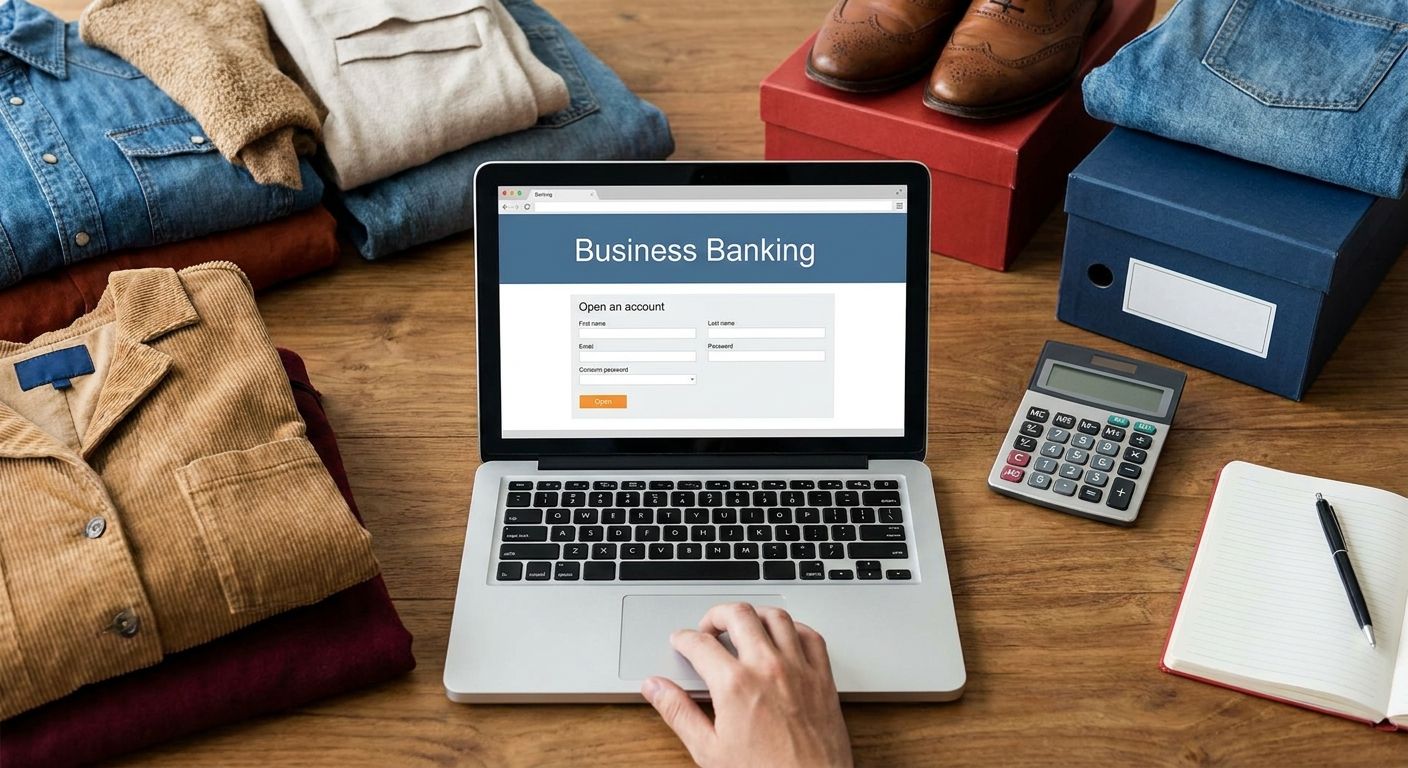
Reselling returned furniture, mattresses, and fitness gear turns into real income fast, and the day you cash a check bigger than $600 from a marketplace payout, the IRS wants that money tracked through a business account, not your personal checking. This guide walks through opening a business bank account for a resale side hustle in 2026, step by step, with the paperwork order that actually works.
TL;DR
Mixing resale income with your personal checking account is the fastest way to lose track of profit and trigger a messy tax season. Once you're flipping mattresses, dressers, or treadmills regularly, payment apps and marketplaces start issuing 1099-Ks, and the federal reporting threshold for 2026 is $600 — a number that used to sit at $20,000 a few years ago. A dedicated business account separates what you spent buying inventory from what you actually earned, which is the entire foundation for tracking taxes on a furniture resale side hustle correctly.
Banks also treat business accounts differently than personal ones — business debit cards, higher transaction limits, and bookkeeping app integrations that save hours every month. If you're running this alongside pickups as a Sharetown rep, a business account is what turns a hobby into something that functions like a real operation in 2026.
This decision determines every form you fill out next, so don't skip it. Most solo resellers start as a sole proprietorship because it requires no state filing, while anyone planning to scale or wanting liability protection files for an LLC. A sole proprietorship lets you open a business account under a DBA using your Social Security number; an LLC requires an EIN. Common mistake: registering an LLC and forgetting the state also requires an annual report or renewal fee.
An Employer Identification Number is what most banks ask for instead of your SSN, and it keeps your personal tax identity separate from the business. Apply directly at IRS.gov — the online application is free and issues the number immediately. Common mistake: paying a third-party website for something the IRS hands out at no cost in under 15 minutes.
If you're not forming an LLC, you still need a "doing business as" registration so the account can operate under a business name instead of only your personal name. DBA filing typically costs $10 to $100 depending on your state and county. Common mistake: assuming a DBA gives you liability protection — it doesn't, it's a name registration only.
Not every bank wants a side hustle account, and some charge monthly fees that eat resale margins fast. Look for no minimum balance requirement, free electronic transfers, and mobile deposit, since most resale payouts arrive through Venmo, PayPal, or marketplace platforms. Common mistake: choosing a premium business tier when basic free checking covers everything a reseller needs in 2026.
Bring your ID, EIN or SSN, DBA certificate or Articles of Organization, and your opening deposit — banks want all of it in one visit or one online session. Online applications for sole proprietors often approve same-day; LLC applications can take a few extra business days for document review. Common mistake: showing up without the DBA certificate, since a bank can't verify a business name that isn't registered anywhere.
Link the new account to every payment app and marketplace you sell through so payouts land in the business account instead of routing through your personal one. Set up a simple bookkeeping habit at the same time. Knowing how to calculate profit margin on a furniture flip gets far easier once every dollar in and out lives in one place.
The account only works as a tracking tool if you actually route income through it and pay for inventory, gas, and supplies out of it. Transfer profit to yourself on a schedule — weekly or monthly — rather than pulling cash ad hoc. Common mistake: treating it like a spare savings account and losing the clean paper trail that makes tax season simple.
Turn resale pickups into steady income
Pick up returns, resell locally, get paid. See how Sharetown reps earn.
Once the account is open, the next lever on profit is what you buy and how fast you move it. Read how to start a resale business from your garage for the setup that pairs with a clean business account from day one.
Do I need an LLC to open a business bank account for reselling?
No, a sole proprietorship with a DBA is enough to open most business bank accounts in 2026. An LLC adds liability protection but isn't required just to separate business and personal money.
How much does it cost to open a business bank account?
Most banks require an opening deposit of $25 to $100, and many waive monthly fees once you hit a minimum balance or transaction count. The EIN itself is free through the IRS.
Can I use my personal bank account for a resale side hustle?
You can, but it makes tax reporting harder once payment apps issue a 1099-K, since the 2026 federal threshold is $600. A separate account keeps inventory costs and profit clearly split.
How long does it take to open a business bank account?
Sole proprietors with a DBA are often approved the same day online. LLC applications can take a few extra business days while the bank verifies formation documents.
Is a business bank account better than a personal account for taxes?
Yes, because every deposit and expense lives in one place, making it far easier to calculate real profit instead of guessing at year-end. It also creates a paper trail if the IRS asks questions.
What documents do I need to open a business account?
You need a photo ID, your EIN or SSN, your DBA certificate or LLC Articles of Organization, and an opening deposit. Some banks also ask for a business address.
Does PayPal or Venmo count as a business bank account?
No, payment apps are transfer tools, not banking accounts, and they still report income to the IRS once you cross the reporting threshold. Route those payouts into an actual business checking account.
Can I open a business bank account without a registered business name?
Most banks require either a DBA filing or an LLC name on record before opening the account. Applying without either usually means getting turned away.
The 1099-K threshold at $600 for 2026 means far more casual resellers get a tax form this year than did two years ago. The form reports gross payouts, not profit — so without a business account showing what you paid for inventory, the IRS sees your full sales total as income. That gap is the single most expensive mistake a new reseller makes in 2026.