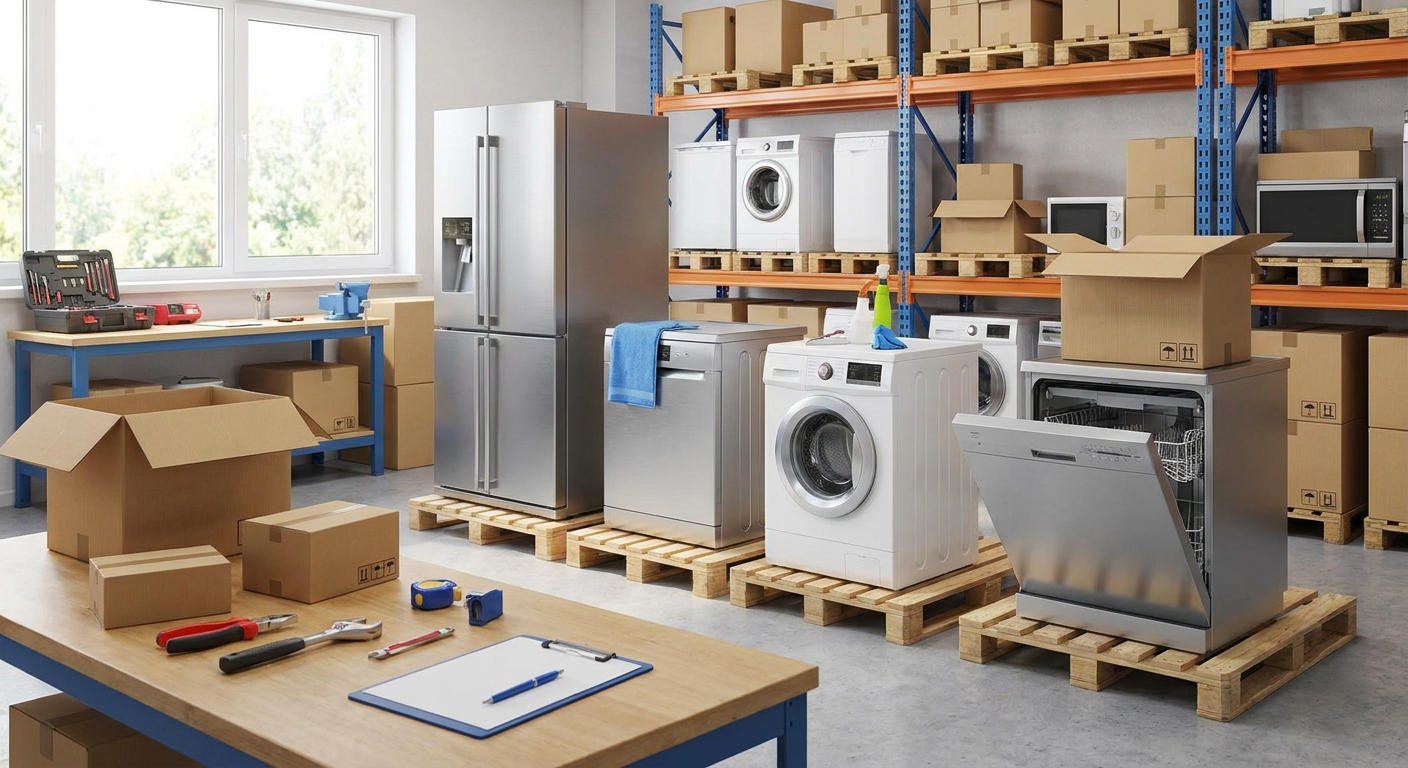
Retailers process a steady stream of open-box and returned appliances every year, and reselling those units locally is one of the more dependable flips you can run in 2026 if you inspect before you buy and price against real comps instead of the sticker on the box.
TL;DR
Washers, dryers, refrigerators, and microwaves make up a steady share of retail returns because delivery damage, size mismatches, and simple buyer's remorse are common with anything bulky. Retailers don't want that inventory sitting on a sales floor, so open-box units get marked down fast and moved out.
That markdown is the opportunity. Reps working with Sharetown pick up returned mattresses, furniture, fitness equipment, and other bulky goods directly from premium retailers, and appliances follow the same math: acquire below wholesale, resell near retail, keep the spread. The skill isn't finding appliances — it's knowing which ones are worth touching in 2026.
If you're brand new to flipping and appliances feel like a big first swing, start smaller and build the habit with beginner-friendly reselling ideas before you scale into bulkier categories.
Blind Craigslist and Facebook Marketplace searches waste hours for every appliance that's actually worth flipping. A dedicated pickup channel puts returned units — often still in original packaging — directly in front of you, which is faster than combing listings for profitable items to resell near you. Common mistake: buying sight-unseen off a photo alone. Always see the unit before money changes hands.
Plug in every appliance and run it for at least 5 minutes on its main cycle before you agree to buy. A refrigerator should hit a cold interior within 20-30 minutes; a washer should complete a short cycle without leaking. Common mistake: assuming a sealed box means untested. Open-box doesn't mean working — it means returned.
Use a simple A/B/C scale: A is no visible marks, B is minor scuffs or a dent under 2 inches, C is noticeable cosmetic damage that needs disclosure. Grade before you price, not after. Common mistake: grading generously to justify a higher asking price — buyers will grade it themselves in the comments.
Shoot at least 8 photos: front, back, both sides, door or lid open, the model and serial plate, and a close-up of any damage. Clean units photograph — and sell — faster than dusty ones sitting in a garage corner. Common mistake: one blurry hero photo and nothing else. Buyers scroll past listings with thin photo sets.
Pull three active or recently sold local listings for the same model or a close equivalent, then price within 10% of the middle comp. If you need to talk a seller down on your own buy side first, the same logic from negotiating secondhand purchase prices applies directly to appliances. Common mistake: anchoring to retail MSRP instead of what similar open-box units are actually closing at in 2026.
State the model number, the condition grade, and why it was returned (size mismatch, cosmetic damage, buyer changed their mind) in the first two lines. Transparency here cuts down on no-show pickups later. Common mistake: burying the condition details at the bottom where nobody reads them.
Give a fair listing 24 hours before you drop the number — early lowball offers are common and most aren't serious. Common mistake: caving to the first offer within an hour just to close the deal.
Want returns brought to you?
Sharetown reps pick up returned appliances and bulky goods ready to resell.
Once appliances are running smoothly, most resellers branch into adjacent bulky categories — treadmills, furniture, and fitness gear all follow the same inspect-clean-price loop. The margin math only gets better once you're sourcing multiple categories through the same pickup channel instead of restarting the search every time.
Is it legal to resell open-box and returned appliances?
Yes, reselling open-box and returned appliances is legal as long as you own the unit outright and disclose known defects to buyers. Retailers sell returned inventory through liquidation and pickup channels specifically so it can be resold.
How much profit can you make reselling open-box appliances?
Profit depends on acquisition cost versus local resale comps, and margins shrink fast once shipping or long-distance transport gets involved. Local pickup and resale keeps more of that spread in your pocket.
What's the best way to test an appliance before buying it to resell?
Plug it in and run a full short cycle — 5 minutes minimum — before money changes hands. A refrigerator should show cold air within 20-30 minutes of being plugged in.
Should you buy an open-box appliance with no manual or accessories?
Only if the missing parts are cheap and easy to replace, and only after deducting that cost from your offer. Missing control panels or compressor parts are a different story and usually a Skip.
How do you price a returned appliance for resale?
Pull three live local comps for the same or a similar model and price within 10% of the middle one. Original retail MSRP is not a useful reference point for open-box pricing in 2026.
Where should you sell resold appliances locally?
Local marketplaces built for pickup, not shipping, work best for appliances because freight costs erase the margin on anything over 50 pounds. List on 2-3 platforms at once for faster turnaround.
What appliances are the worst to resell?
Units with compressor failure, cracked control boards, or missing major components are usually a Skip because parts cost more than the resale value recovers. Cosmetic damage alone is rarely a dealbreaker.
The fastest-selling appliances in 2026 aren't the cheapest ones — they're the ones with the clearest return reason stated up front. A listing that says exactly why a washer came back builds more trust in ten seconds than five extra photos ever will.