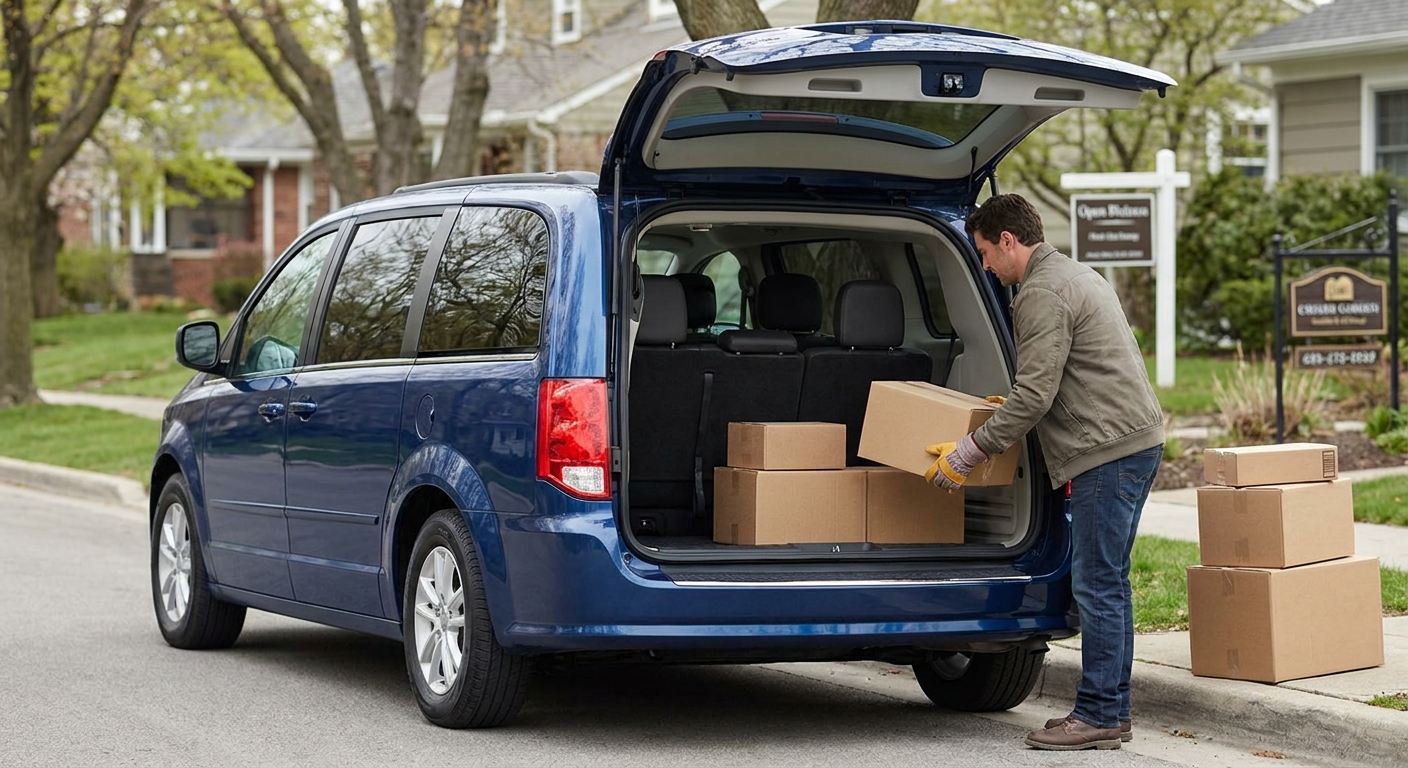
A minivan isn't just a family hauler in 2026 — it's rolling cargo space that pays for itself once you put it to work. This guide breaks down who should try it, what separates a real income stream from a gas-money gig, and where a minivan actually beats a truck or SUV.
TL;DR
Gas prices and gig-app payouts move every quarter, but cargo space doesn't depreciate the same way. A minivan with the rear seats folded holds a queen mattress flat, a treadmill, or three dining chairs — none of which fit in a sedan and most of which don't fit in a compact SUV either.
That's the whole opportunity. Retailers and households generate a steady stream of oversized items — mattresses, furniture, fitness equipment — that need to move locally, and most gig platforms are built for small packages, not bulky goods. A minivan fills that gap. If you already own one, 2026 is a reasonable year to stop treating it as a sunk cost and start treating it as equipment.
This is for minivan owners who want a flexible, local income stream without committing to a second job — parents working around school pickup, retirees with daytime availability, or anyone already driving a minivan for family reasons who wants the vehicle to earn its keep. It's not for someone chasing full-time delivery-app income; minivans win on cargo capacity, not on mileage payouts.
If you're still deciding what kind of side income fits your schedule, the best side hustle jobs you can start this week breaks down options beyond hauling, including ones that need zero vehicle at all.
Most minivans hold somewhere around 140 cubic feet of cargo space with the second and third rows folded flat — enough for a king mattress, a sectional cushion set, or a full treadmill deck. That single spec determines whether you can take bulky-item jobs at all, so measure your actual folded cargo length before committing to any hauling work.
A minivan is only valuable where there's demand for moving large items short distances. Check whether your area has active furniture resale, appliance turnover, or retail return volume before assuming the work is there. Rural areas with fewer return centers or resale buyers make this harder to scale.
Combined fuel economy across minivan models ranges roughly from 19 to 28 mpg depending on year and trim. That spread changes your real hourly rate more than almost any other factor, since every hauling or delivery gig eats into margin at the pump.
Personal auto policies typically exclude commercial use, including gig hauling and paid deliveries. Confirm your policy covers business use, or add a rider, before you accept your first paid pickup — this is the most commonly skipped step and the one that causes the most regret.
Hauling and resale work is job-based, not shift-based, so it fits around school runs, existing jobs, or retirement schedules better than app-based delivery that rewards constant availability. If your calendar is unpredictable, prioritize gig types that let you accept or decline jobs individually.
The best minivan setups combine more than one income source — a pickup and resale gig alongside occasional flipping, or delivery work during slow resale weeks. Relying on a single stream leaves you exposed when demand dips in any one category.
Sharetown pickup and resale work — the steady earner. Sharetown connects independent reps with premium retailers that need returned mattresses, furniture, and fitness equipment picked up, cleaned, and resold locally. A minivan's folded cargo space handles most of these categories without a trailer, which is the main reason this work fits minivan owners better than sedan or hatchback drivers. Verdict: Buy for anyone who wants repeat local jobs instead of one-off gigs.
Furniture and equipment flipping — the classic flip. Retail returns and used furniture often sell for 40-60% of original retail price locally, and a minivan lets you pick up and deliver bulky pieces yourself instead of paying for freight. Reselling something like a used treadmill for profit takes research on demand and pricing per model, but the margin per item tends to beat per-mile gig work. Verdict: Buy if you're willing to spend time on listings and pricing.
Weekend or gig-app delivery work — the fill-in-gaps job. Package and grocery delivery apps pay well for minivan owners because of trunk volume, and several platforms pay out same-day or weekly rather than on a standard payroll cycle. It's lower margin per hour than hauling bulky items, but it fills schedule gaps between resale jobs. Verdict: Consider as a supplement, not a primary income source.
Garage and estate sale sourcing for resale — the treasure hunt. Buying underpriced furniture, tools, or fitness gear at garage and estate sales and reselling it locally works well with minivan cargo space, since you can load multiple pieces in one trip. Turning this into a repeatable resale business from your garage takes more setup time than app-based gigs, but it scales better once you know your local pricing. Verdict: Consider for anyone with weekend availability and patience for sourcing.
Rideshare or passenger transport — the mismatch. Minivans can carry more passengers than sedans, but rideshare payouts are built around trip volume, not vehicle size, so the extra seats rarely translate into extra pay. Fuel costs on a minivan eat into rideshare margins faster than they do on a compact sedan. Verdict: Skip unless passenger transport is already your primary plan.
Turn your minivan into a paycheck
Sharetown connects reps with local pickup and resale jobs for bulky retail returns.
Sharetown pickup and resale
Furniture/equipment flipping
Gig-app delivery
Garage/estate sale sourcing
Rideshare/passenger transport
What's the best way to make money with a minivan in 2026?
Local pickup and resale work for bulky items like mattresses and furniture is the best fit in 2026, since it uses cargo space a sedan or SUV can't match. Sharetown reps handle exactly this category for retail returns.
Is a minivan better than an SUV for gig work?
Yes for bulky-item hauling, since a minivan's folded cargo space typically beats a mid-size SUV by a wide margin. An SUV can edge ahead only on rougher terrain or towing needs.
How much can you make flipping furniture with a minivan?
Used furniture and returned equipment often resell locally for 40-60% of original retail price, with margin depending on pickup cost and condition. Treadmills and mattresses tend to hold resale value better than smaller furniture pieces.
Do you need commercial insurance to haul items for pay?
Most personal auto policies exclude paid hauling or delivery work, so you need to confirm coverage or add a business-use rider before accepting paid jobs. Check with your insurer directly since exclusions vary by state and policy.
Can you make money with a minivan without reselling anything?
Yes, gig-app delivery and passenger transport both pay minivan owners without requiring any resale work, though margins run lower than hauling bulky items. These work best as a supplement to resale income, not a replacement.
What items pay best to resell from a minivan?
Mattresses, furniture, and fitness equipment pay best because they require cargo space most other resellers don't have. Smaller items have more competition from sellers using sedans or hatchbacks.
How does Sharetown work for minivan owners?
Sharetown connects independent reps with retailers that need returned bulky items picked up, cleaned, and resold locally, which fits minivan cargo capacity directly. Reps set their own schedule around available pickup jobs.
Is rideshare a good use of a minivan in 2026?
Rideshare pay is based on trip volume rather than vehicle size, so a minivan's lower fuel economy compared to a compact sedan usually cuts into margin without a matching payout increase. It's a weaker fit than resale or hauling work.
The detail most minivan owners miss in 2026 isn't the vehicle — it's the folded cargo length. A minivan that holds 140 cubic feet on paper still might not fit a king mattress diagonally if the folded floor is a few inches short, so measure before you commit to a hauling job that assumes you can take it.