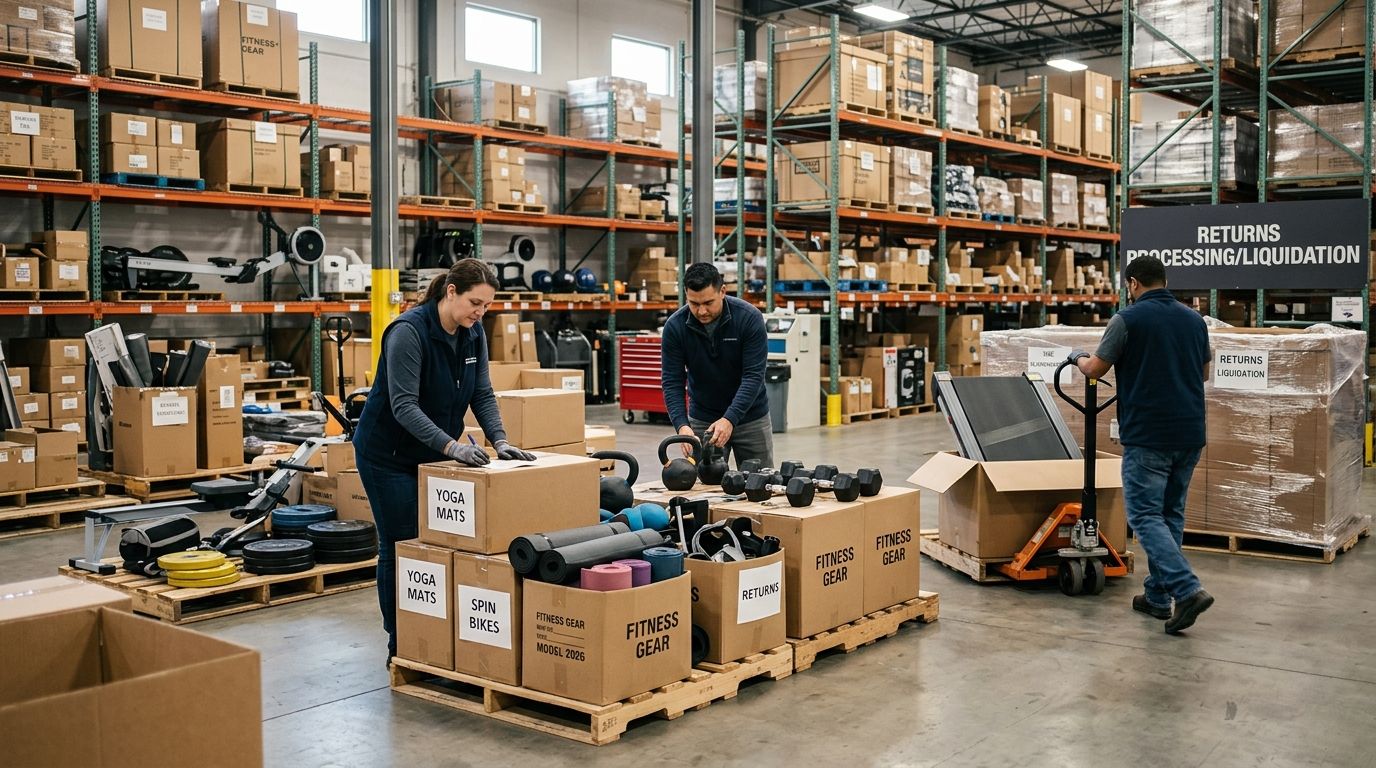
Returns liquidation for fitness retailers means turning treadmill, elliptical, and power rack returns into recovered cash instead of dead warehouse space — through resale marketplaces, liquidation auctions, or local pickup networks. Unlike apparel or electronics returns, fitness equipment returns are heavy, boxed awkwardly, and often carry moving parts or electronics that need a functional check before anyone will pay for them. A pallet of returned rowing machines behaves nothing like a pallet of returned shoes, and the liquidation plan has to account for that from the first sort.
TL;DR
Fitness equipment occupies pallet positions that could otherwise hold faster-turning inventory, and a returned treadmill or power rack sitting in a receiving bay for weeks costs real square footage. Home fitness gear also comes back for a specific reason: the buyer tried it at home, decided against it, and shipped a functionally sound machine back to you.
That mix is the whole game in 2026. A near-new elliptical deserves a different channel than a treadmill with a dead motor. Sorting by condition before picking a route is the single decision that separates recovering pennies on the dollar from recovering something close to used-market value.
Sharetown works the resale end of that equation — independent reps pick up returned mattresses, furniture, and fitness equipment from retailers and resell them locally. Retailers building a returns liquidation process in 2026 should know where that model fits before defaulting to pallets.
Before choosing any channel, know what's coming back and why. Retailers who skip this step route everything — good and bad — into the same low-recovery pile.
For like-new units, the manual and free route is direct resale. It costs staff time, but per-unit recovery beats every bulk option.
A console that won't power on or a rower with a frayed cable becomes a liability the moment it re-enters resale untested. Grading protects both your recovery rate and your brand.
Once a unit fails the near-new bar, bulk channels take over. They move volume fast at the lowest per-unit recovery, so reserve them for what won't sell individually.
This is where a network like Sharetown fits, after the sort-and-test steps have already separated resalable units from scrap. An independent rep picks the unit up locally and resells it in that market instead of it crossing the country on a truck.
Units that fail the functional test still carry scrap value. Recycling recovers something instead of charging you a disposal fee.
Liquidation only works as a system when you can see which channel actually pays. Without tracking, retailers default to whatever is easiest rather than whatever recovers the most.
Consumer resale marketplaces
Liquidation auction platforms
Pallet and wholesale liquidators
Local pickup-and-resale networks
Metal and electronics recyclers
A returned treadmill with a working motor is worth resale money; the same treadmill with a dead motor is worth scrap money — the sort decides which channel it belongs in.
Move fitness returns faster in 2026
Independent reps pick up, clean, and resell oversized returns in your local market.
What is returns liquidation for fitness retailers?
It's the process of recovering value from returned treadmills, ellipticals, racks, and benches through resale, auction, or recycling instead of writing them off. In 2026 the standard approach is to grade every unit by condition first, then route it to the channel that pays most for that condition.
Is individual resale better than pallet liquidation for gym equipment?
Individual resale pays more per unit; pallet liquidation moves volume faster at the lowest recovery. Near-new functional units belong in individual resale, and only damaged or unsellable units should go to pallets.
How do I test a returned treadmill before reselling it?
Power it on and run a full speed and incline cycle while checking the belt, motor, and console for error codes or wear. Skipping this test is the most common reason resold fitness equipment comes back a second time.
Which fitness equipment gets returned most often?
Treadmills, ellipticals, rowing machines, and power racks drive the bulk of returns because buyers frequently change their minds after trying them at home. They are also the bulkiest and most expensive units to store, which makes fast liquidation decisions worth more here than in any other category.
Can Sharetown pick up returned gym equipment locally?
Sharetown works through independent reps who pick up oversized returns, including fitness equipment, and resell them locally rather than routing them through national liquidation channels. Coverage depends on rep availability in a given market.
What's the difference between liquidation and recycling for fitness returns?
Liquidation recovers resale value from a unit that works or can be repaired; recycling recovers only material value from a unit that cannot be resold. Non-functional treadmills and racks should go straight to a recycler instead of sitting in a liquidation queue.
Do liquidation auctions pay more than local resale?
No. Local individual resale typically pays more per unit than auction or pallet liquidation, but it takes more time per sale. Auctions exist to clear volume quickly, not to maximize recovery.
How fast should a fitness return leave the warehouse?
Grade it within days of arrival and route it immediately, because oversized units burn storage value every week they sit. Retailers who set a fixed 14-day window per channel avoid the backlog that forces everything into low-recovery pallets.
The equipment that costs the most to hold — treadmills, power racks, ellipticals — is exactly the equipment retailers leave sitting longest, because sorting oversized units feels heavier than sorting a bin of returned apparel. Flip that instinct in 2026 and triage the bulkiest, highest-value SKUs first. That's where the recovery gap between "sold as a unit" and "dumped in a pallet" is widest, and it's the gap that pays for the process.