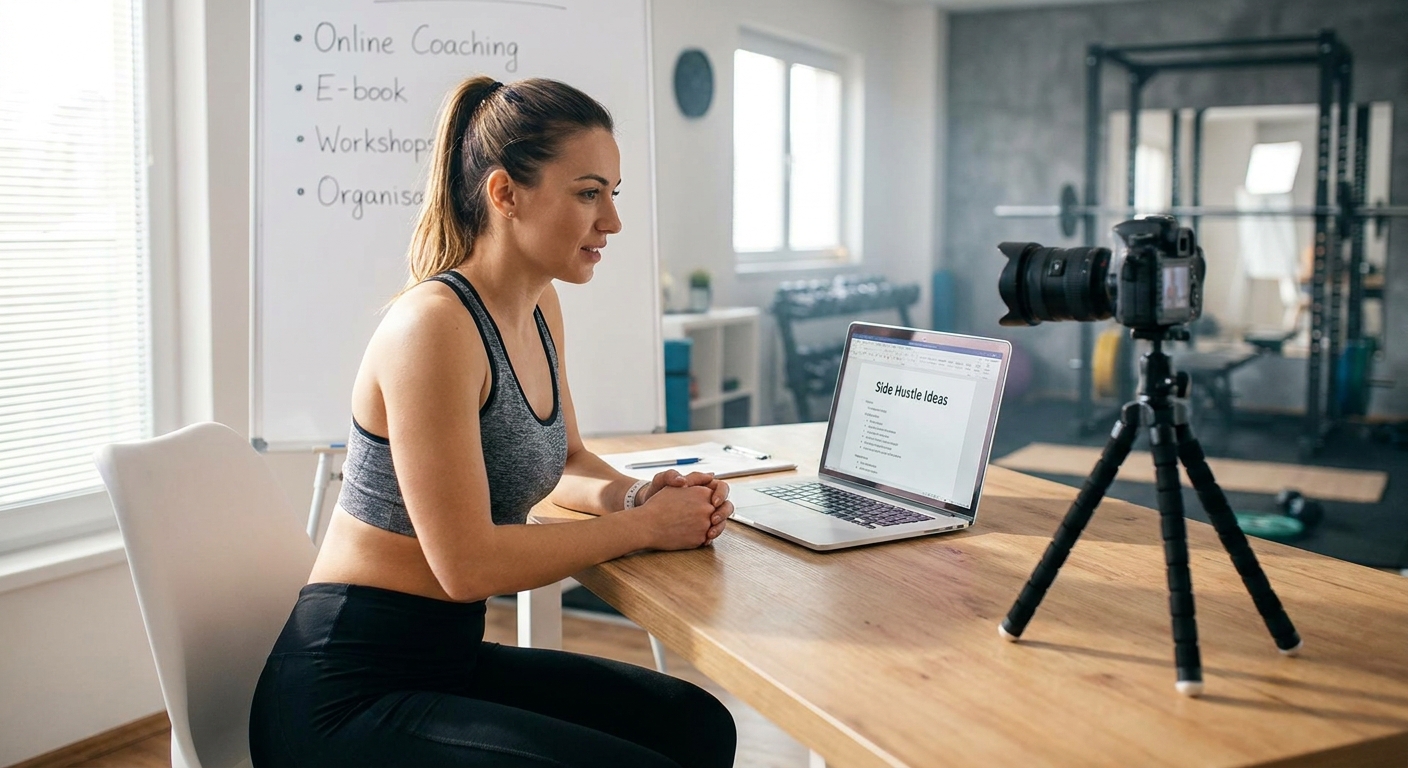
Personal trainers already lift, load, and evaluate equipment for a living — that's a head start most side hustlers don't have. The best side hustles for personal trainers use those exact skills to fill the dead hours between client sessions instead of competing with them.
TL;DR
A typical personal trainer books sessions in two blocks: early morning (5-9 a.m.) and evening (4-8 p.m.), leaving a midday window of three to five hours with nowhere to put it. Client rosters also swing hard with the calendar — January sign-ups spike, summer bookings thin out — so income needs a second lane that doesn't depend on the same 20 people renewing packages.
Most "side hustle" lists thrown at trainers ignore the two things that actually matter here: physical bandwidth and liability. You can't take a hustle that leaves your body too wrecked to coach at 6 a.m., and you can't sell something to your own client list without risking the trust that pays your bills. That narrows the field fast.
This guide is built for the working personal trainer — independent or gym-employed, 10 to 25 client hours a week, comfortable lifting and assessing equipment, and looking for cash flow that doesn't require a new certification or a sales pitch to existing clients. If you've got access to a vehicle and a few open hours midday, everything below applies directly to you.
The hustle has to live in your open hours — usually late morning to early afternoon — not compete with your 6 a.m. or 6 p.m. sessions. Anything that demands fixed evening shifts defeats the purpose.
Selling supplements, programs, or gear directly to your training clients blurs the line between coach and salesperson. That erosion costs more in canceled packages than the hustle ever pays out.
You already spend on certifications, insurance, and gear. A side hustle that demands a big inventory buy-in before the first sale adds risk you don't need in 2026's tighter consumer spending environment.
Trainers can tell a worn resistance band from a functional one and spot a treadmill motor problem by sound. That knowledge is a resale advantage most flippers don't have — use it.
The cleanest hustles sell to strangers, not to the people paying you for coaching. Keep the two revenue streams separate.
Lifting a dresser or a treadmill deck a few times a week is manageable. Doing it on top of a full coaching schedule every single day is how you end up injured and unable to work either job.
Gym equipment resale is the one hustle where your day job is your qualification. Retailers process a steady stream of returned treadmills, benches, and racks that need someone who can grade condition accurately — that's you. A clean adjustable bench or rack typically resells locally for $80 to $250 depending on brand and wear.
Check where to sell used gym equipment before your first pickup so you're not guessing on venues or pricing. Verdict: Buy.
Treadmills are among the most frequently returned bulky fitness items because shipping damage and buyer's remorse hit that category hard. A trainer who knows how to test a belt, check a motor, and spot a bad deck can flip a single unit for $150 to $400 in profit after minor repairs.
The process for reselling a used treadmill for profit covers the exact checks to run before you buy one to flip. Verdict: Buy.
If you already own or can rent a van, midday hauling jobs — furniture moves, appliance pickups, small local deliveries — fill the exact gap in a trainer's schedule. It's less fitness-specific than equipment flipping, but the hours match perfectly and the barrier to entry is a license, not a certification.
Making money with a cargo van breaks down realistic per-job rates and how often you can book them without a full-time driving commitment. Verdict: Consider.
Sharetown pairs independent reps with premium retailers who need someone to pick up, store, and resell returned mattresses, furniture, and fitness equipment. For a trainer, that means turning the equipment knowledge you already have into a repeatable resale income stream — pickups, cleaning, and resale, without cold-calling buyers or building a storefront.
It runs on your schedule, which is the entire point of a side hustle for personal trainers in the first place. Verdict: Buy.
If you're not ready to commit a vehicle or storage space yet, there are hustles that start with almost no cash outlay — reselling small items, local services, or flipping smaller finds you already come across. It's a lower ceiling than equipment flipping, but it's a real way to test whether reselling fits your schedule before scaling up. Verdict: Consider.
Start earning off returned fitness gear
Pick up, clean, and resell bulky returns on a schedule you set.
Gym equipment flipping
Treadmill niche resale
Cargo van hauling
Sharetown resale route
Under-$100 starter hustle
What is the best side hustle for a personal trainer in 2026?
Flipping used gym equipment is the best side hustle for personal trainers in 2026 because it uses skills — grading condition, spotting wear, assessing motors — that trainers already have. It also fills the midday gap between morning and evening client blocks without competing for the same hours.
Can personal trainers make money reselling fitness equipment?
Yes — treadmills alone can net $150 to $400 in profit per unit once repair and resale costs are factored in. Benches and racks typically resell for $80 to $250 depending on brand and condition.
Is it a conflict of interest to sell products to my training clients?
Selling supplements or programs directly to your own clients blurs the coach relationship and risks trust, which usually costs more in canceled packages than it earns. Reselling to strangers through a resale channel avoids that conflict entirely.
How much time does a side hustle need to fit around personal training?
Most trainers have a three to five hour gap between morning and evening client blocks, which is enough time for a pickup, a quick clean, and a listing. Hustles requiring fixed evening shifts generally don't fit a trainer's schedule.
Do I need a vehicle to start a resale side hustle?
Access to a vehicle helps with pickups and hauling but isn't required for every option — smaller flips and under-$100 starter hustles can begin without one. Larger items like treadmills or furniture generally require a van, truck, or trailer.
How much does it cost to start flipping gym equipment?
Startup cost is low compared to retail arbitrage since you're buying single items rather than inventory in bulk. Most trainers start with one piece of equipment and reinvest the profit into the next purchase.
Is reselling treadmills profitable in 2026?
Yes, treadmills are among the most frequently returned bulky fitness items due to shipping damage and buyer's remorse, which keeps flip supply steady. Profit per unit typically runs $150 to $400 after basic repairs.
Treadmills get returned more often than almost any other bulky fitness item — shipping damage and buyer's remorse drive most of it — which means the supply for a trainer willing to flip them barely dries up in 2026. That steady churn is exactly why equipment resale outperforms most generic side hustle advice thrown at trainers.