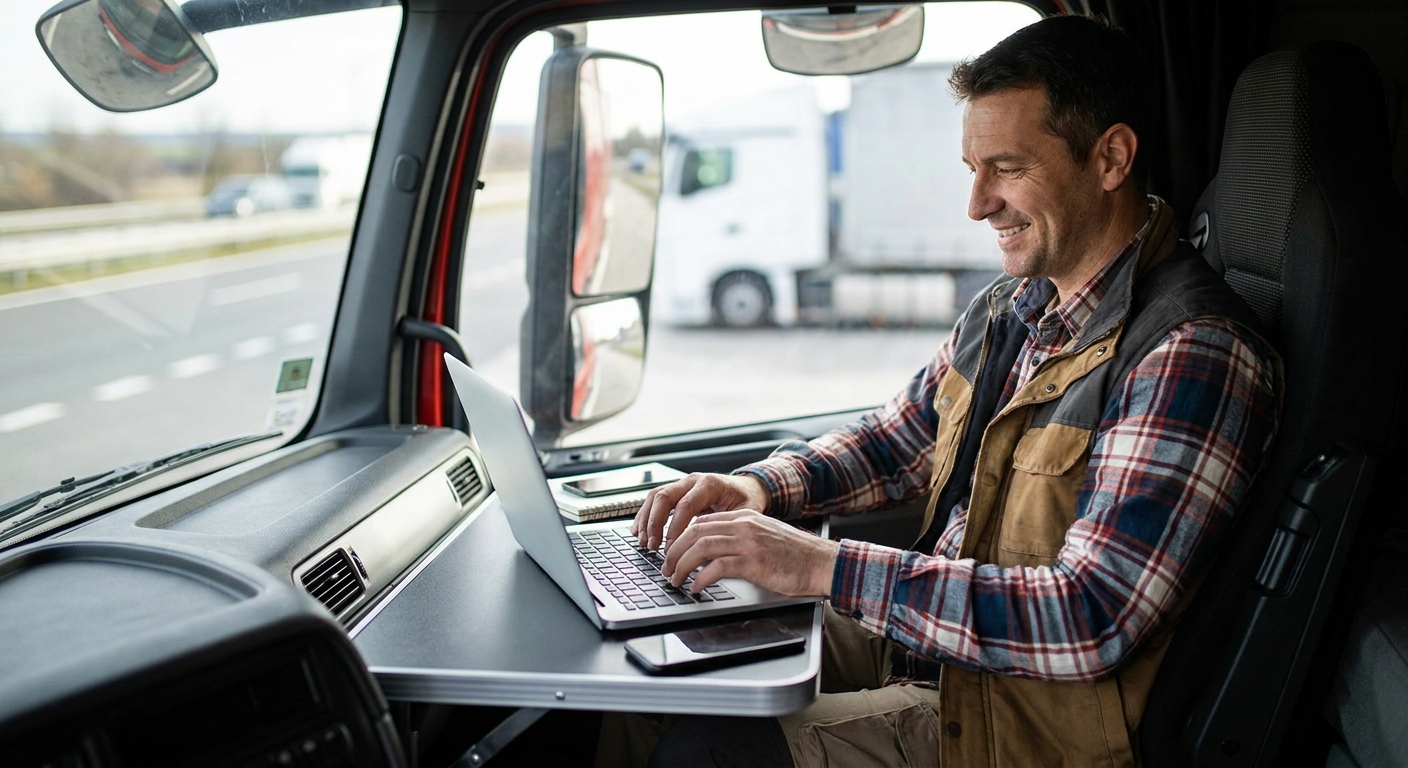
Long-haul schedules, mandatory rest breaks, and unpredictable home time kill most side hustles before they start. These are the ones built to work around a logbook, not against it.
TL;DR
A truck driver's schedule doesn't look like anyone else's. Under FMCSA hours-of-service rules, you get an 11-hour drive limit, a 14-hour on-duty window, and — if you use it — a 34-hour restart that resets your weekly clock. That restart is the only real block of free time most OTR drivers get, and it rarely lands at home.
Most side hustle roundups assume a 9-to-5 with weekends free. None of that applies on the road. The side hustles that actually work for truckers fit inside a layover, a restart, or a home-time weekend — not a fixed shift. Sharetown built its reselling model around exactly that kind of irregular schedule, picking up returned mattresses, furniture, and gym equipment from retailers on a route basis instead of a storefront hourly grind.
Going into 2026, gig platforms keep adding driver-specific side income options, but most still assume you're parked in one city every night. Truckers need something different.
This guide is for OTR drivers running a 70-hour/8-day cycle, regional drivers home most weekends, and owner-operators who control their own dispatch. If you're parked at a truck stop for a 10-hour break more nights than you're home, the hustle has to travel with you or wait for you — not the other way around.
A hustle tied to one storefront or one city dies the moment your dispatcher reroutes you. Anything that works from a phone, a parking lot, or a home garage during layovers survives a schedule change.
The 34-hour restart and 10-hour break periods are your real windows of free time in 2026. A side hustle that needs 6-8 uninterrupted hours daily just doesn't fit an OTR calendar.
You already have limited cab or trailer space. Hustles that require buying and holding stacks of inventory upfront are a poor match — resale models that pick up, flip, and turn over items fast work better.
Home time is irregular, so income should hit your account on a schedule that doesn't assume a biweekly paycheck. Same-day or weekly payout options matter more here than for a typical 9-to-5 side gig.
Rural interstates and mountain routes kill cell coverage constantly. A hustle that needs constant live chat support or real-time app pings is a bad bet for long stretches of the country.
Sharetown reps pick up returned mattresses, furniture, and gym equipment from retail partners and resell locally for profit, with pickups scheduled around routes rather than a fixed shift. The model maps directly onto a driver's 34-hour restart: one route, a handful of items, no storefront lease. Verdict: Buy.
If you've got a personal truck or van, local hauling and delivery runs pay per job, not per hour, which matters when your on-duty window is capped at 14 hours. The tradeoff is real: every hour hauling on your day off is an hour not spent resting before your next dispatch. See how the math works in making money with a cargo van. Verdict: Consider.
Regional and local drivers who run overnight routes have downtime that doesn't line up with daytime gig demand. Apps and tasks built for graveyard-shift workers fit that gap better than anything designed around a 9-to-5. Full breakdown here: side hustles for people who work night shifts. OTR drivers on rotating schedules should test this before committing. Verdict: Consider.
A 34-hour restart is long enough to hit a couple of thrift stores or estate sales near a terminal and flip two or three items online before your clock resets. No fixed schedule required, no storefront, no employees. Verdict: Buy.
Some delivery and task apps pay out weekly instead of on a standard biweekly cycle, which helps smooth income gaps between loads. The catch: margins on gig-app tasks rarely beat what a single flipped dresser or treadmill nets on resale. Verdict: Skip for OTR, Consider for regional.
Turn layover time into income
Pick up, resell, repeat — on a schedule that fits your routes, not a shift clock.
Reselling returned items (Sharetown model)
Cargo van hauling on days off
Night-shift gig work
Flipping local finds during layovers
Weekly-pay gig apps
What's the best side hustle for truck drivers in 2026?
Reselling returned bulky items like mattresses and furniture ranks highest for 2026 because it fits inside a 34-hour restart with no fixed storefront. Route-based pickup models like Sharetown's are built specifically for irregular trucker schedules.
Can OTR drivers really run a resale side hustle from the road?
Yes, as long as the pickups and sales happen during layovers or restarts rather than daily fixed hours. Drivers coordinate pickups around routes and resell locally without needing a storefront lease.
How much can a truck driver make reselling returned furniture?
Earnings depend on item volume and local resale demand, so figures vary by market. Reselling bulky returned goods generally carries better margins than gig-app task work because there's no per-task fee cut.
Is driving a cargo van on days off worth it for truckers?
It can work for regional drivers with more predictable home time, but it competes directly with rest before your next dispatch. OTR drivers should weigh fatigue risk against the extra income before committing.
Do truck drivers need a business license to resell items?
Requirements vary by state and city, so check local rules before scaling up. Casual resale of a few items typically has lower barriers than running it as a registered business.
What side hustles work for night-shift or regional drivers?
Gig apps and tasks built around overnight demand fit night-shift and regional schedules better than daytime-only options. Regional drivers with weekend home time also have more flexibility for resale and flipping hustles.
How much does it cost to start reselling as a truck driver?
Route-based resale models like Sharetown's require no inventory purchase upfront since items come from retailer returns. Independent flipping from garage sales or thrift stores usually starts under $100 in initial buys.
Are gig apps like DoorDash realistic for truck drivers?
Most delivery apps restrict commercial CDL vehicles, so drivers would need a personal vehicle and available non-driving hours. That makes these apps a weaker fit for OTR schedules than resale or flipping hustles.
Most OTR drivers waste their 34-hour restart parked in the cab scrolling a phone. That same window is enough time to run one pickup route, sort a couple of items, and list them for sale before the clock resets — the drivers doing it are turning dead time into the highest-margin hustle on this list heading into 2026.