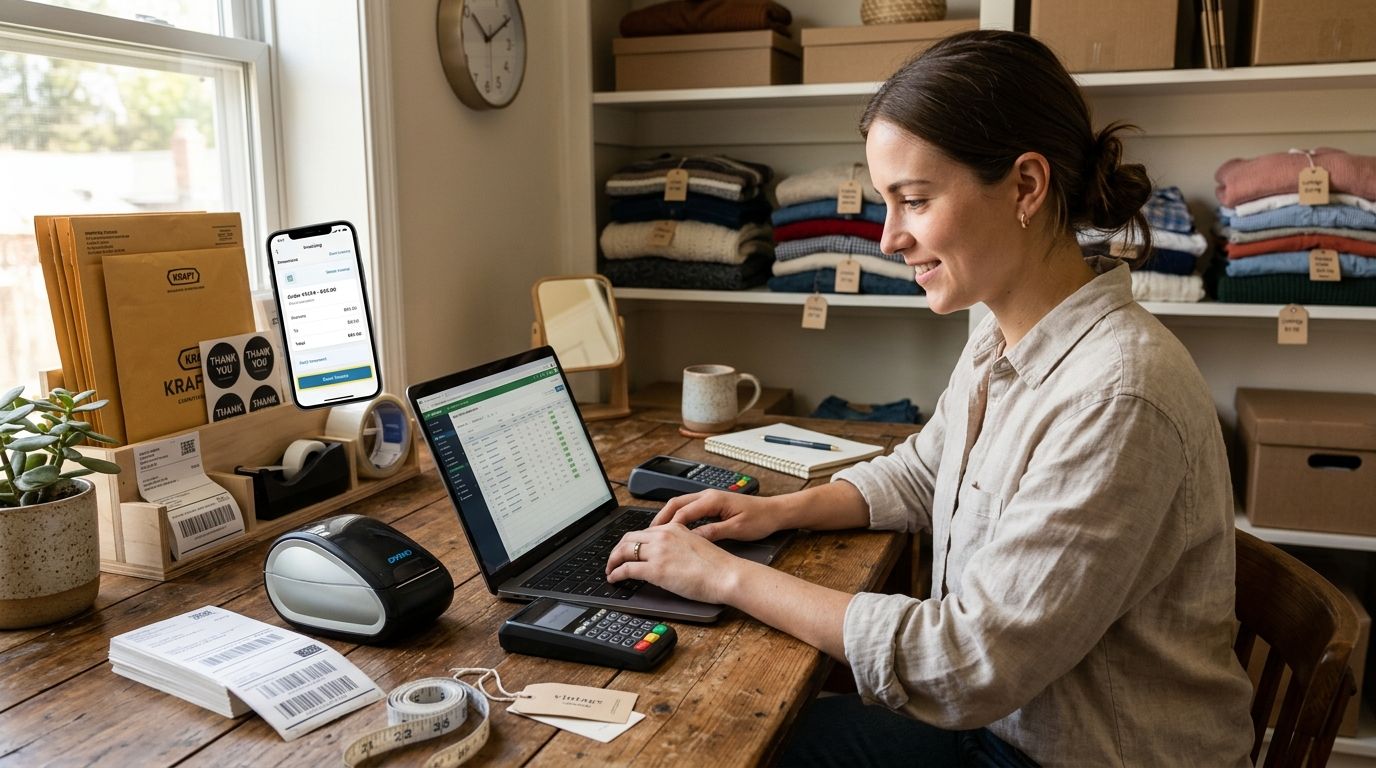
You don't need a fancy back office to run a resale side hustle — you need an app that gets you paid fast and keeps your numbers straight when tax season hits. This guide ranks the invoicing and payment tools that actually fit how Sharetown reps and other independent resellers work: quick sales, cash-strapped starts, and inventory that turns over in days, not months.
TL;DR
A resale side hustle lives or dies on cash flow. You buy a dresser Monday, flip it Thursday, and if the payment app you used holds funds for three business days, you can't reinvest until the weekend. The wrong tool also makes tax time miserable — no mileage log, no expense tab, no record of what you paid versus what you sold for.
Sharetown reps pick up returned furniture, mattresses, and fitness equipment from retailers and resell locally, so the volume adds up fast: several transactions a week, multiple buyers, and inventory that needs a paper trail. If you're building that kind of route, Sharetown is worth a look before you worry about which app sends the invoice.
The apps below get judged on how fast they move money, how much of the tax and expense tracking they automate, and whether they charge you to accept a payment. None of them require a business degree to set up in an afternoon.
Wave
QuickBooks Self-Employed
Square Invoices
PayPal
FreshBooks
Venmo / Cash App
Wave lets you build a professional invoice from a phone in under two minutes and send it before you've even left the buyer's driveway. It syncs to a bank account so payments and expenses land in one dashboard instead of three different apps.
Wave pros:
Wave cons:
Wave pricing: check current plans on their site — the core invoicing tools are free to use.
Best for: resellers who want free, no-friction invoicing without learning a full accounting system.
Verdict: Buy. For most people starting a resale side hustle in 2026, Wave is the default first app.
QuickBooks Self-Employed separates business and personal spending automatically and estimates your quarterly tax payments as you go, which matters the moment your resale income stops being pocket change. It also logs mileage with GPS, useful if you're driving to pick up returned furniture or deliver a sold couch across town.
QuickBooks Self-Employed pros:
QuickBooks Self-Employed cons:
Best for: resellers who need help with taxes more than they need fancy invoices. For a deeper walkthrough on the tax side specifically, see how to track taxes for a furniture resale side hustle.
Verdict: Buy if quarterly taxes are the part of this hustle that stresses you out most.
Square pairs a card reader with an invoicing platform, so the same account handles a driveway cash sale, a card tap at pickup, and a follow-up invoice sent to a buyer who wants to pay later. That flexibility matters for anyone reselling bulky items like mattresses and furniture where deals close in person as often as online.
Square Invoices pros:
Square Invoices cons:
Best for: reps who deliver and get paid on the spot as often as they invoice remotely.
Verdict: Buy if in-person card payments are a regular part of your resale route.
PayPal is the app most buyers already trust, which matters when you're selling a used treadmill or sectional to someone you met on a marketplace an hour ago. Its buyer and seller protection policies are widely recognized, which reduces the back-and-forth over payment method that can kill a deal.
PayPal pros:
PayPal cons:
Best for: closing deals with buyers who don't know you yet and want a recognizable payment method.
Verdict: Buy as a secondary option even if another app is your primary invoicing tool.
FreshBooks adds recurring invoices, time tracking, and client management on top of standard invoicing, which starts to matter once you're managing repeat buyers or a small team helping with pickups and deliveries. It's built for the reseller who's outgrowing spreadsheets.
FreshBooks pros:
FreshBooks cons:
Best for: resellers turning a side hustle into something closer to a full-time flipping business. Pair it with a clear read on how to calculate profit margin on a furniture flip so the reporting actually means something.
Verdict: Buy once you're managing enough repeat clients that manual invoicing eats real time.
Venmo and Cash App move money instantly between two people, which is exactly what a lot of resale transactions need and nothing more. There's no invoice, no client record, and no expense tracking — just a payment that clears in seconds.
Venmo/Cash App pros:
Venmo/Cash App cons:
Best for: quick, low-stakes local sales where speed matters more than paperwork.
Verdict: Hold as a backup for cash sales, not a primary system for a real resale business.
Each app got weighed against the six criteria above: payout speed, cost to the reseller, mobile invoicing, expense and mileage tracking, buyer trust, and bank sync. Apps that only handle peer-to-peer transfers, like Venmo and Cash App, lose points for having zero tax or invoicing infrastructure — fine for a side sale, risky as your only system once volume grows.
Build a resale route that pays
Pick up and resell returned furniture and mattresses as a Sharetown rep.
Start with Wave if you're brand new to invoicing in 2026 — it's free, mobile-friendly, and gets you a professional invoice out the door in minutes. Add QuickBooks Self-Employed the moment your resale income is big enough that quarterly taxes stop being an afterthought. Keep PayPal or Venmo in your back pocket for buyers who prefer them, but don't run your whole operation on apps that skip invoicing and expense tracking entirely — that catches up with you every April.
What's the best invoicing app for a resale side hustle in 2026?
Wave is the best overall pick for 2026 because it's free and handles mobile invoicing without a monthly fee. QuickBooks Self-Employed is the better choice if tracking mileage and quarterly taxes matters more than invoice design.
Is PayPal better than Venmo for reselling furniture?
PayPal is better for building trust with strangers because it includes seller protection and an invoicing feature. Venmo moves money faster for people you already know but offers no invoicing or dispute protection.
Do I need a separate invoicing app if I already use Venmo or Cash App?
Yes, if you sell more than the occasional item. Venmo and Cash App handle instant payment but track no expenses, mileage, or client history, which you need once resale becomes a real side hustle.
How much does invoicing software cost for a resale side hustle?
Costs vary by app and plan, so check current pricing directly on each provider's site before choosing. Several options, including Wave, offer free invoicing tools that cover the basics a reseller needs.
Can QuickBooks Self-Employed track mileage for furniture pickups?
Yes, it logs mileage automatically using your phone's location while the app runs in the background. That log then feeds into the quarterly tax estimate so pickup and delivery driving counts as a deductible expense.
What app should I use to invoice buyers who want to pay later?
FreshBooks or Square Invoices both support sending an invoice for later payment instead of requiring cash on delivery. FreshBooks adds recurring billing if the same buyer purchases from you regularly.
Is Square worth it if I mostly sell online, not in person?
Probably not — Square's main advantage is combining in-person card payments with online invoicing in one account. If you never take a card reader to a sale, a lighter invoicing app like Wave covers the same ground for less setup.
The app matters less than the habit: log every sale the same day it happens, whether that's a $40 side table or a $600 sectional, because reconstructing three months of resale transactions from memory in March 2026 is how people miss deductions and overpay their taxes.