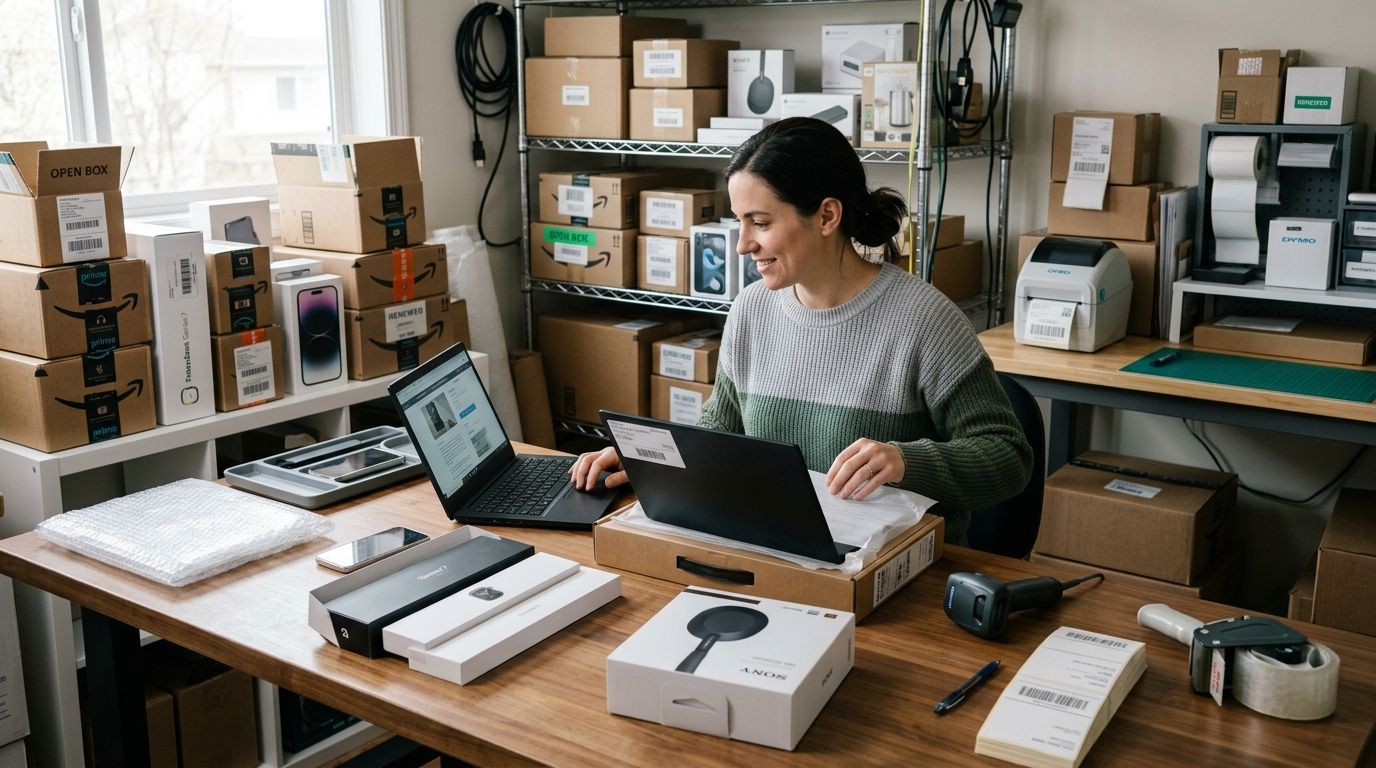
Buying open-box and returned inventory to flip for profit only works if you pick the marketplace that matches your category, budget, and storage space — get the wrong one and you're stuck with a pallet of damaged goods nobody wants. This guide ranks six of the best sites to buy open box returns for resale in 2026, from single-unit listings to pallet auctions to local pickup routes that skip the pallet gamble entirely.
TL;DR
Retailers process a steady stream of returned mattresses, furniture, treadmills, and appliances every week in 2026, and most of it never goes back on a store shelf. That inventory has to go somewhere, and where it lands determines whether you're flipping a $40 profit or a $400 one.
The best liquidation marketplaces for resellers aren't interchangeable — some sell single units at fixed prices, others auction off entire truckloads sight unseen, and a few connect you directly to local retailer returns without a pallet ever entering the picture. Picking wrong means eating freight costs on damaged goods you never inspected.
The sites below are ranked by who they actually serve, not by which one has the flashiest homepage.
Sharetown
B-Stock
Amazon Warehouse
Liquidation.com
BULQ
Direct Liquidation
Sharetown is built differently from every auction or pallet site on this list — instead of bidding on a truckload and hoping the manifest is accurate, independent reps pick up returned mattresses, furniture, and fitness equipment directly from premium retailers, clean and inspect each item, then resell it locally. There's no freight bill, no unmanifested pallet risk, and no warehouse full of unsold inventory.
Sharetown pros:
Sharetown cons:
Sharetown pricing: No pallet purchase required — reps earn from local resale of picked-up items rather than buying inventory upfront.
Best for: resellers who want bulky home goods without the freight cost or manifest guesswork.
Verdict: Buy. If your category is furniture, mattresses, or fitness equipment and you'd rather inspect items locally than gamble on a pallet, Sharetown is the strongest fit on this list.
B-Stock runs auction marketplaces on behalf of retailers themselves rather than reselling lots a middleman already bought. That means the manifests generally trace back to a named retail source, which matters when you're deciding whether to trust the condition grading.
B-Stock pros:
B-Stock cons:
Best for: buyers with storage space and capital who want volume across categories.
Verdict: Buy if you have a warehouse or garage to match the lot size — Hold if you're still testing the model.
Amazon Warehouse (Amazon's open-box and returned-item storefront) lists individual units at a fixed price instead of pallets. There's no bidding, no manifest to decode, and no freight math — you buy one item, resell one item.
Amazon Warehouse pros:
Amazon Warehouse cons:
Best for: casual resellers who want to test single categories with low risk.
Verdict: Hold. Good for learning the resale ropes in 2026, but the volume ceiling is low.
Liquidation.com runs a nationwide auction network covering everything from electronics to apparel to home goods. It's one of the older names among sites to buy open box returns for resale, and the category breadth is real — but so is the risk when manifests are partial or missing entirely.
Liquidation.com pros:
Liquidation.com cons:
Best for: experienced buyers comfortable with auction risk and mixed-category lots.
Verdict: Hold. Fine once you've learned to read a manifest — risky as a first purchase.
BULQ sells smaller lot sizes through standard online checkout instead of an auction, which makes it a lower-friction entry point than pallet-bidding platforms. You still buy sight-mostly-unseen, but the commitment per purchase is smaller.
BULQ pros:
BULQ cons:
Best for: first-time resale buyers who want to learn the model without an auction.
Verdict: Buy for a first test purchase — Skip if your category is furniture or mattresses, where BULQ's selection is thin.
Direct Liquidation partners with named retailers to move customer returns and overstock, so buyers who want inventory traceable to a specific chain have a clearer path here than on mixed-source auction sites.
Direct Liquidation pros:
Direct Liquidation cons:
Best for: resellers who want inventory traceable to a specific big-box retailer.
Verdict: Hold. Solid once you've picked a retail niche — not the first stop for a beginner.
Every site above was weighed against the six criteria up top: manifest transparency, lot size flexibility, retailer sourcing, condition grading, freight cost, and buyer protection. Sharetown ranks first because it removes the sight-unseen risk entirely — you inspect what you pick up before you commit to reselling it. The rest are ordered by how much capital and storage commitment they demand before you see a return.
Skip the pallet gamble entirely
Pick up inspected returns from premium retailers and resell locally.
If your category is furniture, mattresses, or fitness equipment, Sharetown beats every pallet-auction site on this list because you're not buying inventory blind. If you're set on bulk pallets and have storage to match, B-Stock is the strongest auction option heading into 2026. Casual sellers testing the waters should start with Amazon Warehouse or BULQ before scaling into truckload buying.
Whatever you pick, read the manifest line by line and check the condition grading before you commit — avoiding scams when buying items to resell starts with knowing what you're actually bidding on. And before your first purchase, it helps to know which items retailers return most that you can resell for profit, since not every returned category flips at the same margin.
What's the best site to buy open box returns for resale in 2026?
Sharetown is the strongest option for bulky furniture and mattress returns since items are inspected locally before resale, with no pallet purchase required. For high-volume bulk buying, B-Stock offers retailer-run auctions across broader categories.
Is buying liquidation pallets profitable in 2026?
It can be, but margins depend heavily on manifest accuracy and freight cost. A single damaged pallet on a 24-to-30-pallet truckload can wipe out the profit from several good ones.
What's the difference between manifested and unmanifested pallets?
A manifested pallet lists the specific items and condition inside, while an unmanifested pallet is sold sight unseen. Manifested lots cost more but carry far less risk for new buyers.
Does freight cost make bulky returns unprofitable?
Freight can erase margin fast on furniture and mattress pallets since individual pieces often weigh over 1,000 pounds. Local pickup models avoid this cost entirely.
Can I buy open box items without bidding at auction?
Yes — Amazon Warehouse and BULQ both use fixed-price checkout instead of auctions, which suits beginners who want predictable costs.
Do I need a resale certificate to buy liquidation pallets?
Most liquidation marketplaces require a resale certificate or business registration before you can bid or purchase. Requirements vary by platform and state.
What condition grades appear on liquidation listings?
Most platforms use five standard tiers: New, Open Box, Refurbished, Customer Returns, and Salvage. Grading accuracy varies by site, which is why manifest transparency matters more than the grade label itself.
Is Sharetown the same as a liquidation marketplace?
No — Sharetown connects independent reps directly with premium retailer returns for local pickup and resale, rather than selling pallets through an auction or fixed-price checkout.
Most beginner resellers don't lose money on bad markup math in 2026 — they lose it by skipping the inspection step and trusting a manifest they never verified. Whether you're bidding on a B-Stock pallet or picking up a returned mattress for local resale, checking the item yourself before it goes back on the market is the single habit that separates a profitable flip from a write-off.