Yes, $1,000 a month flipping furniture is realistic, and the math is simpler than most side hustle guides make it sound: you need roughly 5 to 20 sold items a month depending on your profit per piece, not one lucky garage-sale score. What most beginners miss is the hidden cost side of that equation — sourcing time, gas, storage space, and listing hours quietly eat into margin if you're not tracking them from day one in 2026.
TL;DR
Most furniture flipping content sells the dream and skips the arithmetic. People quit after month one because they expected one $400 dresser flip to carry the whole target, then got discouraged when reality looked more like six smaller wins spread across four weekends.
The real question isn't whether $1,000 a month is possible — it's whether your sourcing pipeline can support the volume you need. That's a supply problem before it's a pricing problem, and it's the thing this page actually answers.
The honest answer is yes, if you treat it as a volume business rather than a hunt for one big score. The math scales with your profit per item, and the table below shows what that looks like at different profit levels.
$1,000
That's it — no secret formula. A rep landing $100 average profit per item hits $1,000 with 10 sales a month, roughly 2-3 a week. Higher-ticket categories like sectionals or dining sets need fewer flips but longer turnaround; smaller pieces like bar stools or nightstands need more flips but move faster. Either path works, but you need to know which one you're actually running before you commit hours to it. The profit margin breakdown walks through how to figure out your real number per item after gas, cleaning supplies, and platform fees.
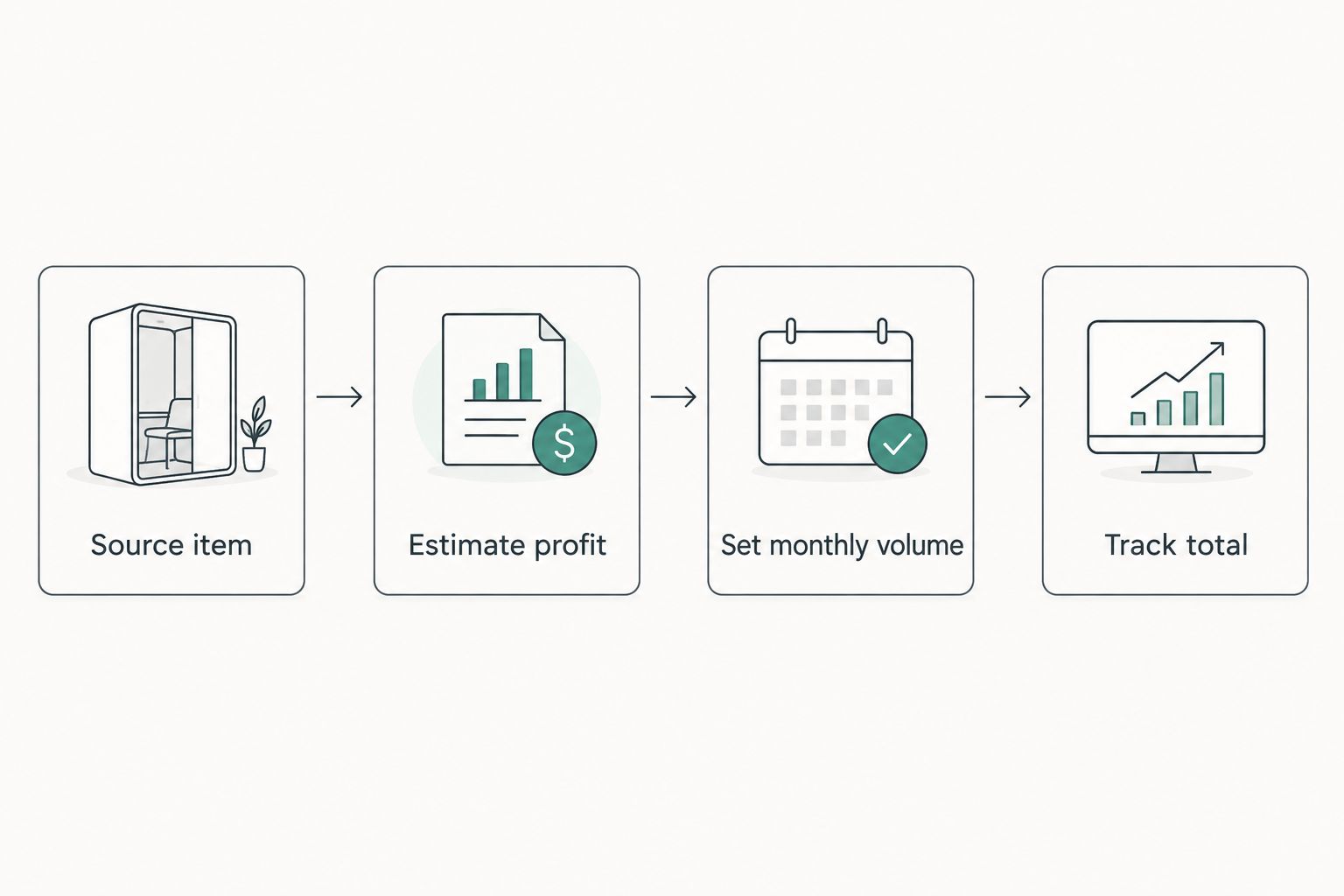
Hitting $1,000 a month comes down to volume math, not one big flip.
A handful of variables push your real number up or down before you ever list an item:
Not every category flips the same way. Some pieces move in days, others sit for weeks waiting for the right buyer.
Dressers & nightstands
Bar stools & dining chairs
China cabinets
Sectional sofas
Coffee tables
Beginners hit their monthly number faster sticking to fast-turning categories like dressers and bar stools, then layering in slower, higher-ticket pieces once volume is steady. The furniture flipping categories ranked by profit margin breaks down which categories carry the widest margins in 2026.
Sourcing is the part most people underestimate. Scouring Marketplace listings and estate sales for hours a week is unpaid labor that eats into the profit you're chasing. Sharetown reps skip that hunt entirely — retailers hand off returned mattresses, furniture, and fitness equipment already sitting there for pickup, so the sourcing step is already done before the flip starts.
Skip the sourcing hunt
Pick up ready-to-resell inventory from retailers instead of hunting listings.
It takes roughly 10 flips a month at $100 average profit each, or as few as 5 at $200 profit, or as many as 20 at $50 profit. The number that matters most is your average profit per item after costs, not the sale price on the listing.
No, a truck isn't required to start, but it limits which categories you can flip profitably. Sedans and small SUVs work fine for chairs, small tables, and nightstands; sectionals, dressers, and mattresses generally need a truck, van, or trailer to move without paying for delivery.
Yes, flipping furniture is worth it in 2026 for anyone who can commit a few hours a week to sourcing and listing consistently. It rewards volume and repeatable sourcing channels over any single high-value find, which is why treating it like a route rather than a hobby is what separates a $1,000-a-month side income from an occasional lucky sale.
Can you really make $1,000 a month flipping furniture?
Yes, $1,000 a month is realistic with roughly 10 sold items at $100 average profit each, or fewer items at a higher margin per piece. It depends on category choice and sourcing consistency more than any single big sale.
How much money do you need to start flipping furniture?
Startup costs depend heavily on how you source inventory and what transport you already have access to. The full breakdown of starting costs by category is in the guide on how much money you need to start flipping furniture.
What furniture sells the fastest for resale?
Dressers, nightstands, bar stools, and coffee tables tend to turn over fastest because they're easy to move and priced for quick decisions. Larger pieces like sectionals and dining sets take longer to sell but often carry wider margins.
Is flipping furniture a full-time income opportunity?
It can scale into full-time income once sourcing volume and buyer demand are consistent, but most people start it as a part-time side income first. Volume, not one flip, is what determines whether it scales.
Do you need a business license to flip furniture?
Requirements vary by state and by how much volume you're moving, so check local rules before scaling past a casual hobby level. Tracking income properly from the start makes this easier to sort out at tax time.
What's the biggest hidden cost in furniture flipping?
Sourcing time and transport, not the purchase price, are the costs beginners underestimate most. Gas, storage, cleaning supplies, and hours spent scouring listings all eat into the profit per item.
Where do Sharetown reps get furniture to resell?
Sharetown reps pick up returned furniture, mattresses, and fitness equipment directly from retailers instead of sourcing through Marketplace listings or estate sales. That removes the sourcing hunt from the flipping process entirely.
The flippers who hit $1,000 a month consistently in 2026 aren't the ones who find one incredible deal — they're the ones who turn sourcing into a repeatable weekly habit. Volume beats luck every time, and a steady pipeline of 8-10 items a month beats waiting around for a single home-run find.