Sharetown reps don't get paid the moment a truck leaves the retailer's dock — the paycheck shows up when the item actually resells, not when it's picked up.
TL;DR
Most gig apps pay for a completed task: drive the ride, deliver the order, get paid within a day or two. Sharetown runs on a different mechanic — reps pick up a returned mattress, dresser, or piece of fitness gear from a retailer, then resell it locally for profit. The money isn't tied to the pickup itself; it's tied to the sale. That distinction answers most of the confusion behind how much reps make per pickup — pay is a function of resale price minus cost, not a flat fee for showing up with a truck.
That's a meaningful difference from apps that batch-pay drivers weekly regardless of demand. With Sharetown, a rep who lists fast and prices right can turn a Saturday pickup into cash within the same week. A rep who lets an item sit in a garage waits longer, no matter how fast the pickup happened.
No. The pickup and the payout are two separate events, and the gap between them is set by how fast the item sells, not by any fixed Sharetown clock. Here's how that compares to the task-based gig model most people assume applies:
Task-based gig apps (rideshare, delivery)
Sharetown
The pickup is the start of the job, not the end of it. Cleaning, sanitizing, listing, and negotiating a sale are the steps that actually generate the payout — the truck run is just step one.
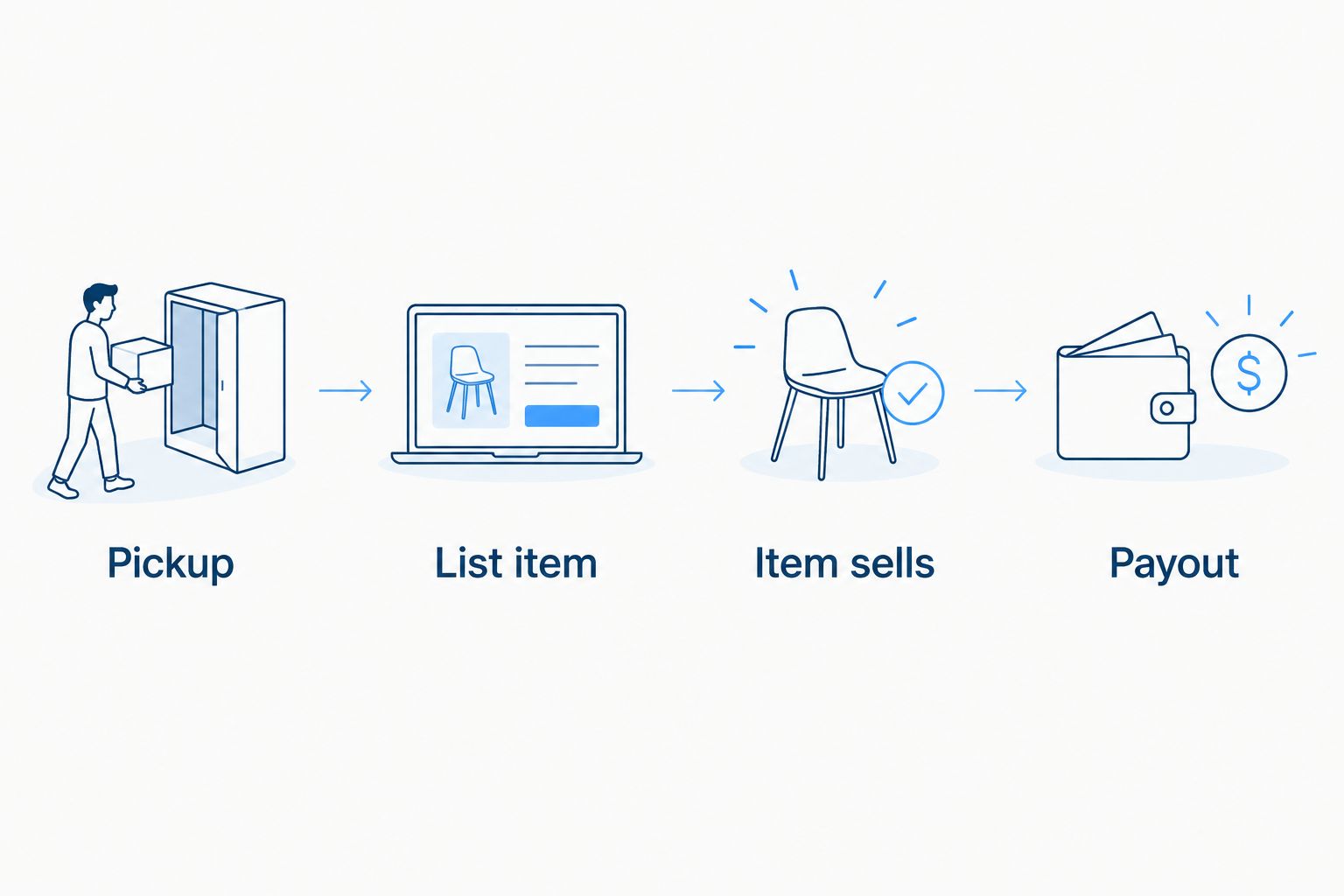
The paycheck sits at the end of the sale, not at the start of the pickup.
A handful of factors decide whether a rep gets paid in three days or three weeks after a pickup in 2026:
Reps get paid once an item they picked up resells, with proceeds routed through the payment method connected to their account. The mechanics of connecting Sharetown payouts to a bank account matter more for reps than any question about pickup-day timing — the bank connection is what determines how fast funds move once a sale closes.
There's no fixed number — a well-priced dresser or bike can find a buyer within days of listing, while bulkier items like sectionals or treadmills often take longer because the buyer pool is smaller. Speed comes down to category demand and how quickly the rep lists after pickup, not any rule Sharetown sets.
Sharetown is built for reps comfortable earning on a resale timeline, not for anyone who needs cash the same day work happens. Anyone chasing a strict same-day payout should compare task-based gig platforms instead, since Sharetown's model pays on the sale, not the clock.
See what a Sharetown pickup pays
Check current pickup opportunities near you.
Does Sharetown pay same day as a pickup?
No, Sharetown does not pay same day as a pickup. Payout happens after the picked-up item resells, so timing depends on how fast the rep lists and sells it, not on the pickup date.
How long after a pickup does a Sharetown rep get paid?
There's no fixed number of days — payout follows the resale, and resale speed depends on the item category, local demand, and how quickly the rep lists it in 2026.
Is Sharetown a same-day pay gig?
Sharetown is not a same-day pay gig in the way rideshare or delivery apps are, because earnings come from reselling an item locally rather than from completing a task.
Why doesn't Sharetown pay on pickup day?
Sharetown's model pays reps a share of the resale, so the money doesn't exist until a buyer pays for the item — the pickup only starts that process.
What items sell fastest after a Sharetown pickup?
Smaller, higher-demand items like dressers or bikes generally move faster than bulky pieces like sectionals or treadmills, which have a smaller pool of local buyers.
Can a Sharetown rep speed up their payout?
Yes — listing an item the same day it's cleaned and priced close to local comps shortens the time to sale, which is the biggest lever a rep controls.
Does Sharetown pay weekly instead of per pickup?
Payout is tied to each item's resale rather than a weekly schedule, so a rep's income arrives whenever an individual sale closes.
The pickup date is the least useful number to track if you're trying to predict your next paycheck — the listing date is the one that actually matters. Reps who treat the truck run as step one of a sale, not the finish line, get paid faster and more predictably in 2026 than reps who let items sit after pickup.