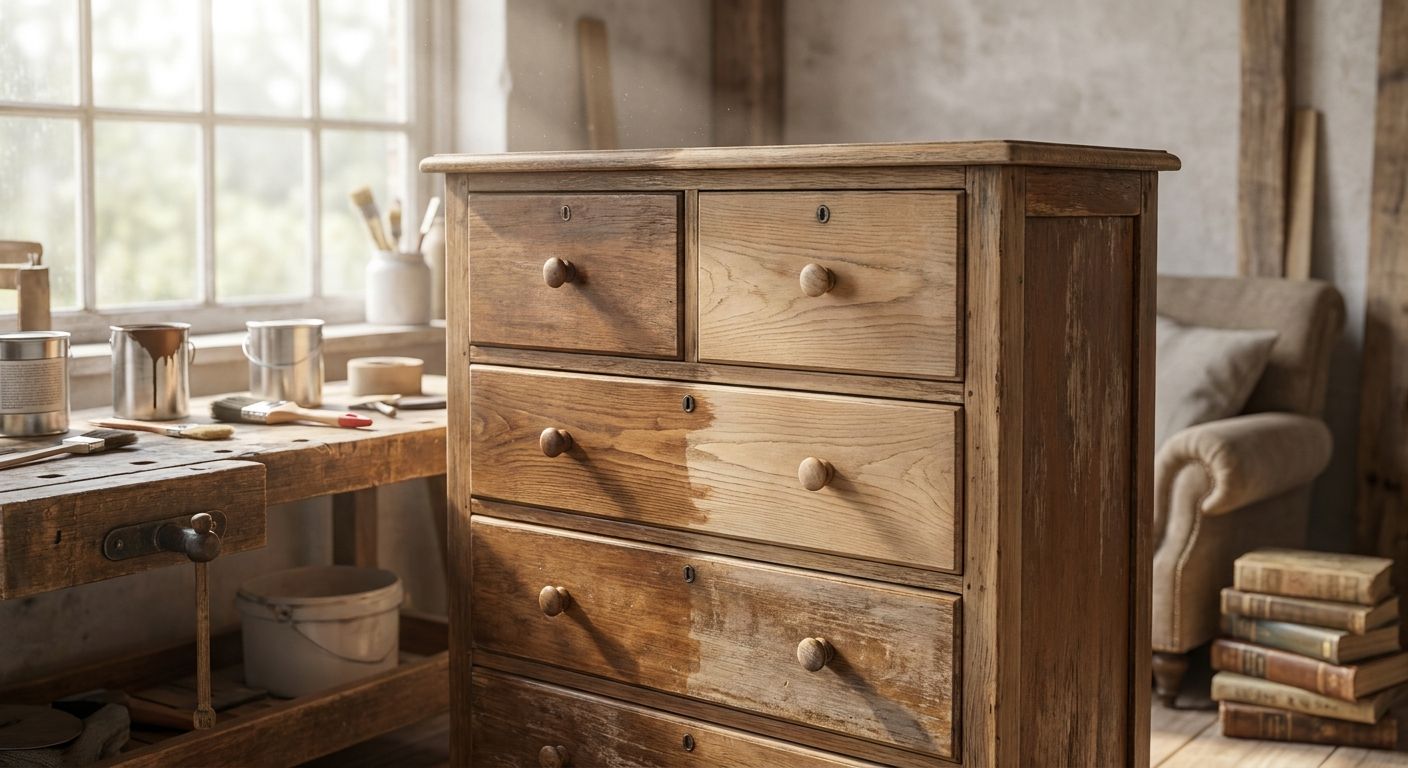
Flipping antique furniture for profit turns estate sale dressers, china cabinets, and dining sets into repeatable cash if you know which pieces hold value, how to price them, and where to move them fast in 2026.
TL;DR
Antique and vintage furniture is one of the few resale categories where condition and construction matter more than brand name. A 1940s oak dresser with dovetail joints and solid drawer sides beats a newer big-box piece every time, because buyers in 2026 are paying for craftsmanship that isn't made the same way anymore.
The people who do this well aren't running antique shops. They're reselling out of a garage, a rented storage unit, or the back of a pickup, moving one to three pieces a week. If you already haul bulky items for a living or as a side hustle, Sharetown reps will recognize the pattern -- pickup, clean, sanitize, resell -- it's the same operational rhythm applied to older, higher-margin stock instead of retailer returns.
This guide is for someone with a truck, van, or trailer, a few free weekend hours, and enough storage space to hold two or three pieces at once. You don't need appraisal training. You need an eye for solid wood, a willingness to clean and stage a piece properly, and patience to wait for the right buyer instead of dumping it at the first lowball offer.
Solid wood -- oak, walnut, mahogany, cherry -- is the single biggest value driver in antique furniture flipping. Flip a piece over and check the drawer bottoms and case sides; solid wood feels heavy and shows consistent grain all the way through, while veneer over particleboard chips at the edges and feels light for its size.
Hand-cut dovetails are slightly irregular in spacing and width, a sign of pre-1900s construction, while machine-cut dovetails are uniform and typically point to early-to-mid 1900s manufacturing. Either type beats stapled or glued joints, which fail within a few years of regular use and tell you the piece isn't a true antique.
Original brass pulls, escutcheons, and casters add real resale value even when they're tarnished, because collectors and stylists both look for period-correct details. A refinished top with the original hardware intact sells faster than a piece where someone swapped in modern knobs.
Stamps, paper labels, or maker's marks on the back panel or drawer bottom let you date a piece and price it with confidence. A marked piece from a known regional maker commands a premium over an unmarked equivalent, even when the construction quality is identical.
Check every drawer glide, hinge, and leg joint before you buy. A wobble in a table leg or a stuck drawer is usually a quick fix, but a split case back or a cracked leg mortise can turn a $50 buy into a piece you can't sell without a real repair budget.
Traditional dark wood sells slower in markets that lean mid-century or farmhouse, while the opposite is true in more traditional-leaning cities. Scroll your local marketplace listings before you buy anything to see what's actually moving in your area right now, not what you assume should sell.
China cabinets -- the steady earner. These are large, glass-front, and intimidating to move, which keeps competition low and margins healthy. A solid wood china cabinet with intact glass and working locks is one of the more consistent categories for flipping antique furniture for profit in 2026. See the full breakdown on flipping china cabinets for profit. Buy.
Dining tables -- the space eater that pays. Extendable solid wood dining tables with matching leaves are undervalued at estate sales because sellers underestimate how much buyers will pay for a table that seats eight without a trip to a furniture showroom. Check joint stability at the apron corners before you commit. Full guide: flipping dining tables for profit. Buy.
Solid wood dressers and nightstands -- the volume play. These move fast because every household needs one, and a matched bedroom set commands more than the pieces sold separately. Structural repairs are usually limited to drawer glides. Buy.
Bookshelves and secretary desks -- the wildcard. Glass-front secretary desks with working locks and intact writing surfaces can bring strong prices, but plain open bookshelves without ornamentation often sell for barely more than a new one. Price these carefully before you commit shelf space to one. Consider.
Upholstered antique chairs and settees -- the trap. Frame quality can be excellent, but reupholstering costs eat into margin fast, and buyers are picky about fabric. Unless you already have a reupholstery source lined up, this category eats more time than it returns. Skip.
China cabinets
Dining tables
Dressers/nightstands
Bookshelves/secretaries
Upholstered chairs/settees
Turn hauling into a side income
Pick up, clean, and resell bulky items on your own schedule.
What is the most profitable antique furniture to flip in 2026?
China cabinets and solid wood dining tables are the most consistently profitable categories in 2026 because supply at estate sales is steady and competition from casual flippers is low. Dressers and nightstands move fastest but at lower per-piece margins.
How do I know if furniture is truly antique?
Check for hand-cut or early machine-cut dovetail joints, solid wood construction through the drawer sides and case, and maker marks or paper labels on the back panel. Uniform stapled joints and particleboard cores mean it's not a true antique regardless of the finish.
Is flipping antique furniture for profit still worth it in 2026?
Yes, as long as you buy solid wood pieces with intact structure at a fraction of retail comparable prices. The category rewards patience and a good eye over volume, unlike lower-margin flips like bikes or small appliances.
How much can I make flipping antique furniture for profit?
Returns depend heavily on buy price, condition, and local demand, so there's no fixed number that applies everywhere. A well-bought, well-cleaned piece typically sells for multiples of the purchase price once you factor in cleaning and light repair time.
Where do I find antique furniture to flip?
Estate sales, moving sales, and marketplace listings from sellers who don't specialize in furniture are the best sources in 2026. Sellers who don't know what they have price pieces below market value far more often than dedicated antique dealers do.
Do I need to refinish antique furniture before selling it?
Not always -- original finish in good condition often sells for more than a refinished piece to buyers who value patina. Refinish only when the existing finish is damaged, cloudy, or actively flaking.
Is antique furniture flipping legal without a business license?
Casual resale is generally fine without a license, but recurring income triggers tax reporting obligations regardless of how you're structured. Track every sale from the start so you're not reconstructing records at tax time.
How long does it take to sell a flipped antique furniture piece?
Fast-moving categories like dressers and dining tables typically sell within a couple of weeks of a properly priced, well-photographed listing. Larger or more niche pieces like secretary desks can sit longer until the right buyer sees them.
Flip the piece over before you hand over cash. The underside of a drawer or the back of a case panel tells you more about age and construction than the finish ever will -- irregular hand-cut dovetails, oxidized unfinished wood, and square-cut nails all point to genuine age, while uniform staples and bright unfinished particleboard mean you're paying antique prices for a modern piece.