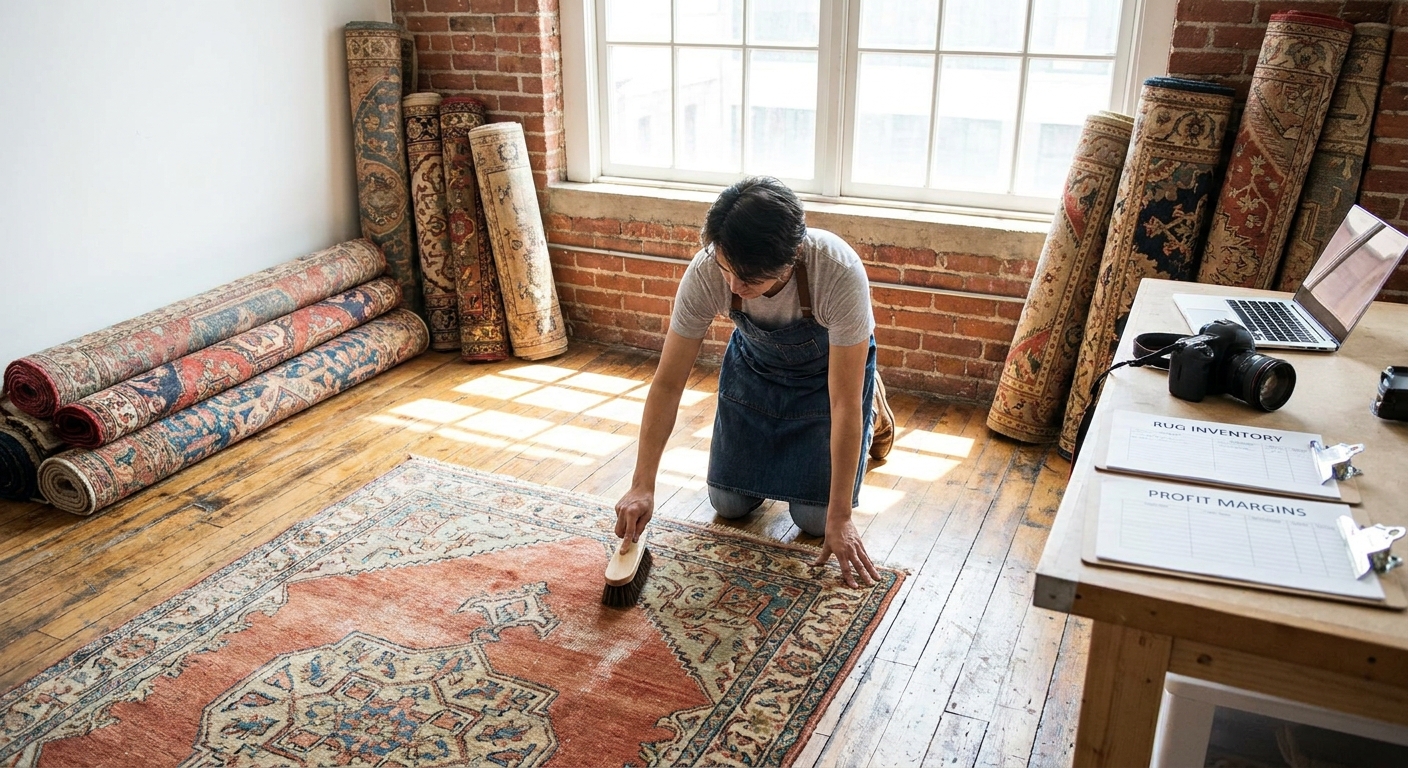
Area rugs are one of the easiest bulky items to flip for profit because they're light enough for one person to carry, but priced high enough new that even a discounted secondhand rug holds real margin.
TL;DR
Rugs don't get the attention that furniture and mattresses get in the resale world, but they should. A single 9x12 wool rug can weigh under 40 pounds, fit in a sedan trunk, and still sell for triple what a nightstand brings in. Retailers process rug returns constantly — shoppers order online, the color's wrong, the size doesn't fit the room, and the rug comes back in resellable condition. That volume is exactly the kind of inventory covered in best items retailers return that you can resell for profit, and rugs sit near the top of that list because damage rates are low compared to upholstered furniture.
The catch: rugs are a style category, not a commodity. A buyer searching for a rug already has a room, a color palette, and a size in mind. That means sourcing decisions matter more here than in almost any other flip category.
This guide is for reps and independent resellers who want a lightweight, high-margin category to run alongside bigger items like furniture and exercise equipment. If you're new to reselling and want something you can source, clean, and list without a truck, rugs are one of the better entry points — the best beginner reselling business ideas guide covers why low-weight, high-margin categories beat bulky furniture when you're starting with limited storage.
Wool holds resale value far better than polypropylene or nylon blends because it resists crushing and keeps color longer. A wool rug priced at $300 new can still flip for $150-$200 used in 2026; a synthetic rug at the same original price often caps out at $30-$50 secondhand.
5x8 rugs move fastest because they fit the most common living room and bedroom layouts. 8x10 and 9x12 rugs bring higher dollar amounts per sale but sit longer and cost more to store — know your storage footprint before you commit to room-size pieces.
Persian, Moroccan, kilim, and jute styles all have active buyer searches. A rug with no identifiable style — just a generic geometric pattern — competes on price alone and sells for less.
Rugs sourced from retailer returns usually carry a condition grade. A "like new" grade with original tags still attached lets you price near retail minus 40-50%; anything graded as damaged needs a hard look at whether cleaning costs eat the margin.
Smoke and pet odor are the two rug killers. Both can survive a single wash and resurface once the rug is unrolled in a warm room. Test in a closed space for 24 hours before you commit to buying.
A rolled 9x12 wool rug can weigh 35-50 pounds and take up real shelf space. If you're working solo without a van, stick to 5x8 and smaller until you scale up your storage.
Turn rug flips into weekly income
Pick up returned bulky items from premium retailers and resell them locally.
Wool pile density is the spec that matters here: denser weaves resist crushing and keep their color for years. An authentic 8x10 wool piece flips for $150-$400 depending on condition and origin. These are the rugs referenced in items retailers return that resell well, since online rug returns skew heavily toward this category. Verdict: Buy.
These retail new for $600 or more and flip secondhand for $200-$350, but demand swings with design trends. When they're in style, they move in days; when they're not, they sit for months. Verdict: Consider if you can price flexibly and hold inventory.
Lower price point, lower risk. These typically flip in under two weeks at $40-$90 because buyers treat them as disposable and don't overthink the purchase. Verdict: Buy for quick cash flow between bigger flips.
A 2x8 jute runner weighs under 15 pounds and stores flat in a closet. Margins are modest at $20-$45 per sale, but the low storage cost makes volume work in your favor. Verdict: Consider as a filler category.
Themed rugs (cartoon characters, sports logos) have a narrow buyer window tied to a kid's age and interest. Margins run $10-$25 and turnover is unpredictable. Verdict: Skip unless you're bundling with a nursery or kids' furniture set.
Wool Persian/Oriental
Moroccan Beni Ourain-style
Outdoor/patio polypropylene
Jute/natural fiber runners
Kids/novelty
Pricing a rug correctly matters as much as picking the right one — the same principles in how to price used furniture before you resell it apply directly to rugs: condition grade, original retail price, and local demand set the ceiling, not what you paid.
Most flipping mistakes happen at the buy, not the sell. When you're sourcing from individual sellers rather than retailer return channels, negotiate before you commit — the tactics in how to negotiate prices when buying secondhand items to resell apply directly: lead with condition issues you've already spotted, not a vague lowball number.
What's the best area rug size to flip for profit?
5x8 rugs move fastest because they fit the widest range of room layouts, while 8x10 and 9x12 rugs bring higher dollar amounts per sale but take longer to sell and cost more to store in 2026.
Is flipping wool rugs more profitable than synthetic?
Yes. Wool rugs hold resale value at $150-$400 for an 8x10 piece, while synthetic rugs at the same original retail price often cap out at $30-$50 used.
How much can you make flipping area rugs in 2026?
Margins depend on category: outdoor rugs flip for $40-$90 in under two weeks, while authentic wool Oriental rugs bring $150-$400 but take 3-6 weeks to sell.
Do you need to clean a rug before reselling it?
Always clean before listing. A rug with visible dust, pet hair, or a faint odor loses buyer trust immediately, and any smell that survives one wash usually signals a padding issue worth walking away from.
Where do resold area rugs sell fastest?
Local, pickup-only listings outsell shipped listings for large rugs, since shipping cost on a rolled 9x12 rug can exceed the profit margin entirely.
Is flipping area rugs a good side hustle for beginners?
Yes. Rugs are lighter and easier to store than furniture, making them one of the lower-barrier categories to start with compared to mattresses or exercise equipment.
How do you tell if a rug is real wool or synthetic?
Pull a few fibers and burn-test them away from the rug: wool singes and smells like burnt hair, while synthetic fibers melt into a hard bead and smell like burning plastic.
What condition issues make a rug not worth flipping?
Melted or stapled backing, unresolved odor after cleaning, and moth damage all signal a rug that will cost more to fix than it will return in resale profit.
Large rugs sell faster locally than they do on shipped marketplaces, because shipping cost on a rolled 9x12 rug can wipe out most of the profit. Prioritize pickup-only local listings for anything over 8x10, and save shipping for small runners and accent rugs where the margin can actually absorb it.