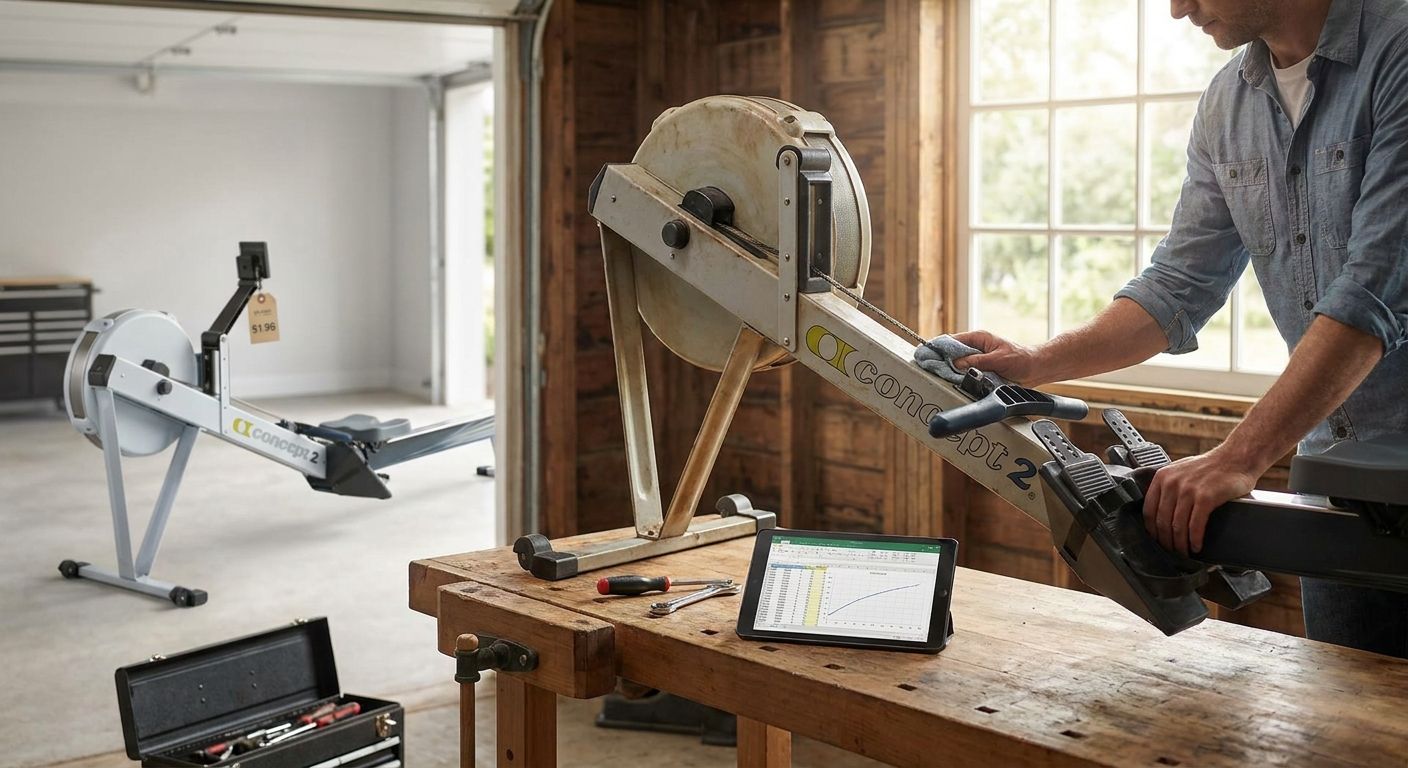
Rowing machines are one of the best-kept secrets in the retailer-return pipeline: heavy enough that most buyers won't drive to pick one up themselves, boxed awkwardly enough that a chunk of them get returned unused, and popular enough post-2020 that resale demand never really cooled off.
TL;DR
Home gym equipment is one of the highest-volume return categories at big-box retailers and online fitness brands, and rowers get returned for reasons that have nothing to do with the machine itself — wrong size room, buyer's remorse after the first workout, a gift nobody asked for. That means a steady stream of lightly-used or unused inventory hits liquidation and returns channels every month of 2026, and most local sellers never bother listing rowers because they're bulky and unfamiliar. Less competition, consistent supply, and a buyer base that already understands the category is a good combination for anyone flipping rowing machines for profit.
This guide is for the reseller who already has a truck, van, or trailer and wants a bulky-item category that doesn't require furniture refinishing skills. If you're comfortable doing a light mechanical check — spinning a flywheel, testing a resistance dial, checking a console screen — rowing machines are a low-skill, high-reward add to a resale route. It also fits sellers already picking up flipping exercise bikes for profit inventory, since the buyer pool and pickup logistics overlap almost completely.
The resistance mechanism determines both resale price and how long the machine lasts on your shelf. Air resistance rowers (the Concept2-style flywheel) are the most recognized and the easiest to resell because gym-goers already trust the mechanism. Magnetic resistance rowers are quieter and common in folding home models, which matters to apartment buyers. Water resistance rowers are the slowest movers but sell at a premium to buyers who care about how a machine looks in a living room.
Check the monorail or sliding track for warping, rust, or deep scratches before you commit to a pickup. A rower with a bent rail is a return you can't resell — the seat won't glide, and that's the first thing a buyer tests in person.
Buyers searching secondhand marketplaces already know a handful of names, and unfamiliar brands sit longer even when the machine works fine. A recognizable brand shortens your time-to-sale, which matters more on a bulky item than it does on furniture.
Most home buyers in 2026 are shopping with apartment or small-house space in mind. A rower that folds upright and rolls on built-in wheels sells faster than a fixed-frame unit of the same quality, because it solves a real storage problem for the buyer.
Console screens, Bluetooth heart-rate pairing, and app connectivity add resale value only if they still work. A dead screen or a subscription-locked console is a dealbreaker for a chunk of buyers, so test every digital feature before you agree to a pickup price.
A heart rate strap, floor mat, or original assembly hardware are small additions that make a listing look complete. Missing hardware is one of the fastest ways a rowing machine listing gets passed over for a competing one.
The safe pick — Concept2 air rowers. These are the machines CrossFit boxes and rowing clubs run daily, so buyers trust the mechanism without needing convincing. The aluminum monorail frame holds up well even after years of home use, and parts are widely available if a chain or handle needs replacing. Verdict: Buy — this is the category's most liquid resale item.
The wildcard — connected rowers (Hydrow and similar). These machines carry a premium because of on-demand class subscriptions, but the console and subscription status need verification before pickup. A rower with a locked or expired subscription still moves, just at a lower ceiling than a fully functional unit. Verdict: Consider — confirm the console works before you agree to a price.
The aesthetic pick — water resistance rowers. Wood-tank rowers sell to a specific buyer who wants the machine to double as furniture, and that buyer pays a premium for a clean, unwarped tank. Water damage or tank leaks are common issues on used units, so inspect the seal before hauling one home. Verdict: Consider — slower sale, higher margin per unit.
The volume pick — folding magnetic rowers. Big-box and online-only brands push a steady supply of budget folding rowers, and returns on these are common because buyers underestimate the noise or footprint. Quality varies by brand, but a clean unit with working resistance levels moves fast to apartment and small-space buyers. Verdict: Buy — good for keeping pickup volume steady between higher-margin flips.
The one to skip — hydraulic piston rowers. These use dual hydraulic arms instead of a flywheel, and the pistons wear out or leak fluid faster than any other resistance type on this list. Buyers who've owned one before actively avoid the mechanism, which caps your resale ceiling no matter how clean the frame looks. Verdict: Skip — the resale math rarely works once you factor in your pickup time.
Before you finalize any pickup price, run the numbers the way you would on any other bulky-item flip — the same logic that applies when negotiating prices on secondhand items to resell applies directly to rowers, since sellers rarely know what their machine is actually worth.
Concept2 air rower
Connected rower (Hydrow-style)
Water resistance rower
Folding magnetic rower
Hydraulic piston rower
Turn pickups into profit
Pick up returned rowers and gym gear from premium retailers and resell locally.
Is flipping rowing machines for profit worth it in 2026?
Yes, rowing machines are a strong bulky-item flip in 2026 because retailer returns keep supply steady and most local resellers avoid the category due to size. A clean Concept2-style unit typically resells fast compared to less recognized fitness equipment.
What's the best rowing machine to flip for beginners?
Concept2-style air rowers are the best starting point because buyers already trust the brand and mechanism. Folding magnetic rowers are a close second for volume, especially in apartment-heavy markets.
Are water resistance rowers harder to resell than air rowers?
Yes, water resistance rowers sell slower than air rowers because the buyer pool is smaller and more specific about aesthetics. They command a higher price per unit when the tank is undamaged, which offsets the slower turnover.
How much do rowing machines weigh for pickup and delivery?
Most home rowing machines weigh 50 to 70 pounds, which usually means two people for a safe pickup or delivery. Factor that into your route planning before you agree to a solo pickup.
Should I buy a rowing machine with a broken console screen?
Only at a steep discount, since a dead console removes the digital tracking features buyers expect in 2026. Price it and market it as a mechanical-only unit rather than trying to sell the smart features.
Do connected rowers like Hydrow still work without the subscription?
The rowing mechanism itself still works without an active subscription, but on-demand classes and some tracking features lock out. Always disclose subscription status to your buyer before the sale closes.
Where should I resell a flipped rowing machine?
Local marketplaces and fitness-specific resale groups tend to outperform general classifieds for bulky gym equipment. Buyers searching those channels already expect to arrange their own pickup, which saves you a delivery trip.
The rowers nobody wants to touch — the ones with a dead console or a squeaky rail — are often the highest-margin flips if you're willing to do a 15-minute inspection and a basic part swap. Most sellers price a broken-console rower like it's junk; buyers who just want the mechanical workout will pay close to full working-unit price once you're transparent about what's missing.