Weight benches are one of the highest-margin items in the bulky-goods resale game — heavy enough to scare off casual sellers, common enough to show up in every returns pile, and cheap enough to flip fast once you know what to look for.
TL;DR
Gyms closed home, home gyms multiplied, and retailers ended up holding a mountain of returned fitness equipment they don't want to restock or ship back. Weight benches are bulky, awkward to return-process, and expensive to store — which is exactly why they get liquidated cheap or handed off through returns-pickup networks in 2026.
That gap is the opportunity. A bench that costs a retailer more to process than it's worth can land in your hands for a fraction of retail, get cleaned up in an afternoon, and resell locally within a week. The margin isn't hypothetical — it's structural, built into how retailers handle oversized returns.
This guide is for anyone already flipping furniture or bulky goods who wants to add a fast-moving category, and for anyone considering becoming a Sharetown Rep to pick up returned fitness equipment directly from retailers. It works whether you're doing this as a weekend side income or scaling toward a full resale route — weight benches don't require a truck the size you'd need for a sectional sofa, and turnaround is faster than furniture because buyers search for them constantly.
Capacity is the first thing serious buyers ask about, and it's the fastest way to sort junk from resale-worthy stock. Standard adjustable benches are typically rated between 600 and 1,000 lbs combined user-and-load capacity, while basic flat benches often top out lower. A bench with a thin, wobbly frame under load isn't worth your gas money even if it's free.
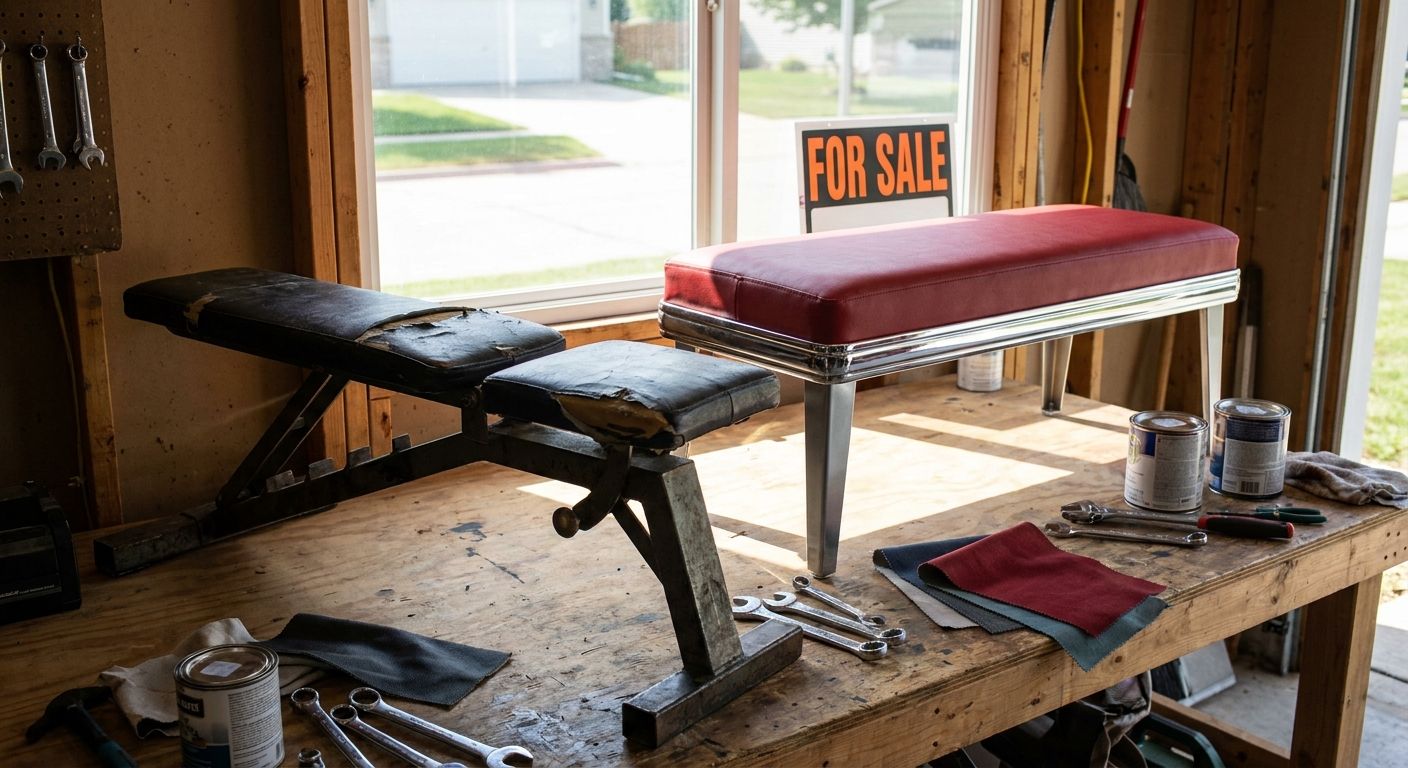
Vinyl pads take the most abuse and show it first — cracks, rips, and foam compression are the difference between a $120 flip and a $20 clearance item. A small rip you can patch with vinyl repair tape costs you a few dollars; a fully collapsed pad means new upholstery, which usually isn't worth it on a low-end bench.
Adjustable benches sell faster and for more than flat-only benches because they serve more workouts in less garage space. If you can only pick up one bench type in bulk, prioritize FID (flat-incline-decline) models — they're the most requested spec in local buy-and-sell fitness groups.
Names like Rogue, Bowflex, and Marcy hold value better than unbranded imports because buyers already trust the build quality sight unseen. A recognizable brand name in your listing title cuts your time-to-sale — buyers search the brand directly instead of browsing generic "weight bench" listings.
Foldable benches are the easiest sell in apartment-heavy markets because they solve the buyer's actual problem: nowhere to store gym equipment. If your local market skews urban, weight this criterion above raw capacity — a foldable bench with a lower rating still outsells a bulky fixed-frame one.
These cover flat, incline, and decline positions on one frame, and they're the single most-searched bench type on local marketplaces. Expect to pick these up for $20-$40 from returns or liquidation lots and resell for $100-$150 once cleaned and photographed. Buy.
Olympic-rated flat benches, often paired with a squat rack or barbell holder, appeal to buyers building a serious home gym rather than a casual one. These typically carry a 500 lb rating standard and resell in the $150-$250 range when the rack is included and intact. Buy if you can source them with the rack; Consider flat-only versions without it.
Lightweight, storable, and fast to move — these are the quickest turnaround item on this list because small-space buyers need them immediately and don't negotiate hard. Margins per unit are lower, usually $40-$70 resale on a $10-$15 pickup, but the sell-through speed makes up for it. Buy if you're moving volume; Skip if you only have time for one listing a week.
These add leg extension, preacher curl, or cable attachments to a standard frame, and they intimidate casual flippers because of missing-parts risk. When complete, they resell for $200-$350 and sit longer on the market — 2 to 4 weeks is normal versus under a week for a basic FID bench. Consider only if every attachment and pin is present; Skip if hardware is missing, because sourcing replacement pins for a discontinued model eats your entire margin.
Start picking up bulky returns
Become a Sharetown Rep and get first access to fitness equipment returns near you.
Adjustable FID
Olympic flat + rack
Foldable flat
Multi-station combo
How much can you make flipping weight benches for profit in 2026?
Most flippers net $50-$200 per bench depending on type and condition in 2026, with adjustable FID benches producing the most consistent margin. Volume matters more than per-unit profit — moving several benches a week beats holding out for one high-dollar sale.
What's the best type of weight bench to flip?
Adjustable FID (flat-incline-decline) benches are the best type to flip because they're the most searched category and resell fastest. Foldable benches are a close second in apartment-heavy markets where storage is the buyer's main concern.
Where do returned weight benches come from?
Returned weight benches typically come from big-box and online retailers processing oversized product returns they don't want to restock or ship back. Independent pickup networks give resellers access to this inventory before it goes to public liquidation.
How much should you pay for a used weight bench before reselling?
Pay no more than 20-30% of the expected resale price for a used weight bench, leaving room for cleaning, minor repairs, and time invested. A bench you expect to resell for $120 should cost you $25-$35 at most.
Are adjustable benches better resale than flat benches?
Yes, adjustable benches resell faster and for more than flat-only benches because they cover more workout types in the same footprint. Flat benches still move quickly on price alone, especially in the $40-$70 range.
How long does it take to resell a flipped weight bench?
A clean, well-priced adjustable bench typically sells within a week; multi-station combo benches with attachments can take 2 to 4 weeks. Photos showing intact upholstery and visible weight ratings speed up every listing.
Do you need to clean or repair a bench before reselling?
Yes — wiping down vinyl, tightening bolts, and patching small rips takes under an hour and directly raises what buyers will pay. Skipping this step is the fastest way to turn a $120 flip into a $60 clearance listing.
Is flipping weight benches better than flipping treadmills?
Weight benches are easier to flip than treadmills because they're lighter, don't require electrical function checks, and have fewer parts that can fail. Treadmills can carry higher resale prices, but weight benches turn over faster with less risk.
The bench type most flippers ignore — the flat-only Olympic model without a rack — is often the cheapest pickup on a liquidation pallet because buyers assume it's the least versatile option. Pair it with a $20 barbell clamp set and reposition it as a "starter powerlifting setup" and it moves as fast as the adjustable models, just with a lower price ceiling.