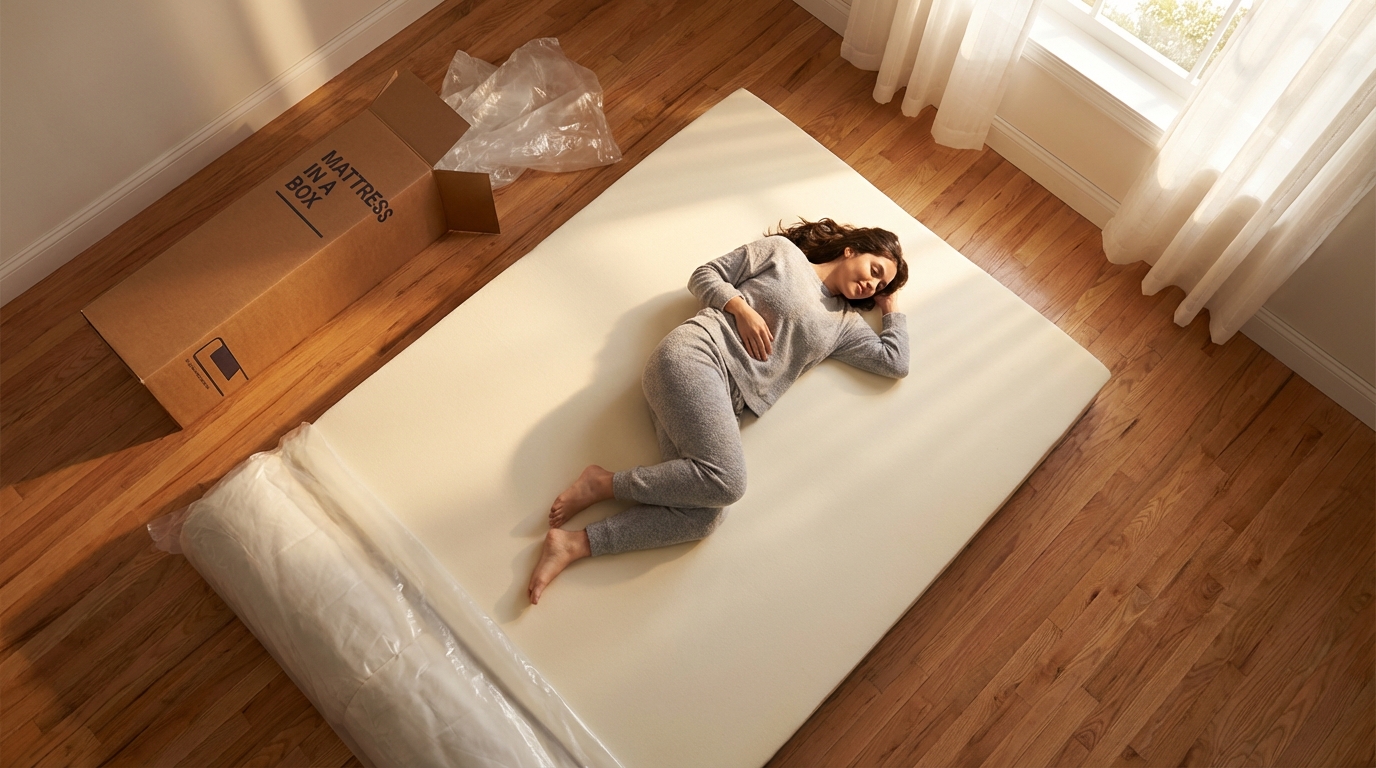
You've seen the ads: "Try our mattress risk-free for 100 nights." Some brands go even further — 365-night trials, no-questions-asked returns, free pickup. It sounds almost too good to be true. And if you've ever wondered how mattress companies can afford to let you sleep on a $1,500 mattress for three months and then take it back, you're not alone.
Mattress sleep trials have become the industry standard for online mattress brands. They were pioneered by companies like Casper and Tuft & Needle in the early 2010s as a way to overcome the biggest barrier to buying a mattress online: the inability to try before you buy. Today, virtually every direct-to-consumer mattress brand — and many traditional retailers — offer some version of a trial period.
But how do these trials actually work? What's in the fine print? And what happens to your mattress after you return it?
In this guide, we'll explain the full lifecycle of a mattress trial — from the moment you click "buy" to the journey your returned mattress takes after you decide it's not the right fit. Spoiler: the answer to that last question is more interesting (and more wasteful) than most people realize.
A mattress sleep trial is a guarantee from the manufacturer or retailer that you can use the mattress for a set period of time — typically 90 to 365 nights — and return it for a full refund if you're not satisfied.
The concept is straightforward: sleep on the mattress in your own home, on your own schedule, and decide if it's the right fit for you. If it's not, you initiate a return and get your money back.
While every brand is different, most mattress trials share these common features:
Nearly every DTC (direct-to-consumer) mattress brand now offers a trial period. Here's a comparison of some major brands:
| Brand | Trial Length | Break-in Period | Return Shipping |
|---|---|---|---|
| Casper | 100 nights | 30 nights | Free |
| Purple | 100 nights | 21 nights | Free |
| Nectar | 365 nights | 30 nights | Free |
| Saatva | 365 nights | None | $99 fee |
| Helix | 100 nights | 30 nights | Free |
| Tempur-Pedic | 90 nights | 30 nights | Free |
| Leesa | 100 nights | 30 nights | Free |
| Tuft & Needle | 100 nights | None | Free |
| WinkBed | 120 nights | 30 nights | Free |
| DreamCloud | 365 nights | 30 nights | Free |
Note: Trial terms change frequently. Always check the brand's current policies before purchasing.
If you're wondering why a company would let you use their product for 100 nights and then return it, the answer comes down to economics and consumer psychology.
Mattresses are a unique product category. They're expensive, highly personal, and traditionally something you'd test in a showroom. When brands like Casper started selling mattresses online in compressed boxes, they needed a way to overcome the natural hesitation of buying a $1,000+ item sight unseen.
The sleep trial was the answer. By removing the risk — "if you don't love it, we'll take it back" — brands dramatically increased conversion rates. Studies in consumer psychology consistently show that risk-free trials increase purchase likelihood by 20–40%.
The industry average return rate for mattresses with sleep trials is approximately 8–15%. That means the vast majority of customers keep their mattress. From the brand's perspective, the trial pays for itself many times over: the increased sales volume from offering a trial far exceeds the cost of processing returns.
Think of it this way: if offering a 100-night trial increases sales by 30% and only 10% of mattresses come back, the math works out overwhelmingly in the brand's favor.
Trial periods also build powerful brand equity. A customer who completes a sleep trial and keeps the mattress becomes a confident brand advocate. They've tested the product in the most rigorous way possible — sleeping on it every night for months — and made a deliberate decision to keep it. That's a customer who's likely to recommend the brand and buy from them again.
Once a few major brands started offering 100-night trials, every competitor had to follow suit or risk looking less confident in their product. This competitive pressure drove trial lengths from 90 nights to 100, then to 365. Brands like Nectar and DreamCloud now offer full-year trials — partly as a genuine customer benefit and partly as a marketing differentiator.
Here's where it gets interesting — and, for most brands, problematic.
Returning a mattress during a trial period usually follows this process:
This is the part most consumers don't think about — and it's the part with the biggest environmental implications.
The uncomfortable truth: Many returned mattresses end up in landfills. Despite being nearly new (often used for just 30–90 days), returned mattresses face a logistical problem. They're bulky, they've been slept on (making them legally "used" in most states), and the cost of shipping them back to a warehouse or factory is often more than the mattress is worth.
For a deep dive into this issue, read our investigation: What Really Happens to Returned Mattresses.
The common paths for a returned mattress:
Landfill disposal — The most common outcome, unfortunately. Many brands contract with hauling services that simply take the mattress to the local dump. It's the cheapest option, but it's also the most wasteful. With roughly 20 million mattresses entering U.S. landfills annually, returned trial mattresses contribute significantly to the problem. See the full picture in our mattress waste statistics breakdown.
Charity donation — Some brands arrange for returned mattresses to be donated to local charities. This is a better outcome, but it's limited. Charities have strict condition requirements and can only absorb so many mattresses.
Recycling — Mattress recycling facilities can recover up to 90% of a mattress's materials — steel springs, foam, fabric, and wood. However, dedicated mattress recycling facilities are scarce, and the economics are challenging. Learn more in our mattress recycling near me guide.
Resale through specialized services — This is the newest and most sustainable path. Companies like Sharetown partner directly with mattress brands to handle the entire return logistics chain — and instead of sending mattresses to landfills, they resell them locally through a network of independent contractors.
Sharetown occupies a unique position in the mattress trial ecosystem. When a customer returns a mattress from a participating brand, Sharetown manages the pickup, refurbishment, and resale — keeping the mattress in circulation instead of sending it to waste.
For mattress companies, partnering with Sharetown solves multiple problems simultaneously:
If you're considering buying a mattress with a sleep trial, here are some tips to make sure you use the trial period effectively:
The mattress trial model is evolving. Several trends are shaping how trials will work in the coming years:
Shorter trials, better matches: Some brands are using sleep technology (mattress sensors, sleep tracking apps) to recommend the right mattress before you buy, reducing the need for extended trial periods. Better matching means fewer returns and less waste.
Sustainability as a selling point: Consumers are increasingly asking about what happens to returned products. Brands that can demonstrate a responsible returns process — through partnerships with companies like Sharetown — will have a competitive advantage.
Circular economy integration: The most forward-thinking mattress brands are beginning to design products with their end-of-life in mind. Modular mattresses with replaceable comfort layers, recyclable materials, and standardized components make both returns and recycling easier.
Tighter regulations: More states are considering extended producer responsibility (EPR) laws for mattresses, which would require manufacturers to fund recycling programs. This will accelerate the shift toward sustainable returns management.
Most mattress trials range from 90 to 365 nights, with 100 nights being the most common length. Many brands require a 21–30 night break-in period before you can initiate a return. Brands like Nectar and DreamCloud offer 365-night trials, while traditional retailers like Tempur-Pedic typically offer 90 nights.
Most DTC mattress brands offer completely free returns during the trial period — including free pickup from your home. However, some brands charge a return shipping or pickup fee. Saatva, for example, charges a $99 return transportation fee. Always read the trial terms before purchasing.
Returned mattresses follow one of several paths: landfill disposal (the most common, unfortunately), charity donation, recycling, or resale through a specialized returns management company. Sharetown partners with major mattress brands to pick up, refurbish, and resell returned mattresses locally — keeping 97% of them out of landfills.
Yes — that's the entire point of a sleep trial. Brands expect the mattress to be used during the trial period. However, the mattress should be returned in reasonable condition: no major stains (use a mattress protector!), no physical damage, and no signs of misuse. Most brands are understanding about normal wear from sleeping.
Brands offer long trials because the math works in their favor. Return rates average only 8–15%, which means 85–92% of customers keep the mattress. The increased sales from removing purchase risk far outweigh the cost of processing returns. Longer trials also build customer confidence and brand loyalty.
Returns are a cost, but not typically a loss-making one when managed well. Smart brands partner with returns management companies like Sharetown to recover value from returned mattresses through resale. The return itself costs the brand money (pickup logistics, refund processing), but it's budgeted into the business model and offset by the significantly higher sales volume that trials generate.
For most consumers, yes. The vast majority of trial returns are processed smoothly with full refunds. The main caveats to watch for are: mandatory break-in periods (you can't return on day 5), condition requirements (no stains or damage), and potential fees (some brands charge for return shipping). Reading the fine print before buying eliminates most surprises.
Look for brands that explicitly state their returns process. Brands that partner with Sharetown or similar services are actively working to keep returned mattresses out of landfills. You can also ask customer service directly: "What happens to returned mattresses?" Companies with a sustainability-forward approach will have a clear answer.