Selling furniture on OfferUp has no fixed timeline: the sale is complete only when a buyer follows through, pays, and takes the item. In 2026, plan around buyer interest and completed pickups rather than a promised number of days, and account for the storage, messaging, and handling involved while you wait.
TL;DR
There is no single selling time you can apply to every furniture listing. A buyer needs to want the piece, accept its condition and asking terms, and arrange transportation. An interested message is progress, but it is not a completed sale.
Instead of guessing a deadline, identify where the transaction stops. Use the table below to choose a next move, then review these practical tips for writing furniture listings that sell.
No buyer inquiries
Repeated questions about size or condition
Conversations stop after pickup comes up
Buyers agree but do not collect
Treat these observations as diagnostic clues, not proof of a single cause. Keep a record of what you change so you can connect later inquiries to the version buyers actually saw.
An unsold dresser takes up physical space. It also creates work: keeping it protected, answering messages, arranging access, and sometimes repeating those arrangements after a buyer cancels.
For your 2026 resale plan, separate inventory on hand from completed sales. Do not schedule your next furniture pickup around money from a transaction that has not happened. Buyer interest is not money you can spend.
Your goal is not simply to generate messages. It is to help a suitable buyer understand the item and complete a practical, safe pickup without surprises.
Furniture resale involves both a buying decision and a moving task. Check these factors before deciding that a listing has been active too long:
These factors explain what to inspect, not how many days a sale will take. Improving one factor does not guarantee that the furniture will sell.
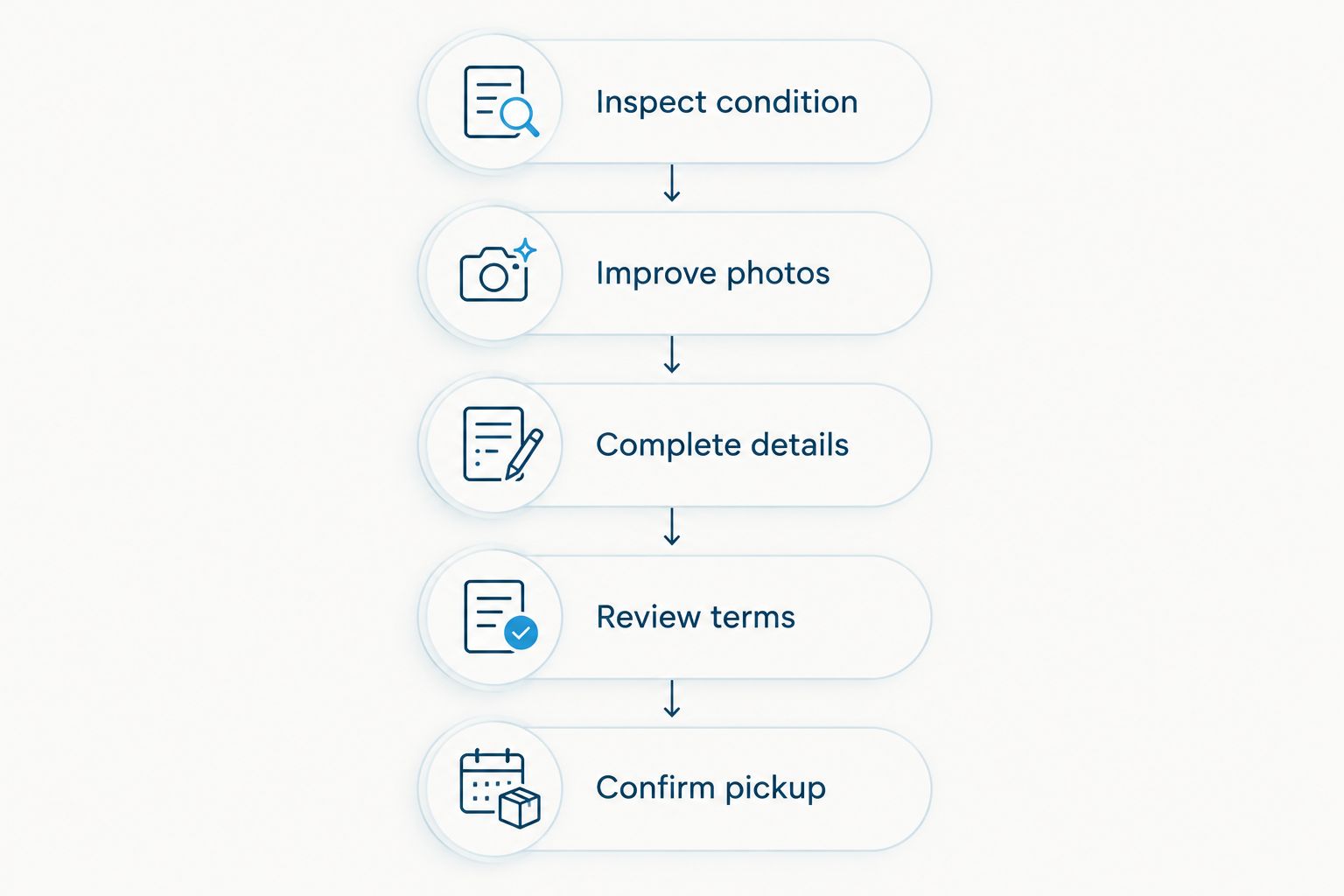
Use a repeatable review process in 2026 instead of repeatedly rewriting the entire listing. Start with the information buyers need, then address the point where conversations stop.
Check the piece before making claims about it. Open drawers, inspect visible surfaces, and document defects relevant to the buyer's decision. If you do not know the material or manufacturer, describe what you can verify.
Do not use like-new as a substitute for disclosure. A condition label should agree with the photographs and description.
Photograph the whole piece in a clear, uncluttered setting. Include views that show its shape and close-ups of wear, hardware, and relevant details.
Keep the images accurate. Editing that hides damage creates a mismatch between the listing and the furniture a buyer inspects.
Put the furniture type and useful identifying details in the title. Include dimensions with units, condition, included components, and the general pickup area in the description.
Answer recurring questions in the listing itself. If buyers keep asking whether a table comes apart, inspect it and add a verified answer rather than making each buyer start the same conversation.
Compare similar local listings without treating their asking amounts as completed-sale evidence. Consider condition and pickup requirements alongside the furniture itself.
Do not change your asking terms just because a message went unanswered. First check whether the buyer lacked information, needed transportation, or could not match your schedule. Make an intentional adjustment rather than reacting to every conversation.
Agree on a specific pickup arrangement before bringing the furniture outside or reorganizing your storage area. Confirm access requirements and who is responsible for moving the piece.
Keep communication clear and follow the marketplace's current safety guidance. Never treat a payment screenshot as a substitute for verifying payment through the method you agreed to use.
Fix the information and pickup obstacles before assuming the asking terms are the only problem.
For a useful 2026 record, write down when you publish the listing and when the paid pickup is complete. Keep preparation time separate so you can distinguish selling time from the full workload of acquiring, cleaning, photographing, and moving inventory.
Also record meaningful milestones: the first inquiry, a confirmed pickup, a cancellation, and a listing change. This helps you see whether an item attracted interest but stalled at collection, or never generated a conversation.
Compare your own similar items rather than treating unlike pieces as interchangeable. A small table and a large sectional create different storage and moving tasks, even if you list both on OfferUp.
Another marketplace gives you another place to present the item, but it also creates more messages and more listings to maintain. Cross-list only if you can keep the descriptions accurate and remove the item everywhere after a completed sale.
Keep condition details, measurements, and pickup arrangements consistent. Track which marketplace produced the completed transaction so your records reflect results rather than inquiry volume.
Cross-listing does not fix unclear photographs or difficult collection arrangements. Improve the original listing before copying the same obstacles elsewhere.
Sharetown suits furniture resellers who can pick up, store, list, and sell assigned returned products. It addresses the inventory-sourcing part of resale by assigning like-new returned products from premium brands to independent Reps.
Reps handle the full process, including pickup, storage, preparation, local listings, buyer communication, and resale. They earn a portion of the profit when an item sells, not simply for collecting it.
The trade-off is physical responsibility. Prospective Reps need space for at least five pieces of inventory, an appropriate vehicle, lifting help, and the ability to lift 50+ lbs. Those requirements matter as much as your comfort using a marketplace.
If those responsibilities fit your situation, explore Sharetown. Assigned inventory does not remove the need to sell effectively or guarantee a selling deadline.
Can furniture sell on OfferUp the same day I list it?
A same-day sale is not something to plan around. Treat the furniture as unsold until payment and collection are complete, regardless of how quickly someone messages you.
Why do people ask about my furniture and then stop replying?
An inquiry does not establish a buyer's intent or ability to collect the furniture. Answer clearly, provide the missing details, and avoid assuming that an unanswered message proves your asking terms are wrong.
Should I lower my asking amount if furniture is not selling?
Review the listing and pickup arrangements before changing your asking terms. Compare similar local pieces, disclose condition accurately, and make an adjustment deliberately rather than after every unanswered message.
Is furniture sold once someone agrees to pick it up?
Furniture is not sold merely because someone agrees to a pickup. Confirm the arrangement, verify payment through the agreed method, and record the sale when collection is complete.
Should I use OfferUp and Facebook Marketplace at the same time?
Use multiple marketplaces only if you can manage the messages and keep each listing accurate. Remove the item from every marketplace after it sells, and record where the completed sale originated.
Do Sharetown Reps earn money when they pick up furniture?
Sharetown Reps earn a portion of the profit when assigned inventory sells, not simply when they pick it up. Pickup, storage, preparation, listing, and buyer communication are parts of the resale process.
Make pickup instructions part of your next listing review in 2026. A buyer who likes the furniture still needs to work out whether they can collect it.
Explain the access, disassembly, and lifting requirements you have verified. The next useful improvement is the one that answers the question stopping a real buyer from proceeding.