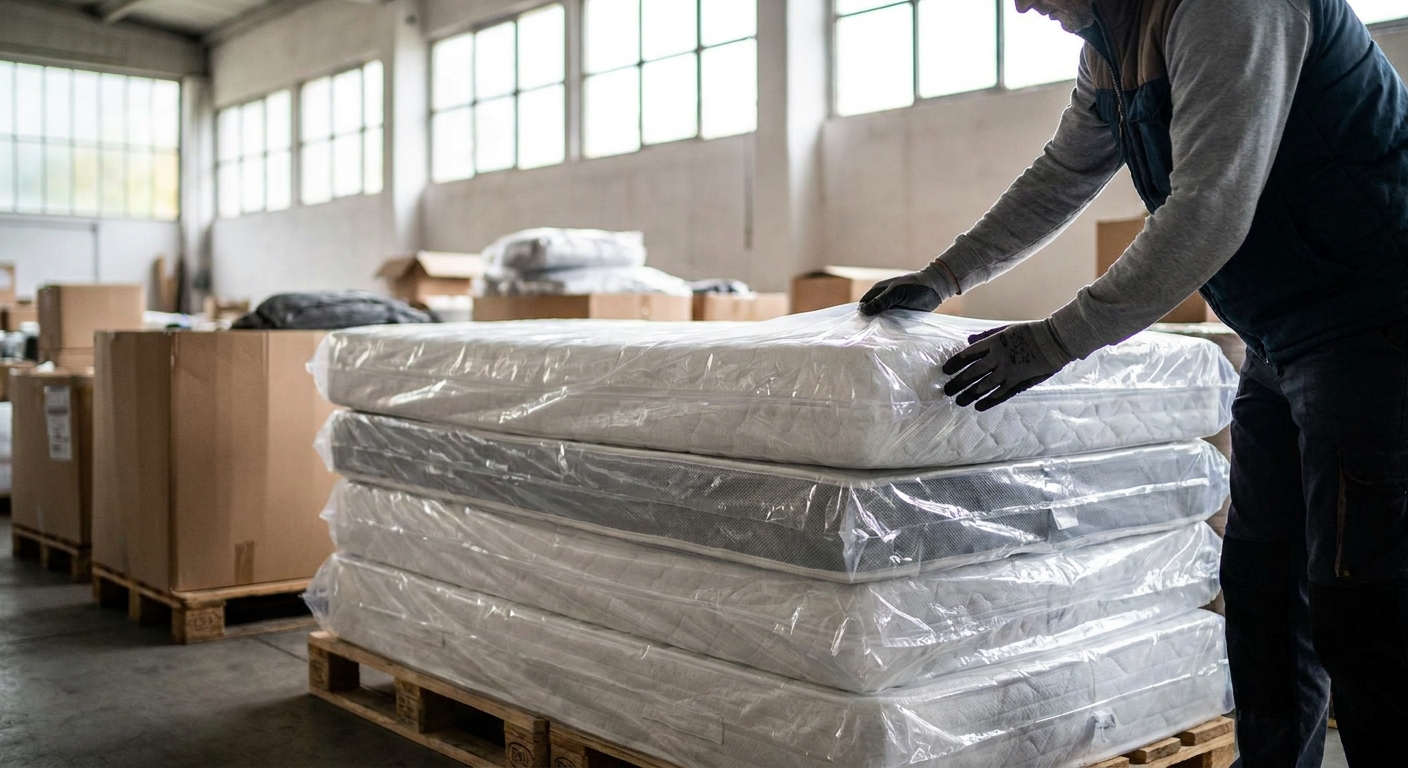
Liquidation auctions move truckloads of returned mattresses at 70-90% off retail, and most first-time bidders lose money on their first pallet because they skip the two steps that actually protect margin: inspection and sanitizing. Flipping mattresses from liquidation auctions is a real side income stream in 2026, but only if you treat it like a supply chain, not a garage sale.
TL;DR
Mattress liquidation lots exist because retailers can't restock a returned mattress by law in most states — once it's been in a customer's home, it goes to auction or landfill. That gap is where flippers make money.
The catch: liquidation platforms sell by the pallet, not the unit, and photos rarely show the condition that matters — stains, odor, sagging coils. Buying blind is how people lose $300-$600 on a single bad lot. Learning to read a manifest and inspect fast is the entire skill.
Budget $150-$400 for a starter lot of 5-10 mattresses, plus $50-$100 in cleaning and encasement supplies. Set aside a full weekend before your first sale — inspection and prep take longer than people expect.
This is where most of your profit or loss gets decided, before you ever touch a mattress. Look for lots that list condition grades ("like new," "shelf pull," "customer return") rather than generic "assorted bedding" pallets, and check whether the manifest names brands like Sealy, Purple, or Tempur-Pedic — branded units resell faster and hold price better than unbranded ones.
Expected outcome: you walk away from at least half the lots you scroll past. Common mistake: bidding on "as-is, no returns" pallets with zero photos — those are almost always the units retailers couldn't even grade.
Every mattress sold in the US carries a federal law tag, and most states require it to stay attached through resale. A lot missing law tags in the photos is a lot you can't legally resell as-is in many jurisdictions.
Check listing photos for the tag corner before bidding, and message the seller if it's unclear. Expected outcome: you avoid buying inventory you can't legally move. Common mistake: assuming "customer return" automatically means the tag is intact — it often isn't.
Many liquidation platforms allow a counteroffer window after an auction closes, especially on unsold or relisted lots. Negotiating prices when buying secondhand items to resell applies directly here — sellers holding aging mattress inventory will often drop 10-20% to move it before storage fees stack up.
Expected outcome: you land lots below the last posted bid. Common mistake: paying full ask on a relisted lot that's been sitting for 30+ days — that's leverage you're leaving on the table.
Do this at the warehouse or delivery dock before you sign off, with your flashlight and moisture meter in hand. Check every seam for stains, press the surface for sagging, run the moisture meter across the underside for hidden water damage, and smell for smoke or mildew.
Expected outcome: you can reject or renegotiate on units that fail inspection, before they're on your truck. Common mistake: inspecting in dim warehouse lighting and missing stains that show up under natural light two days later.
No buyer wants a mattress that smells like a warehouse. Cleaning a used mattress before reselling it is a full process: vacuum, steam at 200°F+ to kill dust mites, spot-treat stains with an enzyme cleaner, and let it air-dry fully — at least 24 hours — before bagging.
Expected outcome: a unit that passes a stranger's smell test on delivery. Common mistake: encasing a mattress before it's fully dry, which traps moisture and grows mildew inside the bag within a week.
Your cost basis on the lot is irrelevant to what a buyer will pay. Pricing used furniture before you resell it breaks down comping against local marketplace listings for the same brand and size, not your acquisition cost.
Expected outcome: a price that sells within 7-10 days instead of sitting for a month. Common mistake: pricing at 50% of original retail across the board — condition, not age, drives what a used mattress is actually worth.
Shoot in daylight, photograph both sides, and disclose any cosmetic flaw upfront — buyers who show up to a surprise stain leave bad reviews and demand refunds. Expected outcome: fewer no-shows and faster closes. Common mistake: reusing a manufacturer stock photo instead of your own — marketplace buyers scroll past those immediately.
Build a two-hour delivery window into your price for anything queen-size or larger, since most buyers can't fit a mattress in a sedan. Expected outcome: you close sales that competitors selling "pickup only" lose. Common mistake: underpricing delivery into the sale price and eating gas costs across a dozen deliveries a month.
Turn pickups into steady income
Sharetown Reps pick up retailer returns, including mattresses, and resell them locally.
How much does it cost to start flipping mattresses from liquidation auctions in 2026?
A starter lot of 5-10 mattresses runs $150-$400 in 2026, plus $50-$100 for cleaning supplies and encasement bags. Add hauling costs if you don't already own a van or trailer.
Is it legal to resell a used mattress?
Yes, as long as the federal law tag stays attached and the mattress has been sanitized per your state's health code. Most states require disclosure that the mattress is used.
What's the best liquidation platform for mattress lots?
Platforms with condition grading and photo requirements, like B-Stock or regional pallet brokers, beat generic marketplaces because you can actually see what you're bidding on.
How long does it take to flip a mattress from a liquidation lot?
Plan on a full weekend per 10-unit lot: inspection and cleaning take a day, drying takes 24 hours, and listing to sale usually closes within 7-10 days.
Can you resell a mattress with a stain?
A stain that comes out with enzyme cleaning and steam is fine to resell once disclosed in the listing. A stain that doesn't lift after two treatment rounds should be recycled, not sold.
What size mattresses sell fastest?
Queen size sells fastest in most markets because it fits the most households, followed by full and king. Twin sells slower outside of college towns and rental markets.
How do I know a liquidation mattress isn't damaged before I bid?
Check for manifest condition grades, law tag visibility in photos, and seller ratings before bidding — lots without any of these three are the highest risk.
Do I need a business license to flip mattresses?
Requirements vary by state and city; check local resale and secondhand dealer rules before scaling past a few units a month.
The flippers who actually make consistent money in 2026 don't chase every lot — they specialize in one or two brands they can inspect fast and price confidently, then repeat the same pickup-clean-list workflow every week instead of reinventing it per pallet.