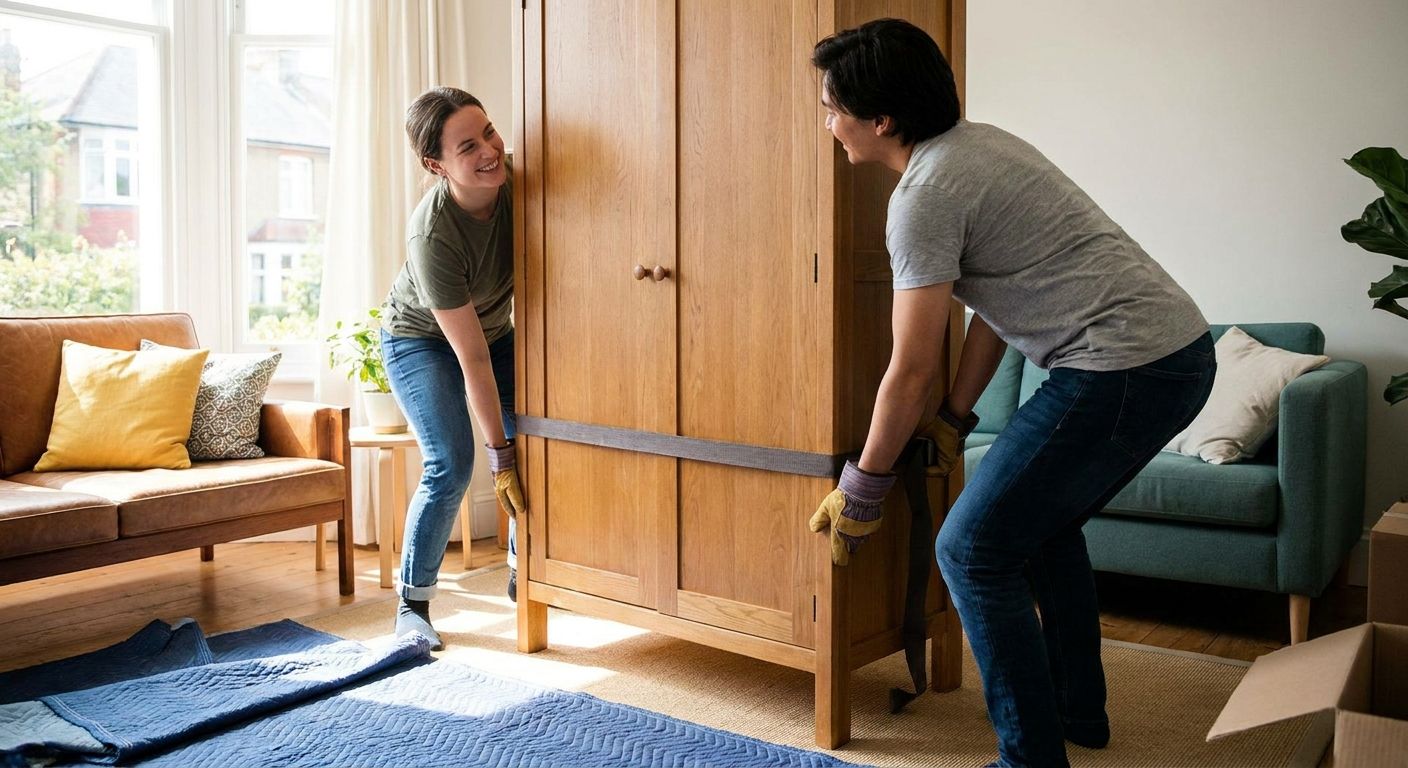
Heavy furniture doesn't care about your lifting technique until it's too late — a $600 sectional or a queen mattress can put a Sharetown rep or a weekend mover on the sidelines for weeks. This guide walks through the setup, the steps, and the recovery habits that keep your back intact while you move bulky items in 2026.
TL;DR
Back injuries from furniture and appliance handling are one of the most common reasons movers and resale reps lose income to downtime. If you're pulling returned mattresses, dressers, or exercise equipment for resale — the kind of oversized item pickup work Sharetown reps do daily — your back is your equipment. One bad lift on a heavy dresser or a full-size mattress can cost you weeks of work, not just a bad afternoon. Getting the mechanics right isn't optional if you're doing this more than once a month, whether you're a side hustle for movers or just clearing out a garage.
If you're building this into a resale business, the right tools matter more than raw strength. Reps who lift dressers, mattresses, and cabinets several times a week rely on gear like furniture dollies built for one-person moves and moving straps for solo hauls to keep the workload off their spine entirely.
Walk the full route from pickup point to drop point before you touch the furniture. Measure doorway widths, stair turns, and any spot narrower than 30 inches — a sectional that doesn't fit through a hallway forces a mid-carry pivot, which is where most twisting injuries happen. Common mistake: skipping this step because it looked fine from across the room.
Under NIOSH's revised lifting equation, the recommended maximum for a solo lift in ideal conditions is 51 lbs — most dressers, loveseats, and queen mattresses exceed that easily. If two people can't comfortably get a grip on opposite ends, that's your signal to bring in a third or use a dolly. Common mistake: underestimating weight because the item looks manageable, then compensating with a bad-form lift halfway through.
Stand with feet shoulder-width apart, one foot slightly ahead for balance, and get as close to the item as possible — no reaching. Bend at the knees and hips, not the waist, and grip with your whole hand, not just fingertips. Common mistake: hunching over the piece from a standing position instead of squatting down to it first.
Drive up through your heels and straighten your legs while keeping your spine neutral and your core tight — the furniture should rise because your legs are extending, not because your back is arching. Keep the item close to your torso the entire time. Common mistake: letting the load drift away from the body, which multiplies the strain on your lower back several times over.
Once the item is up, move your feet to turn — never rotate your torso while your feet stay planted. This is the single most common cause of lower back strain during a furniture move, more than the lift itself. Common mistake: twisting at the waist to clear a corner because turning your feet felt slower.
Any carry longer than a room's length should go on a dolly or shoulder straps, not your arms. Two-person shoulder straps redistribute weight to your legs and shoulders instead of your grip and lower back, which matters most on stairs. Common mistake: trying to muscle through a long hallway carry to save time setting up equipment.
Lower the item the same way you raised it — bend at the knees, keep your back straight, and set it down slowly instead of dropping the last few inches. A sudden drop transfers shock straight into your spine. Common mistake: relaxing form on the set-down because the hard part feels over.
Spend five minutes on hip flexor and hamstring stretches after a heavy lifting session — tight hips force your lower back to compensate on the next lift. If you feel sharp, localized pain (not general soreness), stop lifting for the day. Common mistake: pushing through a second or third heavy item right after the first, when your form is already fatigued.
Turn heavy lifting into steady income
Sharetown reps pick up returned mattresses and furniture with the right gear and support.
Once your lifting technique and gear are dialed in, the next question is whether this becomes a repeatable income stream. If you're already hauling furniture for resale, look at how to build a reselling side hustle around your day job to see how far a few weekly pickups can go in 2026.
How do I lift heavy furniture without hurting my back?
Bend at the knees and hips, keep the item close to your body, and drive up through your legs while keeping your spine neutral. Never twist at the waist while carrying — turn your feet instead.
How much weight can one person safely lift?
NIOSH's guideline puts the safe solo lift limit at roughly 51 lbs under ideal conditions with a good grip and short carry distance. Most dressers, sofas, and mattresses exceed that, so plan for two people or a dolly.
Is it better to lift or slide heavy furniture?
Sliding on furniture sliders is safer than lifting for short, flat-floor distances since it removes spinal load entirely. For stairs or uneven ground, lifting with a dolly or straps beats sliding.
What's the most common cause of back injury when moving furniture?
Twisting the torso mid-carry, not the initial lift, causes most furniture-related back injuries. Moving your feet to turn instead of rotating your spine prevents this.
Do moving straps actually protect your back?
Yes — shoulder-style moving straps shift weight off your arms and lower back onto your legs and shoulders, which is a stronger load path for heavy carries. They matter most on stairs and long hallway carries.
Should two people lift a mattress together?
Yes, a queen or king mattress is awkward enough that even a lighter weight benefits from two people to control balance and avoid a solo twist injury. One person should lead and call the lift and set-down.
What shoes are best for lifting heavy furniture?
Closed-toe shoes with a solid, non-slip sole give you the stability to plant your feet and pivot safely. Sandals or socks on hardwood increase slip risk during a carry.
How long should you rest between heavy lifts?
Give your lower back and legs a few minutes between heavy items, especially after anything over 75 lbs, since fatigued form is when most injuries happen. If you feel sharp pain, stop lifting for the day entirely.
The lift itself rarely causes the injury — the twist during the carry does. If you take one habit from this guide into 2026, make it moving your feet instead of your spine every time you turn a corner with a heavy piece in your hands.