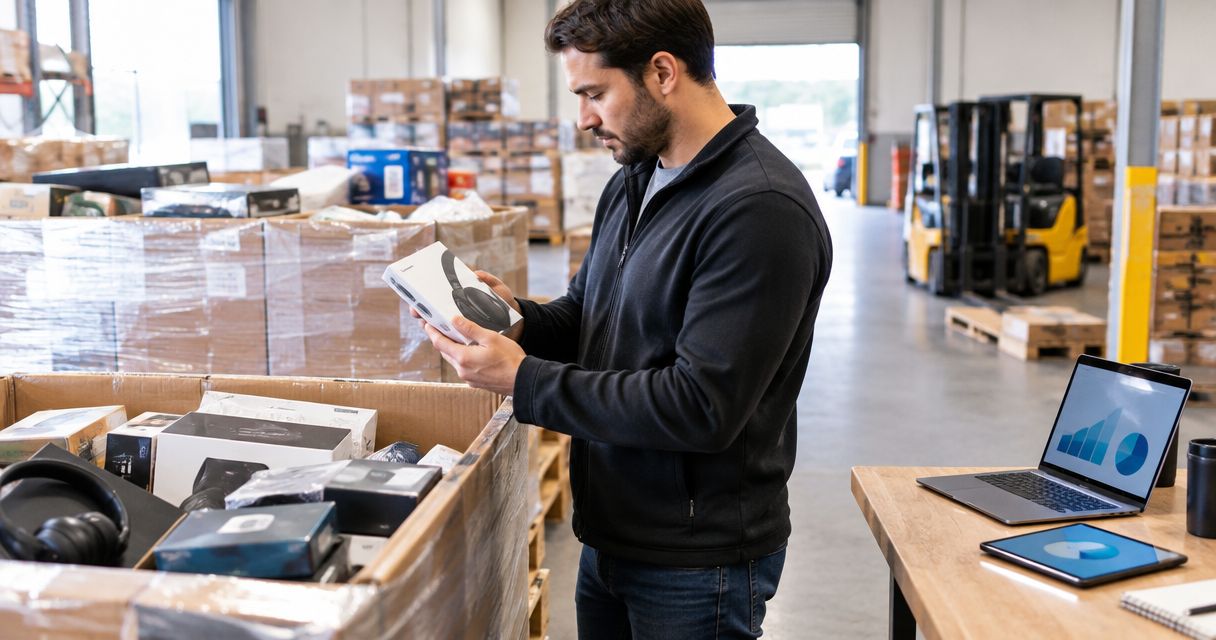
Liquidation pallets get pitched as a low-effort path to resale profit, but flipping liquidation pallets is profitable in 2026 only for people who inspect what they're buying and specialize in a category they actually understand. The pallet itself isn't the business — sorting, testing, pricing, and moving what's inside it is.
TL;DR
Pallet flipping got a wave of attention as retailers pushed more returned and excess inventory into the liquidation channel after the online-shopping surge of the past few years. That volume didn't disappear in 2026 — it just got more competitive, because more people are watching the same auction listings you are.
The pitch is simple: pay a fraction of the stated retail value for a pallet of mixed merchandise, resell the good pieces, and pocket the difference. The reality is messier. Manifests can overstate condition, freight damage isn't always disclosed, and testing electronics or furniture eats hours you don't get paid for until something actually sells.
Yes, for resellers who treat it like inventory management rather than gambling — no, for anyone expecting every pallet to be a clean win. Profitability depends on which type of pallet you're buying, and the four common categories behave very differently once you flip pallets for profit instead of just reselling odd pieces.
Customer-returns pallets
Shelf-pull / overstock pallets
Salvage / damaged-freight pallets
Insurance-claim pallets
These are the pallets most beginners find first because liquidation marketplaces list them constantly. Items have already been opened, used, or sent back for a reason the manifest rarely explains in detail. Buy these only if the platform lets you review a photo manifest or item-level list before you bid — blind customer-returns pallets are where new resellers lose money fastest.
Shelf-pull inventory never left the shelf — it got pulled for a reset, a season change, or a discontinued SKU. Condition risk is far lower than returns pallets, which makes this category the better starting point while you're still learning how to price and move inventory. Beginners exploring beginner reselling business ideas tend to land here first for exactly that reason.
Salvage pallets exist because something went wrong in transit — a truck rollover, a warehouse flood, a crushed pallet stack. Some resellers do well here because they can repair furniture, refurbish electronics, or part out what's unsellable whole. Without those skills, this category turns into a dumpster you paid for.
Running the actual math before you bid matters more than the pallet's sticker price. Learn to calculate your profit margin on a per-item basis, not just per pallet, so one dead SKU doesn't wipe out the win from three good ones.
Skip the blind pallet bid
See how Sharetown reps get inspected retailer returns to resell instead.
Pallet flipping means paying for a sealed box of unknowns. Sharetown works differently: independent reps pick up specific returned mattresses, furniture, and fitness equipment directly from retailers, inspect the item, then clean, sanitize, and resell it locally. You know what you're picking up before you commit your truck bed to it, which removes the biggest variable that makes pallet flipping risky in the first place.
Buying liquidation pallets is worth it for beginners in 2026 only when starting with shelf-pull or overstock pallets, since customer-returns and salvage pallets require condition-assessment skills most beginners haven't built yet. Start small, track every item's outcome, and don't scale spend until you've run a full pallet cycle from bid to sold.
Items that sell best from liquidation pallets are ones with steady local demand and low repair complexity — small home goods, seasonal decor, and simple appliances move faster than anything requiring parts or specialized repair. Bulky furniture and mattresses can be profitable too, but they need a vehicle and storage space most pallet buyers don't budget for upfront.
Most liquidation marketplaces require a resale certificate or business registration before they'll let you bid, since pallets are sold tax-exempt for resale purposes. Check the specific platform's requirements before you register, since they vary by state and by marketplace.
Is flipping liquidation pallets profitable in 2026?
Flipping liquidation pallets is profitable in 2026 for resellers who inspect condition before bidding and specialize in one resale category. It's a loss-maker for anyone treating an unopened pallet as a guaranteed win.
What's the safest type of liquidation pallet for a beginner?
Shelf-pull and overstock pallets are the safest starting point because the inventory was never used or returned, only pulled from a shelf reset or discontinued line. Customer-returns and salvage pallets carry far higher condition risk.
How much does a liquidation pallet cost?
Liquidation pallet pricing varies by platform, category, and the stated manifest value, so check current listings on the marketplace you're using rather than relying on a fixed number. Bidding formats mean the same pallet type can price very differently week to week.
Are liquidation pallets better than buying individual returned items?
Individual returned items give you more control over condition and category than a sealed pallet, since you can inspect before committing. Pallets can offer more volume per dollar, but only when the manifest is accurate.
What sells fastest from a liquidation pallet?
Small home goods, seasonal items, and simple appliances typically sell fastest because local demand is steady and repair complexity is low. Bulky furniture sells too, but it takes longer to move without the right vehicle and storage.
Do liquidation pallets include a manifest?
Reputable liquidation marketplaces include a manifest listing item categories, quantities, and sometimes photos, though detail level varies widely by seller. Always confirm the manifest source before bidding, since accuracy is the single biggest driver of pallet profitability.
Can you make a full-time income flipping liquidation pallets?
Full-time income from liquidation pallets is possible but requires enough capital to buy in volume and enough sales channels to move inventory consistently. Most people start part-time to learn pricing and condition assessment before scaling.
Is Sharetown an alternative to buying liquidation pallets?
Sharetown gives reps inspected, individual retailer returns to pick up and resell instead of bidding on a sealed pallet of unknown contents. It removes the guesswork that makes pallet flipping risky for beginners.
The reseller who breaks even on their first three pallets and profits on the fourth isn't unlucky — that's the normal learning curve for anyone flipping liquidation pallets in 2026. The fix isn't buying more pallets faster; it's slowing down on manifest review and picking one category to get good at before you branch out.