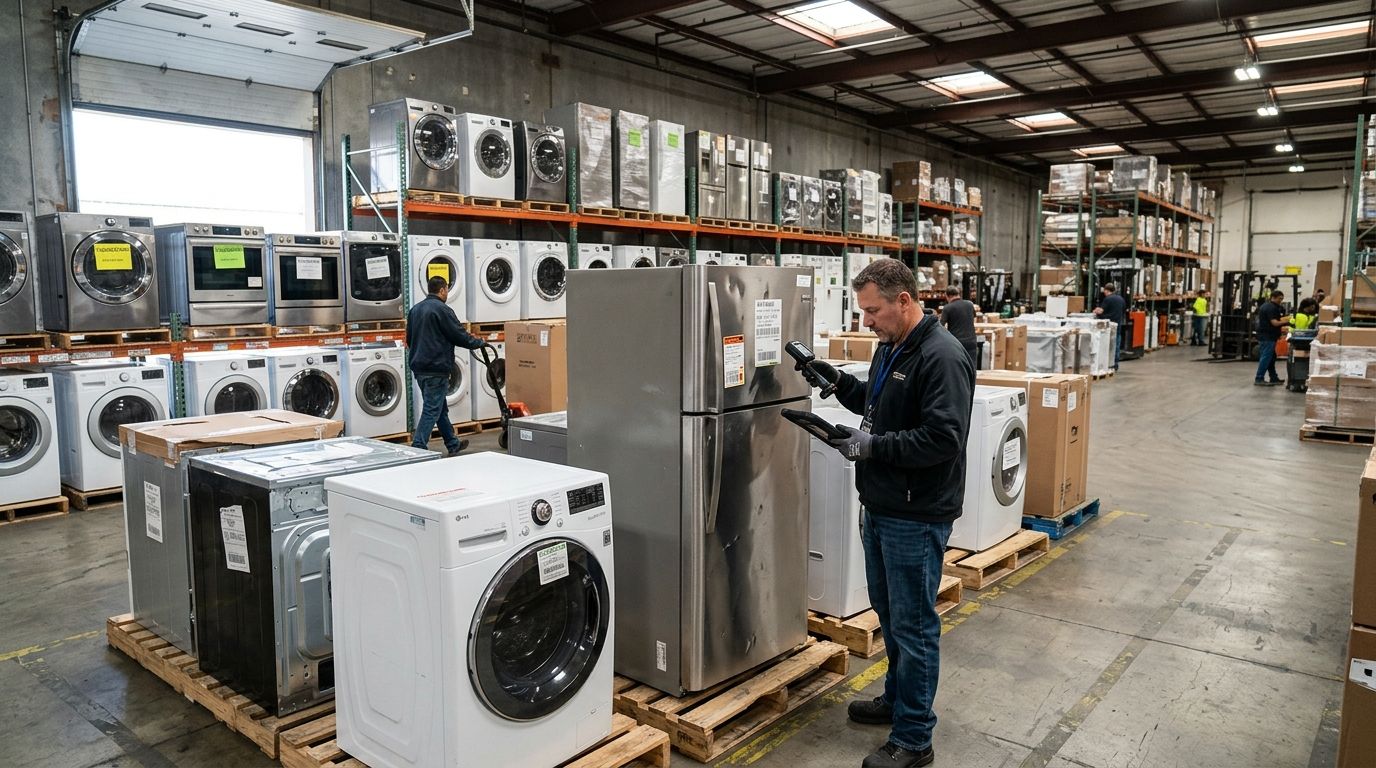
Returns liquidation for appliance retailers is the process of pulling refrigerators, washers, dryers, and small kitchen units out of the returns pipeline and reselling them locally before storage costs and depreciation erase what's left of their value. Appliances carry a risk most other return categories don't carry: a scratched dishwasher might sell just fine, but a refrigerator with a failed compressor is scrap. Grading and testing matter more here than almost anywhere else in reverse logistics.
TL;DR
Appliance returns take up more floor space per dollar of value than almost anything else a big-box retailer moves. A returned washer or refrigerator sits on a pallet, in a dock cage, or in a back room for weeks, and every one of those weeks is rent you're paying on inventory you already booked as a loss.
Retailers who resell open-box and returned appliances instead of scrapping them recover cash that would otherwise go to a liquidator at pennies on the dollar. The math only works if the process is fast and the grading is honest — a mispriced unit that gets returned again by the next buyer costs you twice.
Appliance retailers in 2026 also face a compliance layer furniture and mattress sellers don't: refrigerant recovery. That single requirement changes who you can liquidate through and how fast you can move a refrigeration unit off the dock.
Separate cosmetic damage from functional damage before you do anything else. A dented dryer panel and a dryer that throws an error code are two completely different resale paths.
Appliances depreciate faster than furniture because next year's model pushes last year's price down the moment it hits the floor. A refrigerator sitting in your warehouse in March 2026 is worth less by June.
Pricing by cosmetic condition alone is the fastest way to sell the same broken unit twice. Power-on testing takes minutes and changes the price tier immediately.
This is the decision that determines your recovery rate. In-house clearance sales work if you have foot traffic and spare floor space. Wholesale liquidators move volume fast but pay the least per unit. A local rep network like Sharetown gives you a middle path: an independent rep picks up the unit, grades it, cleans it, and resells it in their own market, so you're not staffing a clearance corner or negotiating pallet prices.
Condition tiers keep pricing consistent across locations and prevent the guesswork that leads to underpricing working units or overpricing broken ones.
A graded unit that sits for another two weeks waiting on a pickup truck erases the time you saved by testing it fast.
Liquidation data is a diagnostic tool, not just a recovery report. If one SKU keeps showing up in the functional-damage pile, that's a product or handling problem worth fixing before the next order.
In-house clearance sale
Wholesale liquidator / pallet buyer
Online marketplace listings
Local rep network (Sharetown)
Move Appliance Returns Off Your Dock
Local reps pick up, grade, and resell returned appliances in your market.
Knowing which used appliances are worth flipping in the first place also shapes which units belong in your liquidation channel versus your scrap pile — not every returned appliance is worth the same recovery effort.
What is returns liquidation for appliance retailers?
It's the process of moving customer-returned refrigerators, washers, dryers, and small appliances out of storage and into resale channels before they lose value. Grading and functional testing come first, then the unit is routed to clearance, wholesale, marketplace, or local rep resale.
How fast should appliance retailers move returned units?
Aim for a decision within 30-45 days of the return date. Appliances depreciate faster than furniture because next year's model discounts push last year's resale price down within months.
Can retailers resell refrigerators and freezers with refrigerant still inside them?
Yes, if the unit still functions and the refrigerant hasn't leaked, it can be resold intact. Recovery under EPA Section 608 only applies when the unit is being scrapped or the refrigerant system is being opened for repair or disposal.
What's the difference between wholesale liquidation and local resale reps?
Wholesale liquidators buy pallets in bulk at a low per-unit price, which moves volume fast but recovers less cash per appliance. Local resale through a rep network grades each unit individually and typically returns more per item, at the cost of slower per-unit turnaround.
Is it worth reselling non-functional appliances?
Usually only for parts or scrap value once a unit fails a power-on test. Repairing a non-functional appliance for full resale rarely pencils out once labor and parts availability are factored in.
Do appliance retailers need a resale certificate to liquidate returns?
Requirements vary by state and by whether you're selling directly or through a third-party channel, so check your state's rules before setting up a liquidation program. A local rep or liquidation partner handling the resale may carry their own registration instead.
What appliances resell best after being returned?
Units with cosmetic-only damage that pass a power-on test resell closest to open-box pricing. Refrigeration and laundry units tend to hold resale value better than small countertop appliances, which compete against cheap new replacements.
How much floor space should appliance retailers budget for returns?
There's no fixed number — it depends on return volume and how fast units move through grading. The faster the liquidation window closes, the less dedicated space you need to hold returns.
Before you liquidate a single refrigerator in 2026, confirm your channel handles refrigerant recovery under EPA Section 608 — the retailer who resells a unit without certified recovery is the one holding the liability, not the buyer. That single check separates a clean liquidation program from a compliance problem waiting to surface.