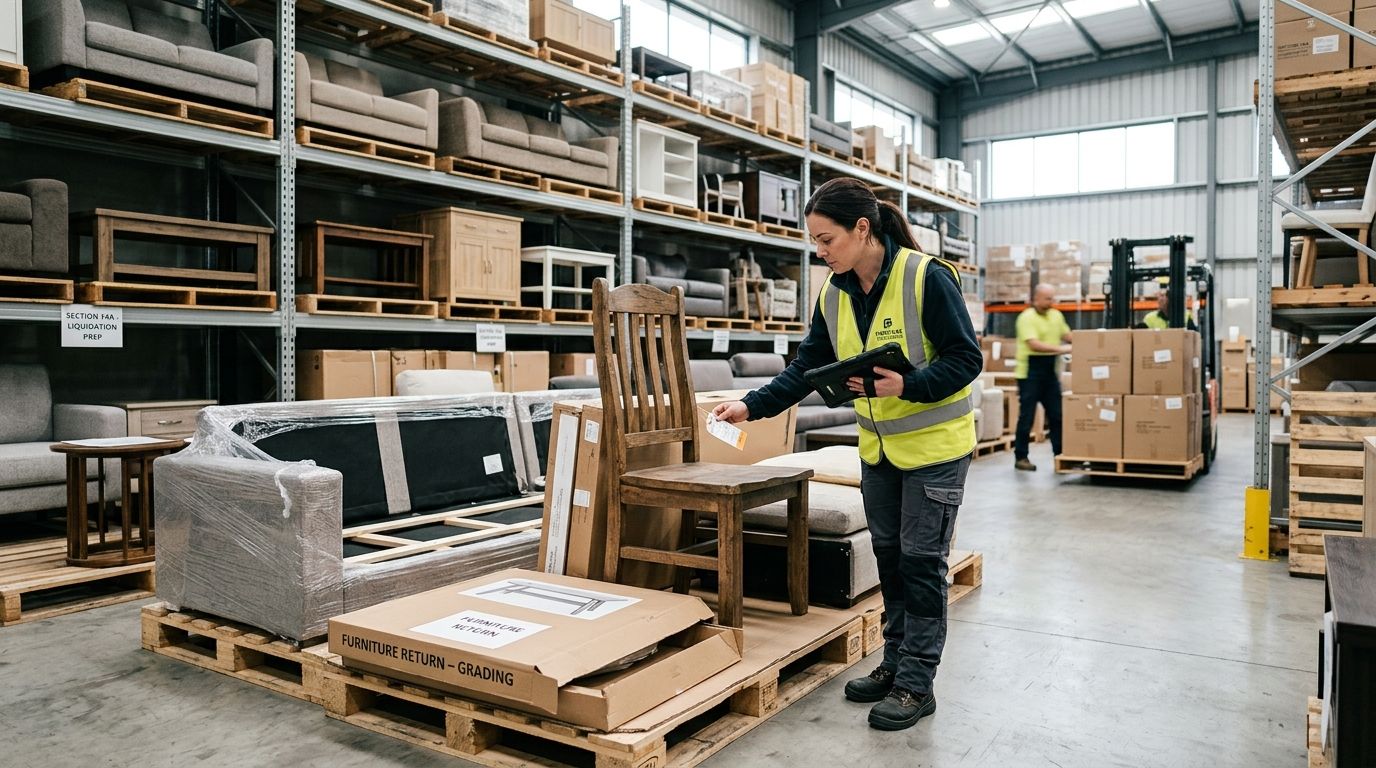
Returns liquidation for furniture retailers means converting open-box sofas, returned mattresses, and damaged floor models into cash instead of letting them rot in receiving. Furniture returns move differently than apparel or electronics returns: every unit is freight-class bulky, storage costs stack up fast, and a mattress or sectional loses resale value the longer it sits untouched. A furniture retailer's liquidation program has to move heavy items on a tight clock, not just process a return label.
TL;DR
Mattress and upholstery returns carry a different cost structure than small-parcel returns. A return that ships back to a distribution center consumes dock space, forklift time, and square footage that's priced by the pallet, not the box. Every day a returned king mattress sits on a rack is a day it depreciates toward a scrap-value pallet sale instead of a resale-grade sale.
Retailers running mattress, furniture, or fitness equipment lines see return volume concentrated in a handful of SKU types: floor models, damaged-in-transit deliveries, and buyer's-remorse mattress trials. Unlike apparel, none of these can go through a standard reverse-logistics conveyor. They need someone local, with a truck, who can pick up in days rather than weeks. That's the gap Sharetown was built to close — independent reps who pick up bulky returns and resell them locally instead of routing everything to a national liquidator.
Before you liquidate anything, know what's actually coming back and in what condition.
A mattress and a solid-wood dresser don't depreciate at the same speed. Give each category a firm deadline before it defaults to the lowest-recovery channel.
This is the manual work most retailers already do, just without a system behind it.
This is where most retailers hit a wall — someone has to physically get the mattress off the dock and into a buyer's hands. Sharetown solves this by connecting retailers to a network of independent reps who pick up directly from stores or distribution centers, then clean, sanitize, and resell locally.
Move returns off your dock faster
Local reps pick up bulky returns and resell them so you don't have to.
You can't fix a liquidation program you're not measuring.
Mattresses carry state-level law-tag and sanitation requirements that most other furniture returns don't.
National liquidation marketplace
Pallet auction to liquidation buyers
In-house resale team
Sharetown local rep network
Donation write-off
Verdict: retailers moving a steady volume of oversized returns get the best blended recovery pairing local resale for A/B-grade units with pallet liquidation for the rest.
What is returns liquidation for furniture retailers?
It's the process of converting returned mattresses, sofas, and other bulky furniture into recovered revenue instead of writing them off. Retailers grade condition, pick a channel — local resale, marketplace liquidation, or pallet auction — and move units before they depreciate further.
How fast should a furniture retailer liquidate returned mattresses?
Move mattress and upholstery returns within 7-10 days of intake. Waiting longer increases storage cost and drops resale value, since buyers pay less for units that look like they've sat in a warehouse.
Is local resale better than a liquidation marketplace for furniture retailers?
Local resale typically recovers more per unit because there's no freight cost and the item sells at closer to full market value. Marketplace liquidation moves volume faster but at a lower payout per unit.
Can Sharetown handle fitness equipment returns, not just furniture?
Yes. Sharetown's rep network picks up mattresses, furniture, and fitness equipment returns from retailers and resells them locally, which covers most of the oversized-item categories retailers deal with.
Do furniture retailers need a resale certificate to liquidate returns?
In most states, yes, if you're reselling returned inventory rather than just disposing of it. Check your state's requirements before routing returns through any resale channel.
What's the difference between liquidation and donation for returned furniture?
Liquidation recovers cash through resale, pallet auction, or a marketplace. Donation gives up cash recovery in exchange for a tax write-off, and it's usually reserved for units too damaged to resell.
How does Sharetown pick up returns from furniture retailers?
A local independent rep is dispatched to the store or distribution center to pick up the returned item directly, rather than routing it through a national reverse-logistics network.
What furniture categories have the highest return rates for retailers?
Mattresses and upholstered sofas tend to generate the most returns due to comfort mismatch and shipping damage. Fitness equipment and case goods return less often but cost more to liquidate per unit due to size.
Grade before you route. Retailers that sort A/B/C condition on the dock, before deciding which channel a return goes to, consistently pull more value out of the same return volume than retailers who send everything to whichever liquidator answers the phone first. In 2026, the retailers still treating every return the same way are the ones leaving margin on the table.