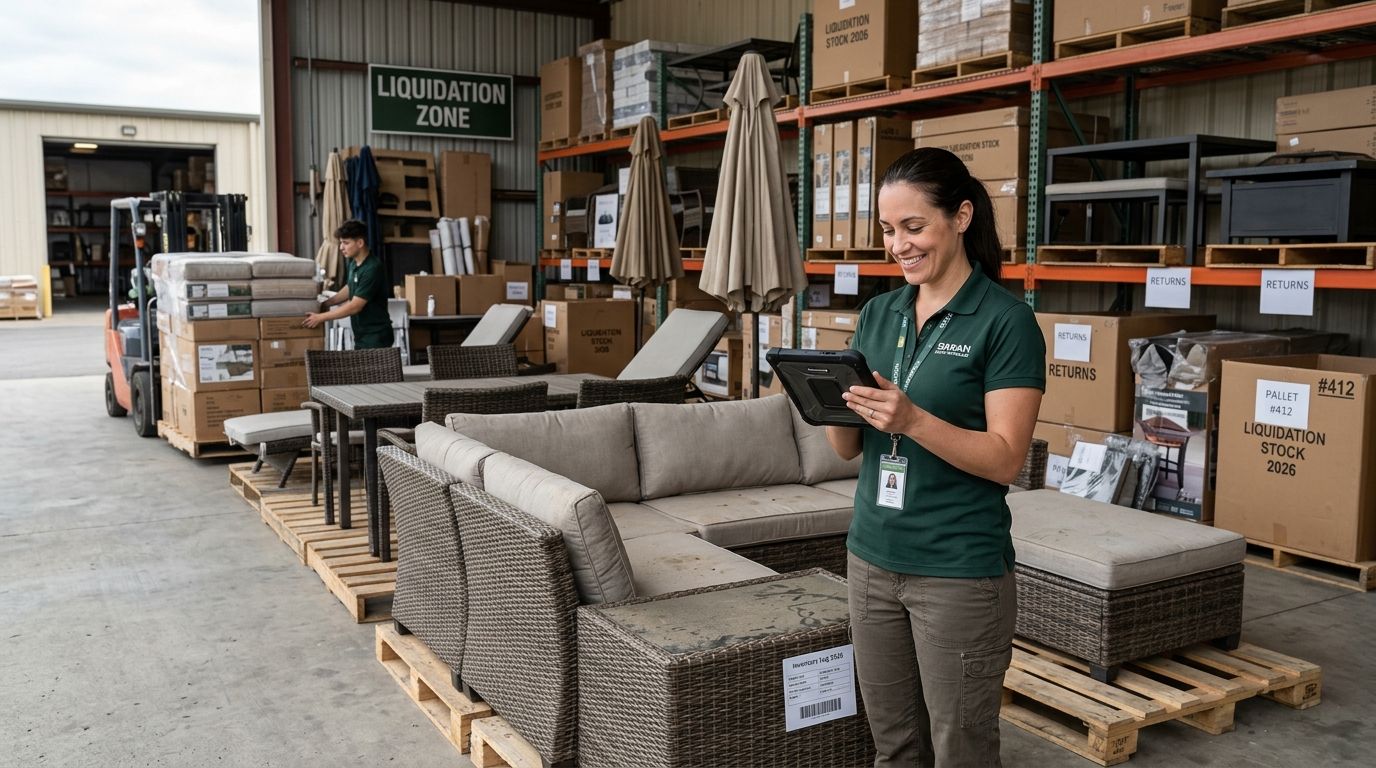
Patio retailer returns liquidation is the process of getting damaged-box, defective, and buyer's-remorse outdoor furniture out of the warehouse and back into cash instead of letting it eat storage space through another season. For patio retailers, the twist is timing: a rusted fire pit or a freight-crushed sectional sitting in a corner in July is worth far less by October, so the liquidation plan has to move fast and match a narrow selling window rather than a year-round one.
TL;DR
Patio furniture returns arrive in clusters, tied to spring and early-summer buying, and a large share come back for reasons that have nothing to do with the product itself: freight damage on umbrellas and sectionals, assembly frustration on cantilever bases, or a buyer who simply changed their mind about color once the set landed on the deck. None of that makes the item worthless. It makes it a liquidation problem with a clock attached.
Outdoor furniture also depreciates on a seasonal curve that indoor furniture doesn't face. A 4-piece wicker set that sells at near-retail in May is a markdown item by September and dead weight by December if it's still sitting in a distribution center. That's the core reason flipping patio furniture for profit works as a resale category for independent resellers, but only when retailers move returned inventory out the door while demand is still live.
Weight and dimension compound the problem. Aluminum frame chairs run light, but a sectional piece or a stone-look fire pit table can push well past 150 lbs, the general threshold where freight carriers switch from parcel to LTL shipping. That single fact changes everything about how a patio retailer should route pickups, price for resale, and decide who touches the item next.
The manual version of this process works. It's slower and takes more internal labor, but every step below can be run in-house before you ever bring in outside help.
Before fixing anything, know what's actually coming back and why.
A returned patio set that sits ungraded gets treated like scrap by default, and that's where margin disappears.
This is also the point where retailers start looking outside their own four walls. A Sharetown rep can pick up graded inventory directly from the warehouse, which removes the need to build a full resale operation internally.
Not everything that comes back is sellable, and mixing it with good stock slows down everyone.
Returned patio furniture doesn't sell at MSRP, and pricing it like new inventory just extends the time it sits.
Bulky patio items need routing logic that a standard parcel return process doesn't have.
Each outbound channel trades speed for control differently. This is where most patio retailers either overpay for national liquidators or underprice through DIY marketplace listings.
Without tracking, you can't tell if the program is working or just moving inventory sideways.
Local resale via independent reps
Liquidation pallet auctions
National liquidation marketplaces
In-house marketplace listings
A patio retailer with steady return volume gets the most value out of local resale through independent reps because the furniture sells inside the same season it was returned, not months later through a national liquidator's queue.
Move patio returns before the season ends
See how Sharetown reps pick up and resell bulky returns locally.
What is returns liquidation for patio retailers?
It's the process of grading, pricing, and reselling returned outdoor furniture instead of writing it off or sending it to landfill. For patio retailers, timing matters more than for most categories because demand is seasonal.
Is local resale better than a liquidation auction for patio furniture?
Local resale through independent reps typically recovers more value per item than pallet auctions because buyers pay closer to local market price instead of bulk-lot pricing. Auctions move volume fast but at a lower per-item return.
How much does returns liquidation cost a patio retailer?
Cost depends on the channel: in-house listing takes staff time and storage space, national liquidators take a cut of proceeds, and rep-based resale networks operate on a different cost structure than either. Check current terms directly with each option.
What patio items get returned most often?
Sectionals, umbrellas, dining sets, and fire pits see the highest return volume, largely due to freight damage and assembly issues rather than product defects. Umbrellas and cantilever bases are especially prone to mechanical damage in transit.
Can retailers resell patio furniture with cosmetic damage?
Yes, as long as it's graded and priced to reflect the damage. Cushions with UV fade or minor frame scuffs still sell locally at a discounted price rather than being scrapped.
How fast should patio returns be liquidated?
As close to real-time as the warehouse allows, since outdoor furniture demand drops sharply once the selling season ends. Waiting until the following spring cuts recovery value significantly.
What's the freight threshold for patio furniture returns?
Items over roughly 150 lbs typically ship LTL freight rather than standard parcel, which changes how pickups and returns need to be routed and staffed.
Do independent reps handle pickup logistics for patio returns?
Reps working with a network like Sharetown pick up directly from the retailer's location, which removes the need for the retailer to run its own local delivery or resale operation.
The biggest lever most patio retailers ignore isn't pricing or grading, it's timing the exit against the calendar. A returned sectional graded and priced in June sells in June. The same set graded in September competes with markdown season and loses most of its resale value by winter. Build the liquidation step into the return process the same week the item comes back, not the same quarter.