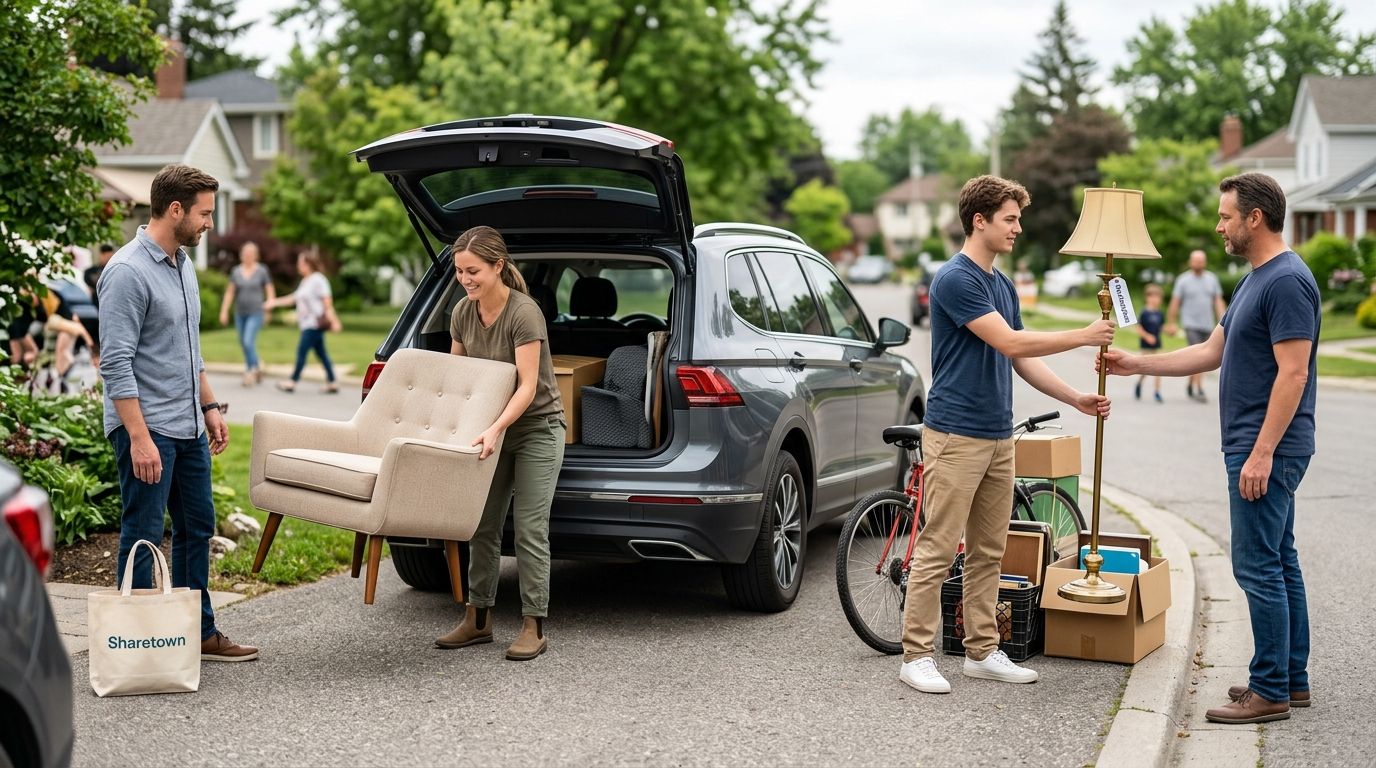
Sharetown and Facebook Marketplace both put cash in your pocket from secondhand goods, but they solve two different problems: one hands you the inventory and the route, the other hands you a crowd of local buyers and lets you figure out the rest.
Choose Sharetown if you want bulky items — mattresses, furniture, fitness equipment — assigned to you for pickup and resale without hunting for stock yourself. Choose Facebook Marketplace if you already have items sitting in a garage or storage unit and just need the biggest possible local audience to list them to.
TL;DR
People searching "sharetown vs facebook marketplace" are usually deciding how to start making money off bulky secondhand goods, not choosing between two identical tools. Facebook Marketplace is a listing venue — it does not supply inventory, screen items, or arrange logistics for you. Sharetown is a resale operation built around retailer returns, meaning the sourcing problem — the hardest part of any furniture flipping side hustle — is handled before you ever touch a listing.
That distinction changes who each platform actually serves in 2026. A reseller with a garage full of estate-sale finds needs reach. Someone with a truck and free weekends but no inventory needs a pipeline. Rarely does one person need both solved by the same tool.
Best for
Inventory source
Audience reach
Buyer trust signals
Time to first sale
Pricing model
Standout feature
Schedule flexibility
Finding profitable stock is the single biggest bottleneck in any resale side hustle, and it's the one problem Facebook Marketplace does not solve. Sharetown reps get bulky items — mattresses, sectionals, treadmills, dressers — assigned directly from retailer return streams, which means the sourcing research covered in guides like items retailers return that you can resell for profit is already built into the model rather than something you have to hunt down yourself.
Facebook Marketplace sellers, by contrast, spend real hours scouting estate sales, curb alerts, and liquidation listings before they ever photograph an item. That sourcing time is invisible in most "how much can you make" comparisons, but it's real, and it's the reason a lot of would-be resellers quit in month one.
Verdict: Sharetown removes the sourcing bottleneck; Facebook Marketplace leaves it entirely on you.
Facebook Marketplace sits inside an app already installed on most smartphones, with local buy-sell groups layered on top of it. A single furniture listing can surface to thousands of nearby users within hours, no separate account or approval needed.
Sharetown's resale reach depends on the rep's own local market-building — the same skills covered in guides on how to write listings that sell furniture fast. That's a real skill gap for someone new to reselling, and it's an area where Facebook Marketplace's existing audience does the heavy lifting for free.
Verdict: Facebook Marketplace has a structural reach advantage no independent reseller can easily match.
Facebook Marketplace listings inherit a layer of built-in trust: buyer and seller profiles, mutual friends, local group membership, and message history all reduce the "is this a scam" hesitation that kills a lot of secondhand sales. Buyers can scroll a seller's other listings and activity before committing to a pickup.
Sharetown reps build that trust independently, city by city, sale by sale — which is exactly why item-specific pricing and inspection guides matter so much for reps, including resources like how to price used furniture before you resell it. Pricing accuracy substitutes for the platform trust signals Facebook Marketplace provides natively.
Verdict: Facebook Marketplace wins on baked-in buyer trust; Sharetown reps earn it manually.
The single biggest barrier to starting a resale side hustle is having nothing to sell. Facebook Marketplace offers no answer to that — it's a venue, not a supplier. If your closet and garage are empty, Facebook Marketplace gives you a great audience and nothing to show them.
Sharetown solves the zero-inventory problem directly by assigning bulky retailer-return pickups to reps in 2026, which is why it functions less like a listing tool and more like a route-based earning opportunity. Anyone weighing side hustle options with no starting stock — a scenario covered across guides like best beginner reselling business ideas — runs into this gap fast.
Verdict: Sharetown is the only one of the two that gets you inventory before you ever open a listing app.
Neither platform locks you into shifts. Sharetown reps pick up assigned routes on their own schedule, and Facebook Marketplace sellers list and negotiate whenever it's convenient. Both fit around a day job, childcare, or a second income stream without forcing fixed hours.
Verdict: a genuine tie — schedule flexibility isn't a differentiator here.
Neither model runs on a simple listing fee, so comparing them on cost isn't really an apples-to-apples exercise. Facebook Marketplace lets sellers list items and keep the full sale price, with no platform cut — the tradeoff is that every dollar earned depends entirely on the seller's own sourcing, pricing, and negotiation skill.
Sharetown works on a resale-profit structure built around assigned retailer-return inventory, which trades some earning predictability against the sourcing and logistics support the platform provides. One model rewards independent hustle; the other rewards showing up consistently on an assigned route. Check current program details directly for the specifics that apply to your market in 2026.
See if Sharetown fits your market
Check current pickup routes and rep opportunities near you.
Choose Sharetown if: you're a rep-minded earner with a truck or van who wants bulky inventory — mattresses, furniture, fitness equipment — assigned to you instead of spending weekends scouring listings for stock. Sharetown wins here.
Choose Facebook Marketplace if: you already own furniture, appliances, or gear you want gone fast and just need the largest possible local audience without sourcing anything new. Facebook Marketplace wins here.
Inventory sourcing
Audience reach
Buyer trust & local discovery
Getting started without inventory
Schedule flexibility
Is Sharetown better than Facebook Marketplace for beginners?
Sharetown is better for beginners with no existing inventory because it assigns bulky retailer-return items to resell in 2026. Facebook Marketplace is better if you already own items and just need buyers.
Does Facebook Marketplace charge a listing fee?
Facebook Marketplace does not charge a fee to list most items as of 2026. Sellers keep the full agreed sale price minus any shipping costs on shippable categories.
Do I need my own inventory to use Sharetown?
No. Sharetown reps get bulky items like mattresses and furniture assigned from retailer returns rather than sourcing their own stock. This is the core difference from Facebook Marketplace.
Which platform has more buyers, Sharetown or Facebook Marketplace?
Facebook Marketplace has a far larger existing local buyer base built into the Facebook app. Sharetown reps build their own local resale reputation over time.
Can I use Sharetown and Facebook Marketplace together?
Yes. Many resellers source inventory through assigned pickups and still use Facebook Marketplace as one of several channels to reach local buyers.
What items work best for a Sharetown resale route?
Bulky retailer returns like mattresses, sectionals, dressers, and fitness equipment are the core categories assigned to Sharetown reps in 2026.
Is Facebook Marketplace safe for selling furniture?
Facebook Marketplace includes buyer and seller profiles and local group context that add a layer of trust, though in-person pickup safety practices still apply.
How fast can I make a first sale on each platform?
Sharetown reps can move faster once assigned inventory arrives, since sourcing is already solved. Facebook Marketplace speed depends entirely on how quickly you source and photograph your own items.
The real cost most resellers underestimate isn't the platform fee — it's the sourcing time Facebook Marketplace never solves for you. Reps who skip straight to routes with inventory already assigned, instead of spending weekend hours scouting estate sales, tend to hit their first sale far faster in 2026.