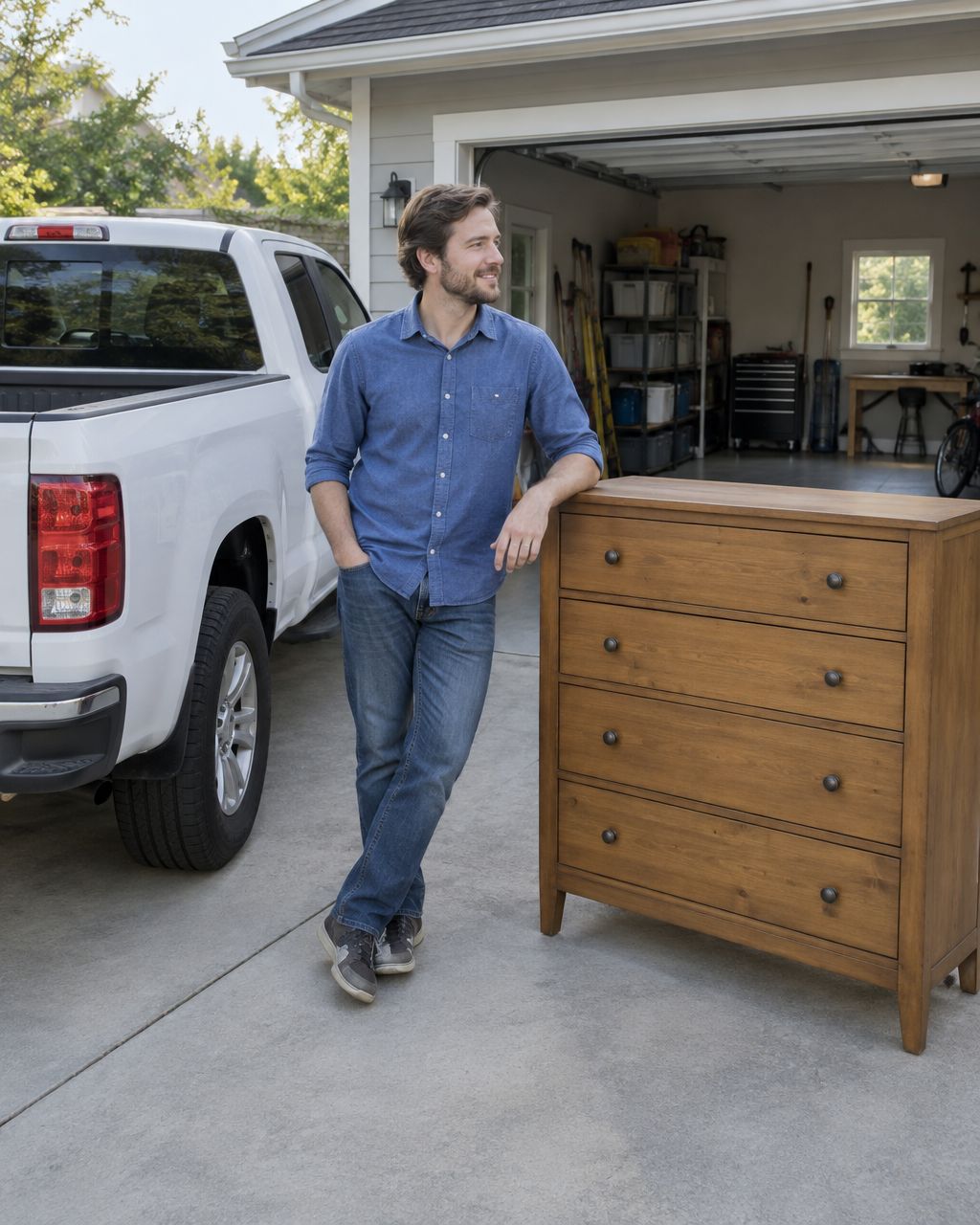
Best for truck owners with storage and selling skills: local resale. Best for people who already run a service: use the truck to carry the tools and materials that service needs. Paid transport is a different business model, with its own insurance, registration and handling questions.
TL;DR
A truck is useful equipment, not a complete business. This guide compares seven distinct activities rather than assuming every owner should become a delivery driver. For a platform-focused comparison, see the existing pickup truck earning apps guide.
Evaluate each idea against these questions:
Assigned-product resale through Sharetown
Independently sourced furniture resale
Marketplace purchase transport
Small household moving services
Yard-maintenance services
Event setup support
Permitted waste or junk hauling
These are models to investigate, not verified job openings. The order prioritizes relevance to practical resale, not measured earnings.
Sharetown's Rep opportunity uses the truck as part of a resale process. Sharetown assigns like-new returned products from premium brands. Reps pick them up, store them, prepare them, list them locally and sell them.
Reps are invoiced and charged an inventory fee, then earn a portion of the profit when a product sells. Review current terms before accepting inventory. The pickup does not create a separate delivery paycheck.
Sharetown is a resale opportunity for people with suitable transport, storage, lifting help and a willingness to sell oversized products. Plan room for at least five inventory pieces, lifting help and the ability to lift 50+ lbs, along with a safe plan for each individual move.
Advantages: assigned inventory reduces the need to independently find every product; preparation and listing tasks can fit around other commitments.
Limitations: unsold products occupy space, fees apply and buyer communication takes work. A truck without storage and selling time is not enough.
Verdict: Consider this if you want to run a resale activity, not a transport route.
Use the truck to collect suitable furniture you have evaluated for resale. Begin with a manageable product and understand the condition, preparation and storage requirements before agreeing to collect it.
You choose what to pursue, but searching and inspection are part of the work. A cheap piece that cannot be safely handled or realistically sold is not a bargain for your operation.
Advantages: control over product selection and a chance to build a category you understand.
Limitations: sourcing takes time, condition can be uncertain and products remain your responsibility until the sale is complete. Read the used-furniture pricing guide before deciding that a competing asking price is achievable income.
Verdict: Start small if you like product evaluation as well as selling.
A buyer who has purchased a large item sometimes needs help getting it to the destination. That creates a possible transport service, not a resale transaction: you are handling someone else's property rather than earning from your own inventory sale.
Do not assume that describing the job as a “pickup” removes moving or transport obligations. Check the actual service with the relevant authority and insurer before advertising it. Agree on access, handling, product dimensions and the service boundary.
Advantages: the task has a named collection and destination, without storing speculative inventory.
Limitations: stairs, damage, waiting and failed access can change the work. A personal vehicle policy is not proof of suitable business coverage.
Verdict: Wait until the legal, insurance and handling setup is clear.
Moving household goods is not automatically an informal favor once it becomes a paid service. Florida's Department of Agriculture and Consumer Services states that intrastate movers must register before engaging in that activity. Local requirements also need separate attention.
A pickup truck can support only work within its actual capacity and your safe handling arrangements. Do not promise a whole move before assessing inventory, access, people and equipment.
Advantages: a distinct service with a defined customer need and appointment.
Limitations: registration, insurance, documentation and potential property damage make this unsuitable for casual experimentation.
Verdict: Skip casual paid moving until you are properly set up.
The truck can carry tools and supplies for a clearly scoped yard service you can competently deliver. Start with the work you are trained and equipped to perform rather than offering every outdoor service.
Discuss access, scope and cleanup before agreeing to an appointment. Do not add pesticide application, tree work or other specialist tasks without checking the training, licensing and insurance those activities require.
Advantages: the truck supports a useful service rather than requiring resale inventory.
Limitations: tools, maintenance, safety and customer acquisition add obligations. Waste removal is a separate question from completing the yard work.
Verdict: Consider this when the service skill already exists.
Use appropriate transport and handling equipment to support a defined event setup or teardown service. Clarify which items you handle, who owns them, where loading occurs and who is responsible for installation.
Time the entire commitment. Teardown can happen long after setup, so an apparently short task can occupy more of your day than expected. Do not agree to transport or install equipment beyond your competence.
Advantages: a planned scope and deadline can make scheduling clearer than uncertain buyer inquiries.
Limitations: missed deadlines and damaged client equipment carry consequences; truck capacity and access constrain what you can accept.
Verdict: Consider this only with clear scope and dependable availability.
Do not treat everything a customer wants removed as ordinary cargo. Identify the materials, destination and applicable permissions before offering disposal.
The City of Tampa's private-hauler guidance, reviewed in October 2026, distinguishes commercial solid-waste haulers from businesses hauling their own waste. It describes franchise and permit requirements for covered activities and a defined service area. Ask the city which rules apply to your proposed work rather than borrowing the category that sounds easiest.
Advantages: removal is a defined service when the materials and disposal arrangements are established.
Limitations: restricted materials, facility acceptance, permits and disposal expenses can make a load unsuitable. Never promise to remove unknown waste.
Verdict: Wait until classification, permissions and disposal are confirmed.
“Tampa Bay” is not a precise service location. A job within your usual part of Tampa and a trip across the bay toward St. Petersburg need separate route estimates. Check the real address and route before agreeing on the appointment.
Include the return journey, loading, unloading and waiting. Confirm whether a helper is available for the whole commitment. Do not promise another customer an appointment that relies on every earlier task ending perfectly.
Check the truck's actual cargo dimensions and safe limits. Equipment, passengers and tools affect the load you can safely carry. A larger-looking bed is not a substitute for the manufacturer's information and an appropriate load plan.
Track fuel, vehicle wear, preparation supplies, insurance, permits, disposal costs and other applicable expenses. Count your time for estimates, messages and empty travel too.
For resale, distinguish the customer sale amount from your personal portion of profit. For Sharetown, check whether a fee has already been reflected in a payout before subtracting it again. For services, agree on scope before doing extra work you did not plan to provide.
No idea in this list guarantees income. Select the model you can operate safely, lawfully and consistently before spending money to expand it.
Can I make money with my pickup truck in Tampa without doing delivery?
Yes. A truck can support local resale or carry equipment for a service you are competent to provide. You still need to find customers or complete sales, and check applicable requirements.
Is Sharetown a pickup truck delivery gig?
No. Sharetown is a resale opportunity involving pickup, storage, preparation, listing and selling. Reps earn a portion of the profit when products sell.
Do Sharetown Reps need storage?
Yes. An appropriate setup includes room for at least five inventory pieces, along with suitable transport and lifting help. Safe access matters as well as floor space.
Can I casually advertise paid household moves in Florida?
Do not begin without checking registration, insurance and other applicable requirements. FDACS states that intrastate movers must register before engaging in that activity.
Can any truck owner offer junk removal in Tampa?
Truck ownership alone does not establish permission. Tampa distinguishes covered commercial hauling from self-hauling and sets franchise or permit requirements for the relevant categories.
Which pickup truck idea earns the most?
There is no verified earnings ranking in this guide. Compare your completed results after costs and time, rather than relying on advertised amounts or another operator's experience.
Write down what makes you decline a load before you receive the request. Unknown materials, unsafe access and a missing helper are easier to evaluate before a customer is waiting.