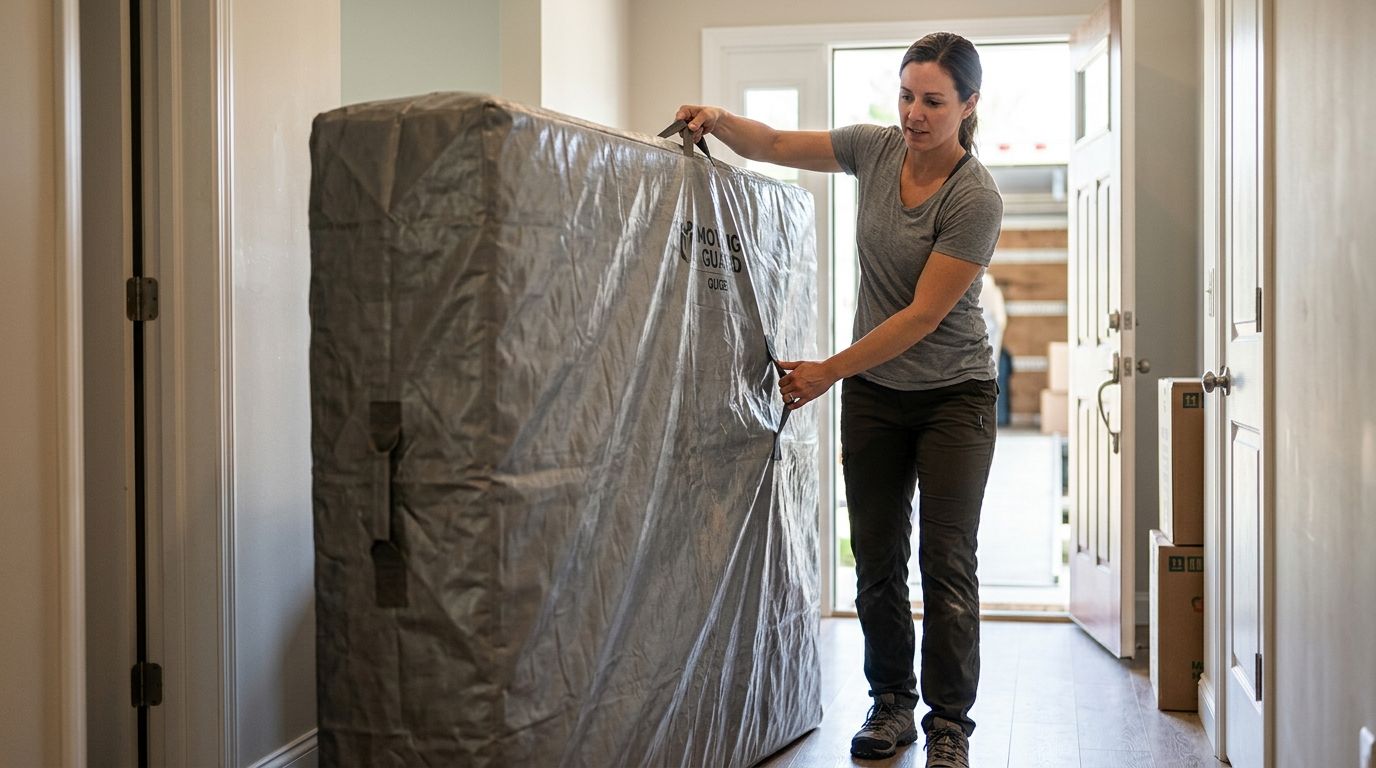
Hauling a mattress by yourself without ripping it, staining it, or throwing your back out comes down to one gear choice: the bag. The best mattress transport bags for hauling a mattress solo in 2026 combine tear-resistant material, a size that actually fits the mattress you own, and a closure or handle system built for one set of hands instead of two.
TL;DR
A bare mattress dragged across gravel, curbs, or a truck bed picks up rips, water stains, and grime that tank its resale value in minutes. If you're loading a mattress into a pickup truck safely without a second person, the bag is doing two jobs at once: protecting the mattress and giving you something to grip that isn't the mattress fabric itself.
For anyone picking up retailer returns or flipping used mattresses in 2026, the bag also affects what you can charge later. A stained, torn mattress sells for less than one that arrived sealed and clean — that's the whole economic case for spending a few minutes bagging it before the drive.
Heavy-duty 4-mil poly bag
Zippered reusable bag
Strap-handle bag
Clear vinyl bag
Oversized king/Cal king bag
Bag-and-strap combo kit
This is the bag most people grab for a single move — a thick polyethylene sleeve you slide the mattress into and seal with tape or an adhesive strip. The thicker gauge (4-mil versus the thinner 1.5-mil bags some stores hand out free) holds up to dragging a mattress across pavement or through a garage doorway without splitting.
4-mil poly bag pros:
4-mil poly bag cons:
Best for: a one-off move where the mattress needs to survive one drive, not a season of pickups. Verdict: Buy if you're moving a mattress once and want it to arrive clean.
Built for anyone doing this more than once — a zippered mattress bag seals tighter than tape-and-poly and holds up to being folded, stored, and reused. This is the type that makes sense if mattress pickups are part of a repeat resale route rather than a single move.
Zippered bag pros:
Zippered bag cons:
Best for: resellers or reps handling mattress pickups on a recurring basis in 2026. Verdict: Buy if bagging mattresses is a repeat task, not a one-time job.
This is the type built around the actual solo problem: lifting and controlling 60 to 150 pounds of mattress with no one on the other end. The bag itself is usually a mid-weight poly or vinyl sleeve, but the sewn-in strap loops are the reason it makes this list — they give you something to pull that isn't slippery bagged fabric.
Strap-handle bag pros:
Strap-handle bag cons:
Best for: solo movers who need a grip point more than they need extra protection. Verdict: Buy if you're doing this alone and have no help lined up.
A see-through vinyl bag lets you check a mattress for stains, tears, or sagging without pulling it back out of the packaging — useful if you're reselling and want a buyer to see the condition without unwrapping it on a driveway.
Clear vinyl bag pros:
Clear vinyl bag cons:
Best for: anyone storing or transporting a mattress that still needs a buyer's visual sign-off. Verdict: Buy if resale condition matters more than raw tear resistance.
Standard bags are sized for twin through queen. A king or California king mattress needs a bag cut to its full 76-by-80-inch or 72-by-84-inch footprint, or the material bunches at the corners and tears on the first drag.
Oversized bag pros:
Oversized bag cons:
Best for: king and California king mattresses specifically — don't use this size on anything smaller. Verdict: Buy only if you're moving a king or Cal king; otherwise it's the wrong tool.
This pairs a mattress bag with tie-down points or a separate ratchet strap set, built for hauling in an open pickup bed rather than a closed van or SUV. The sealing keeps road debris off, and the strap points let you strap down furniture for transport instead of relying on the mattress's own weight to keep it in place.
Combo kit pros:
Combo kit cons:
Best for: solo haulers using an open truck bed rather than an enclosed vehicle. Verdict: Buy if your vehicle is an open bed and you drive highway distances.
Turn mattress pickups into income
Sharetown connects independent reps with retailer mattress returns ready to resell locally.
Each bag type was measured against the six criteria above: material thickness, size fit, closure quality, handles, reusability, and visibility. No single bag wins on all six — that's why the list is split by use case instead of stacked into one leaderboard. A solo mover doing this once has different needs than a rep bagging mattresses weekly in 2026.
If you're moving one mattress one time, the 4-mil poly bag is the default answer — cheap, tear-resistant, and disposable when you're done. If mattress pickups are a repeat part of your week, the zippered reusable bag pays for itself after a handful of uses. Add strap handles to either option if you have no one helping you lift, and reach for the oversized bag only when the mattress is a king or Cal king.
What's the best mattress transport bag for hauling a mattress alone?
A strap-handle bag paired with 4-mil poly material is the best combination for a solo haul in 2026 — the straps give you a grip point and the thicker material resists tears during the drag and load.
Do I need a mattress bag to move a mattress in a pickup truck?
You don't strictly need one, but road grime, rain, and truck bed debris will stain an unbagged mattress within a single trip. A bag is cheap insurance against losing resale value.
What size mattress bag do I need for a queen mattress?
A queen mattress measures roughly 60 by 80 inches, so look for a bag labeled specifically for queen — a king-size bag will bunch and tear at the corners.
Can I reuse a mattress transport bag for multiple pickups?
Standard 4-mil poly bags are single-use. Zippered reusable bags are built to survive repeated pickups, which matters if you're bagging mattresses regularly rather than once.
Are clear mattress bags better than opaque ones for resale?
Clear vinyl bags let a buyer see the mattress condition without unwrapping it, which helps close a resale faster. Opaque 4-mil poly bags typically resist tears better but hide condition.
What mil thickness mattress bag holds up best for solo hauling?
4-mil polyethylene is the thickness that consistently survives a solo drag across pavement or through a doorway without splitting. Thinner 1-mil to 2-mil bags tear far more easily.
Do mattress bags prevent bed bugs during transport?
A properly sealed mattress bag with a zipper or taped closure creates a barrier against bed bugs moving on or off the mattress during transport and short-term storage.
How do I bag a mattress by myself without a helper?
Stand the mattress on its long edge, slide the bag over the top half first, then walk the bottom half in while keeping the mattress vertical — strap handles make this step far more controllable solo.
Bagging a mattress doesn't fix the physics of moving it alone — a bagged mattress still catches wind like a sail once you tilt it past 45 degrees on a windy day. The bag protects the fabric; your footing and grip protect you. Pair any bag on this list with proper lifting form, and if you're building a resale route around mattress pickups, reselling a used mattress starts with one that arrived clean.