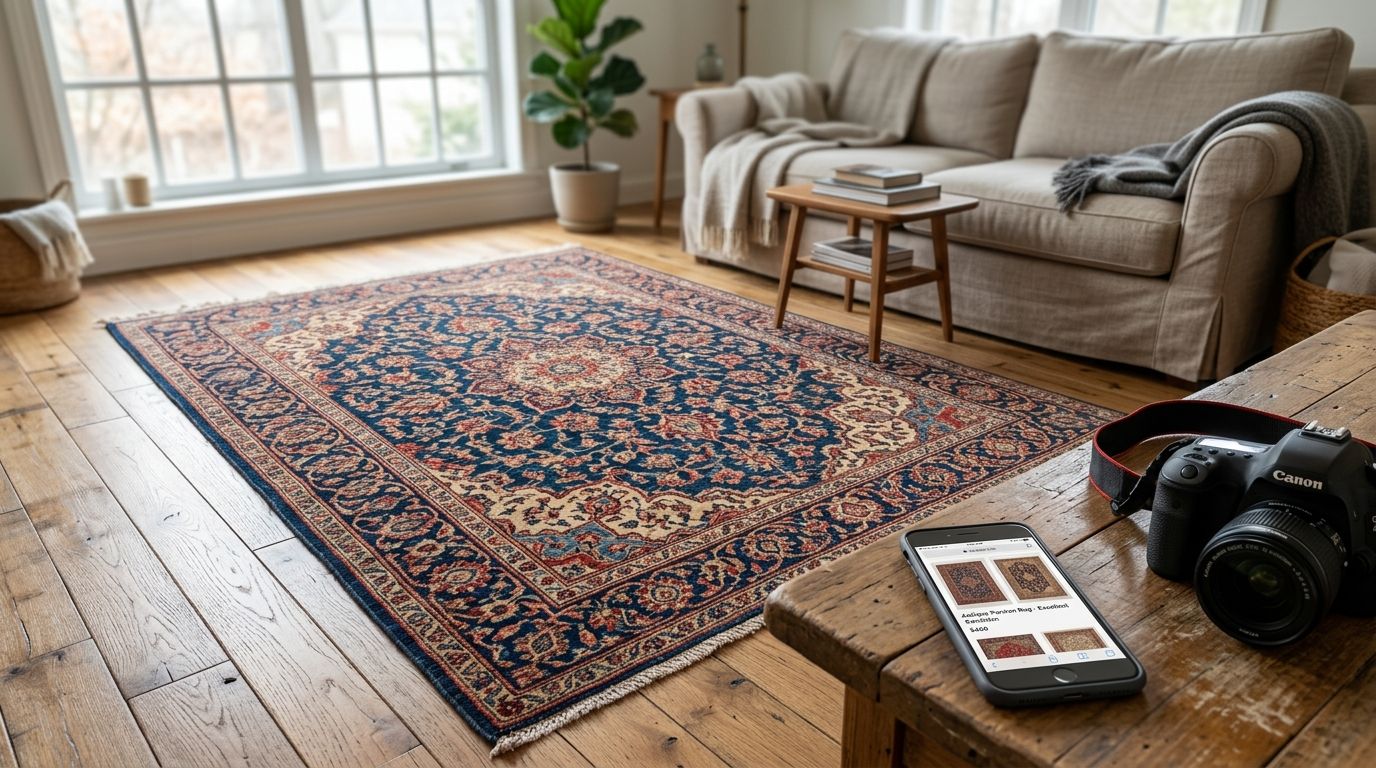
Selling a used area rug means picking the platform that matches the rug's size, condition, and shipping reality — not just posting everywhere and hoping. Facebook Marketplace wins for most sellers because it's free, local, and skips the shipping problem entirely; eBay wins if the rug is small enough to roll and ship; Chairish wins for designer or vintage pieces. The rest of this guide breaks down where each type of rug sells fastest in 2026.
TL;DR
Area rugs are awkward inventory: too heavy to ship cheap, too bulky for most buyers to want sight-unseen, and priced all over the map depending on material and brand. Listing a 9x12 wool rug on the wrong platform means it sits for weeks while a smaller jute rug on the right platform moves in days.
For anyone running a resale side hustle — including reps who pick up bulky retailer returns and flip them locally — knowing which platform fits which rug type is the difference between a two-day sale and a rug taking up garage space through 2026. Flipping area rugs for profit covers the sourcing side; this guide covers where to actually sell them.
Facebook Marketplace
Craigslist
OfferUp
eBay
Chairish
AptDeco
Nextdoor
Turn rug flips into repeat income
See how Sharetown reps pick up and resell bulky home goods for profit.
Facebook Marketplace is the default for anyone selling a rug too heavy or awkward to box up. Listings go live in minutes, buyers message directly, and the local radius filter puts the rug in front of people who can pick it up the same day.
Facebook Marketplace pros:
Facebook Marketplace cons:
Facebook Marketplace pricing: free to list and free to sell locally.
Best for: sellers who want the fastest path to a local cash sale.
Verdict: use it first.
Craigslist still pulls serious furniture and home-goods traffic in most metro areas, and it remains the go-to for buyers specifically hunting used rugs by size and material. No account is required to browse, which keeps the buyer pool wide.
Craigslist pros:
Craigslist cons:
Craigslist pricing: free.
Best for: sellers in dense metro areas who want maximum free exposure.
Verdict: use it as a second listing, not a replacement for Facebook.
OfferUp's TruYou identity verification and buyer/seller rating system make it the safer choice for meeting strangers to hand off a bulky rug. The app format also makes photo uploads and price negotiation faster than Craigslist.
OfferUp pros:
OfferUp cons:
OfferUp pricing: free for local sales.
Best for: sellers who prioritize safety over maximum reach.
Verdict: worth trying as a backup listing.
eBay makes sense once the rug is small enough to roll and box — think runners, accent rugs, or anything under roughly 8x10. It opens the buyer pool to the entire country instead of just your zip code, which matters for rare patterns, brands, or vintage weaves.
eBay pros:
eBay cons:
eBay pricing: seller fees apply; check eBay's current fee schedule before listing.
Best for: smaller rugs with national buyer appeal.
Verdict: use it for shippable sizes only.
Chairish caters to home-decor buyers actively hunting vintage and designer pieces, which makes it the strongest fit for a hand-knotted wool rug or a recognizable brand name. Basic machine-made rugs don't perform as well here.
Chairish pros:
Chairish cons:
Chairish pricing: seller fees apply on completed sales.
Best for: vintage or designer rugs with real resale value.
Verdict: use it only for standout pieces.
AptDeco handles pickup and delivery logistics on your behalf in the major metro areas it serves, which removes the coordination headache of meeting a stranger for a heavy rug handoff.
AptDeco pros:
AptDeco cons:
AptDeco pricing: seller fees apply on completed sales.
Best for: sellers in a covered metro who want the logistics done for them.
Verdict: worth it if you're in a serviced city.
Nextdoor's neighborhood-verified structure means buyers already know roughly where you live, which lowers the friction of a stranger meetup for a bulky rug. It works especially well in suburban areas with active local groups.
Nextdoor pros:
Nextdoor cons:
Nextdoor pricing: free.
Best for: suburban sellers who want a trusted, hyper-local audience.
Verdict: use as a supplemental listing, not your only one.
Each platform above got scored against the six criteria listed earlier: local vs. shippable fit, buyer volume for home goods, fee structure, condition tolerance, safety features, and listing effort. Facebook Marketplace topped the list because it scores well across every category with no shipping requirement; the rest earn a spot by winning one specific use case rather than competing head-to-head.
Before listing anywhere, pricing used furniture correctly and photographing it well matter more than which app you choose — a clean rug with sharp photos sells on any of these platforms.
For most sellers in 2026, Facebook Marketplace is the right first move — free, local, no shipping, and the largest buyer pool for bulky home goods. List a shippable, smaller rug on eBay as a parallel listing to catch out-of-area buyers, and reserve Chairish for anything genuinely vintage or designer. If you're in a metro AptDeco serves and want the logistics handled, that's worth the fee trade-off. Don't rely on a single platform — a rug listed in two or three places sells faster than one listed everywhere at once but managed nowhere.
What's the best site to sell a used area rug in 2026?
Facebook Marketplace is the best overall site to sell a used area rug in 2026 because it's free, local, and avoids the cost and hassle of shipping a bulky item. eBay works better for smaller, shippable rugs with national buyer appeal.
Is Facebook Marketplace better than eBay for selling a rug?
Facebook Marketplace is better for large rugs since it skips shipping entirely, while eBay is better for smaller rugs where reaching buyers outside your local area matters more. Choose based on rug size and how fast you need the sale.
How do you ship a large area rug if you sell it online?
Roll the rug tightly, wrap it in plastic to protect against moisture, and box or bag it before shipping through a carrier that handles oversized packages. Rugs larger than roughly 8x10 get expensive to ship and are usually better sold locally instead.
Do rug marketplaces charge seller fees?
Free local marketplaces like Facebook Marketplace, Craigslist, and Nextdoor charge no seller fees. Shipping-based platforms like eBay and curated sites like Chairish or AptDeco charge a fee on completed sales, so check current rates before pricing the rug.
Should you use Nextdoor to sell a rug locally?
Nextdoor works well as a supplemental listing in suburban areas with active neighborhood groups, since buyers are already neighborhood-verified. It shouldn't be your only listing because its reach is limited to your immediate area.
How much should you price a used area rug?
Price depends on material, brand, size, and condition — a hand-knotted wool rug holds value far better than a basic machine-made one. Check completed listings on the platform you're using to gauge what similar rugs actually sold for, not just asking prices.
Are Craigslist rug listings still worth it in 2026?
Yes, Craigslist still pulls solid traffic for used rugs in most metro areas because buyers actively search it by keyword. It works best as a second listing alongside Facebook Marketplace rather than a standalone strategy.
What condition issues hurt a used rug's resale value most?
Pet stains, lingering odor, and matted or crushed pile hurt resale value the most across every platform. Cleaning the rug and photographing it in good light before listing solves most of the buyer hesitation upfront.
The rug type matters more than the platform for how fast it sells — a machine-made 5x8 in decent shape moves on Facebook Marketplace in days, but a hand-knotted vintage piece can sit for weeks on a general marketplace only to sell within days once it's on Chairish. Match the rug to the right audience before worrying about which app has the most users.