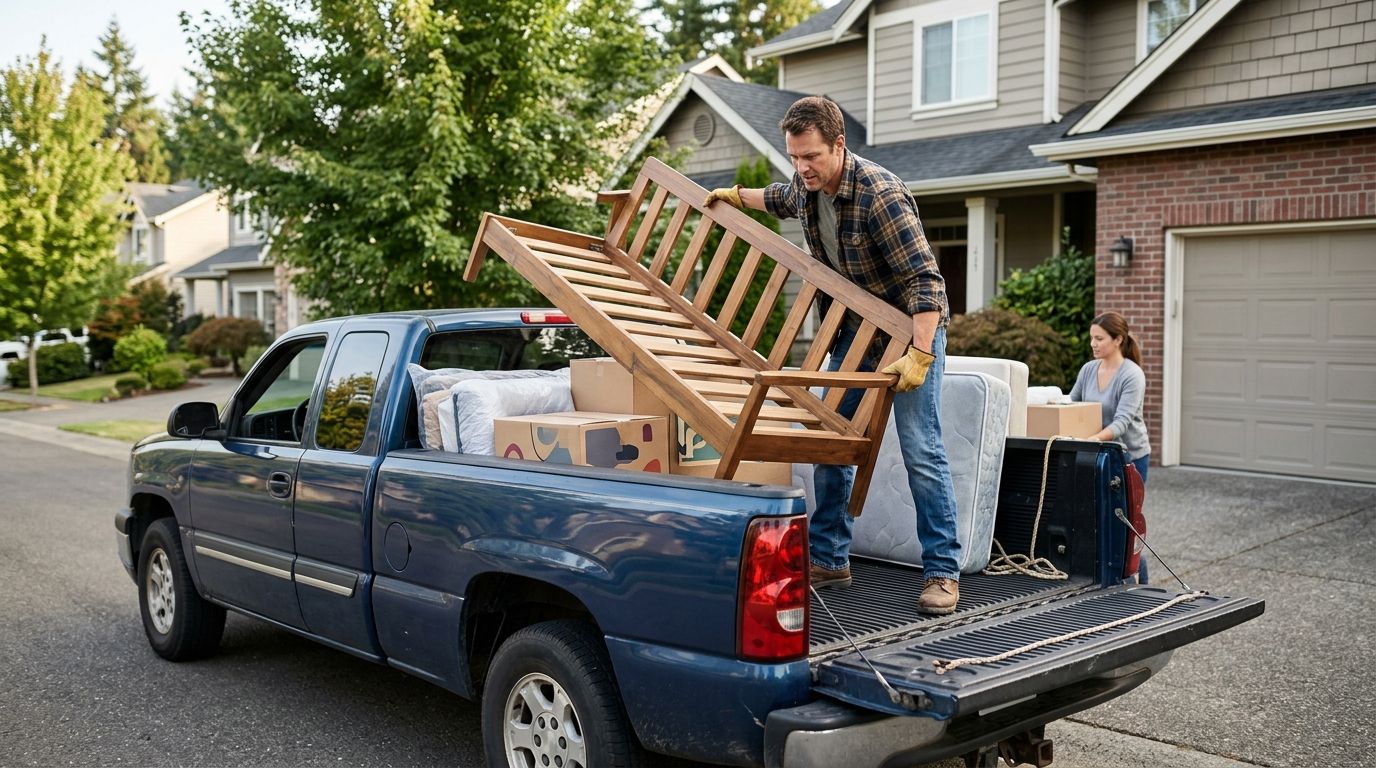
Yes, you can use your own truck for Sharetown pickups, and most reps do exactly that. Sharetown doesn't mandate a specific make, model, or truck bed length; the requirement is that your vehicle can safely haul oversized items like mattresses, dressers, or treadmills without damaging them or blocking your rearview visibility. A midsize pickup, a cargo van, or even a minivan with the seats down covers the majority of standard pickups in 2026.
TL;DR
Sharetown runs on independent reps picking up bulky returns -- mattresses, sofas, fitness equipment -- from retailer partners and reselling them locally. The vehicle question comes up early in every rep application because it determines which pickups you can actually take. Get it wrong and you'll show up to a pickup with a sectional sofa that doesn't fit your trunk. Get it right and your truck becomes the tool that generates income every time you accept a job.
Yes. Sharetown is built around independent reps supplying their own transportation, which is part of why the earning model stays flexible. There's no company truck, no leasing requirement, and no dealership partnership you have to go through.
Here's how common vehicle types stack up for typical Sharetown pickups:
Full-size pickup (6-8 ft bed)
Cargo van
SUV (seats folded)
Minivan
Trailer/tow setup
A standard queen mattress measures roughly 60 by 80 inches, which fits diagonally in most SUV cargo areas but rides easier flat in a 6-foot or longer pickup bed. King mattresses and full sectional sofas generally need a pickup, cargo van, or trailer.
A pickup with a 6-foot bed or longer covers the bulk of Sharetown pickups without modification. Fuel-efficient trucks make the math work better on a per-pickup basis since you're driving to retailer locations and drop-off points regularly -- see this breakdown of fuel-efficient truck options for a part-time hauling side hustle if you're shopping. Open beds need a tarp or truck cap for wet-weather pickups, and a bed liner protects the surface from mattress corners and dresser edges.
A cargo van keeps furniture dry and out of sight during transport, which matters if you're doing back-to-back pickups across a service radius. Vans also stack items more efficiently than an open bed, letting you combine two or three smaller pickups into one run. If you're weighing this option, the numbers in make money with a cargo van walk through what a van route actually looks like day to day.
An SUV with the rear seats folded handles chairs, end tables, small dressers, and boxed items without trouble. It struggles with king mattresses, large sectionals, and anything over roughly 75 inches in one dimension. If you don't own a truck yet, hauling furniture without a truck using an SUV covers which models handle the widest range of pickups.
See what pickups are available near you
Check current Sharetown opportunities in your area.
Not every job needs the same setup. What you drive should match the type of pickups you plan to accept:
No specific bed length is required, but a 6-foot bed handles most mattresses and furniture without the tailgate down, while anything shorter usually means securing items with the tailgate open and extra tie-downs. An 8-foot bed accommodates king mattresses and long dressers flat, which cuts down on strapping time per pickup.
Yes, renting is a workable option for reps who only take occasional pickups or don't want to commit to a vehicle purchase. A one-time rental covers the job without the ongoing costs of ownership, insurance, and maintenance -- compare that route in truck rental services for a one-time furniture haul.
You can still start with an SUV, minivan, or cargo van, since Sharetown pickups aren't limited to pickup trucks. Reps evaluating whether the opportunity fits their situation before buying any vehicle often start with is becoming a Sharetown rep worth it in 2026 to see what the day-to-day workload actually looks like.
Can I use my own truck for Sharetown pickups?
Yes, Sharetown reps supply their own vehicle -- pickup, van, SUV, or minivan -- and there's no company fleet requirement in 2026.
What size truck do I need for Sharetown pickups?
A 6-foot bed or longer handles most mattress and furniture pickups; shorter beds work but need extra tie-downs for oversized items.
Can I use an SUV instead of a truck for pickups?
Yes, an SUV with the rear seats folded works for smaller furniture and most items under roughly 75 inches, though king mattresses and sectionals are a tighter fit.
Is a cargo van better than a pickup truck for pickups?
A cargo van keeps items dry and protected from weather during transport, which a pickup bed doesn't unless covered, but a pickup often loads mattresses faster.
Do I need a trailer for Sharetown pickups?
No, a trailer isn't required, but it can help if your vehicle's interior cargo space is limited and you want to avoid tarping an open bed.
Can I rent a truck for occasional Sharetown pickups?
Yes, a rental truck works for reps who only take occasional jobs rather than committing to a vehicle purchase.
What if my truck bed is shorter than 6 feet?
A shorter bed still works for most items with the tailgate down and proper strapping, though king mattresses and long dressers need more careful loading.
Does Sharetown require insurance on my personal vehicle?
Check current rep requirements directly, since vehicle and insurance policies can be updated -- the vehicle type itself isn't restricted to a specific truck class.
The vehicle question matters less than most new applicants assume -- the real bottleneck for most reps is loading technique, not truck size. A rep with an SUV and the right straps and ramp routinely out-hauls a rep with a full-size pickup and no plan for securing a load. Sort your loading method first, then match the vehicle to it.