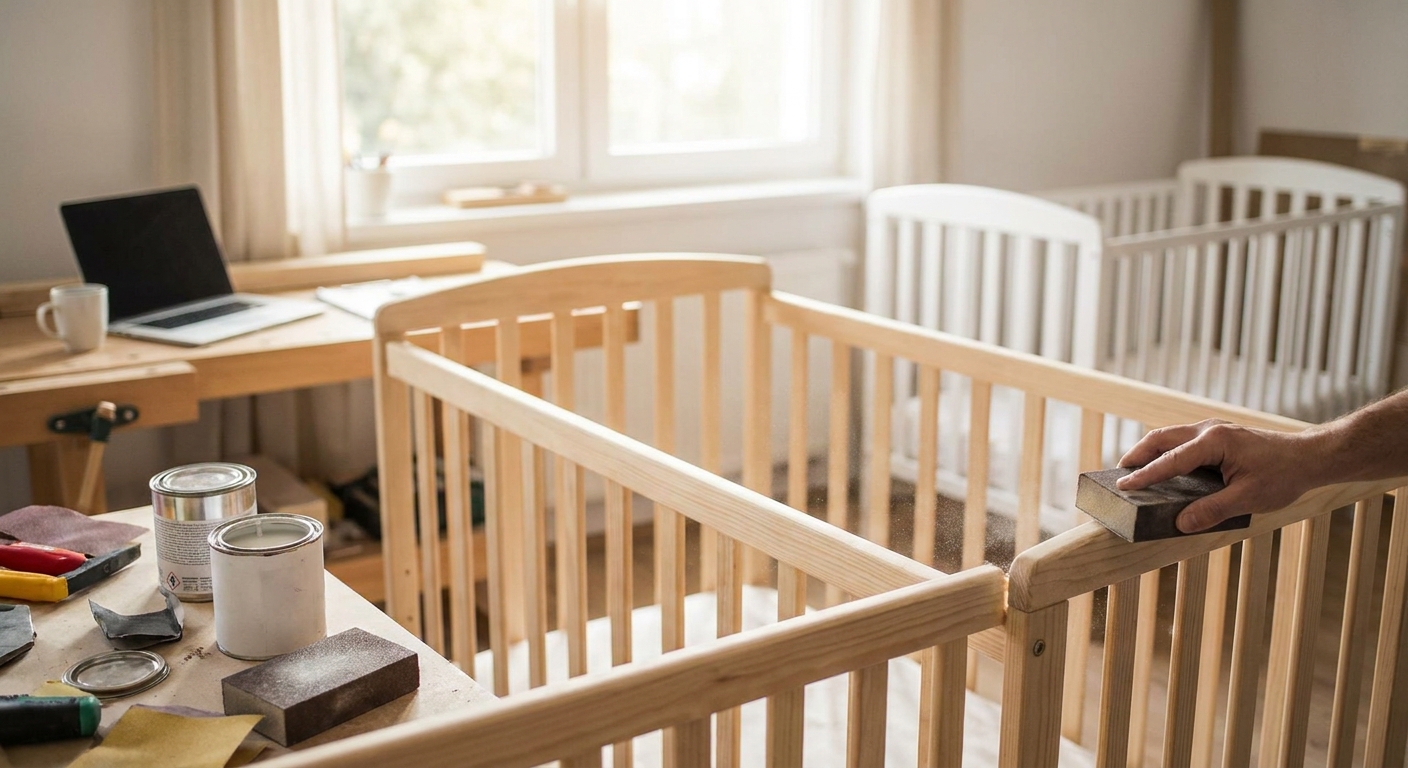
Cribs are bulky, they're everywhere in the used market, and most flippers ignore them because they assume the margins are thin. They're not — if you know which cribs to touch and which ones to walk past.
TL;DR
Retailers process a steady stream of crib returns every year — open-box units, floor models, and customer returns that never make it back to the sales floor. That's the same supply chain that feeds items retailers return that you can resell for profit, and cribs sit right in the middle of it because parents buy fast and return often when a style doesn't fit the nursery.
The catch is safety regulation. Cribs are one of the most heavily regulated furniture categories in the country, and a wrong call can mean reselling something that's illegal to sell. Get the criteria right and flipping baby cribs for profit turns into one of the steadier bulky-item flips you can run in 2026.
This guide is for resellers who already move furniture — garage sale flippers, Facebook Marketplace sellers, or reps picking up bulky returns — and want to add cribs to the rotation without learning a brand-new category from zero. If you're starting from nothing, how to start flipping items as a complete beginner is the better first stop before you specialize in nursery furniture.
Parents shopping secondhand want two things: a crib that meets current safety standards, and a price that beats retail by a real margin. If you can verify both, you have a repeatable flip.
Check the label on the crib's frame or the box if you still have it — every crib made after June 2011 must meet the current federal fixed-side-rail standard. Anything older is presumptively unsafe to resell, and the manufacture date is the fastest filter you have before you even inspect the wood.
A crib without its mattress support bracket, bolts, or assembly manual is a dead flip until you source replacement parts. Buyers walk the second they see a bag of loose screws instead of a labeled hardware kit, and sourcing generic crib hardware eats your margin fast.
Current U.S. standard caps slat spacing at 2 3/8 inches — wide enough to catch a measuring tape, tight enough that a baby's head can't fit through. Measure it yourself rather than trusting a seller's word; this single check is what separates a legal resale from a liability.
Cribs that convert to toddler beds, daybeds, or full-size frames hold resale value years longer than single-stage cribs. Parents pay a premium for a crib that grows with the kid, and that premium is where most of your profit lives.
Wood finish scuffs sand out; mattress-support staining or a lingering smoke or pet odor does not, and it kills the sale on pickup day. Inspect the crib in person whenever possible before you commit to hauling it.
Before you buy, know what similar cribs are actually closing at in your local market — not list price, sold price. How to negotiate prices when buying secondhand items to resell covers the negotiation tactics that keep your acquisition cost low enough to protect margin, and how to price used furniture before you resell it walks through setting that resale ceiling correctly.
Skip the sourcing hunt entirely
Sharetown reps pick up returned furniture straight from retailers to resell locally.
Convertible cribs — the safe pick. These convert to toddler beds or daybeds, which stretches their useful life to 5-8 years for one family. Typical clean resale in 2026 lands around $150 for a complete unit with all conversion hardware. Buy.
Mini and portable cribs — the wildcard. Compact cribs move fast with parents in apartments or grandparents' houses who need a part-time sleep setup. They're smaller to haul, which lowers your transport cost per flip, and demand spikes around holidays when families travel with grandkids. Consider.
Solid wood heirloom-style cribs — the slow burn. Real wood (not laminate) cribs from mid-tier and premium brands hold finish and structural integrity longer, and buyers searching for a nursery centerpiece will pay above the category average. Verify the manufacture date is post-2011 before you touch one; older solid-wood cribs are the trap here. Consider.
Basic single-stage cribs — the low-margin filler. No conversion feature, no design premium, and a resale floor closer to $40. These only make sense as an add-on when you're already hauling a bigger nursery furniture lot. Hold unless the acquisition cost is close to zero.
Drop-side cribs — the trap. These were banned from manufacture and resale by the Consumer Product Safety Commission in 2011 after being linked to infant entrapment and suffocation incidents. Selling one — even to a friend, even cheap — puts real liability on you. Skip.
Cribs rarely show up alone. If a pickup includes a matching dresser or changing table, how to flip dressers and nightstands for profit covers how to bundle nursery furniture for a bigger per-trip payout.
Convertible crib
Mini/portable crib
Solid wood heirloom
Basic single-stage
Drop-side crib
Is flipping baby cribs for profit actually worth it in 2026?
Yes, when you stick to convertible or solid wood cribs with complete hardware — those resell for $120-$200 and move faster than most nursery furniture. Basic single-stage cribs are the low-margin exception.
Can I legally resell a used crib?
Only if it was manufactured after June 2011 and meets the current federal fixed-side-rail and slat-spacing standard. Drop-side cribs and pre-2011 models cannot be legally resold.
How do I check if a crib has been recalled?
Match the model number and manufacture date printed on the crib's frame label against the current CPSC recall database before you list it. Do this even on cribs that look brand new.
What's the best type of crib to flip for beginners?
Convertible cribs are the easiest entry point because they hold resale value longest and buyers actively search for the conversion feature. They also tend to come with clearer hardware labeling than older styles.
How much profit can you make flipping a crib?
A convertible crib sourced cheap and resold clean can net $50-$100 in profit after cleaning supplies and transport. Margins shrink fast on basic single-stage cribs, which resell closer to $40 total.
Should I buy a crib without its original hardware?
No — missing mattress-support brackets or bolts usually mean sourcing generic replacements, which eats into your margin and can compromise the safety standard. Walk away unless the hardware kit is intact.
Do vintage cribs sell well?
They photograph well but almost never meet current slat-spacing or hardware standards, so they can't be sold as sleep furniture. Sell them explicitly as decor pieces only, never marketed for infant use.
Where do the best cribs to flip come from?
Retailer returns and open-box inventory are a steady source because parents return cribs often over style or color, not defects. Estate sales and moving sales are the next-best source for solid wood models.
The crib that looks the most "used" — scuffed rails, a few paint chips — is often the safest legal buy, because those wear marks usually mean it's a newer, post-2011 model that's actually seen a toddler sleep in it. The crib that looks pristine and untouched is the one you need to check hardest, because it might be an older model that's sat in a garage since before the 2011 standard changed.