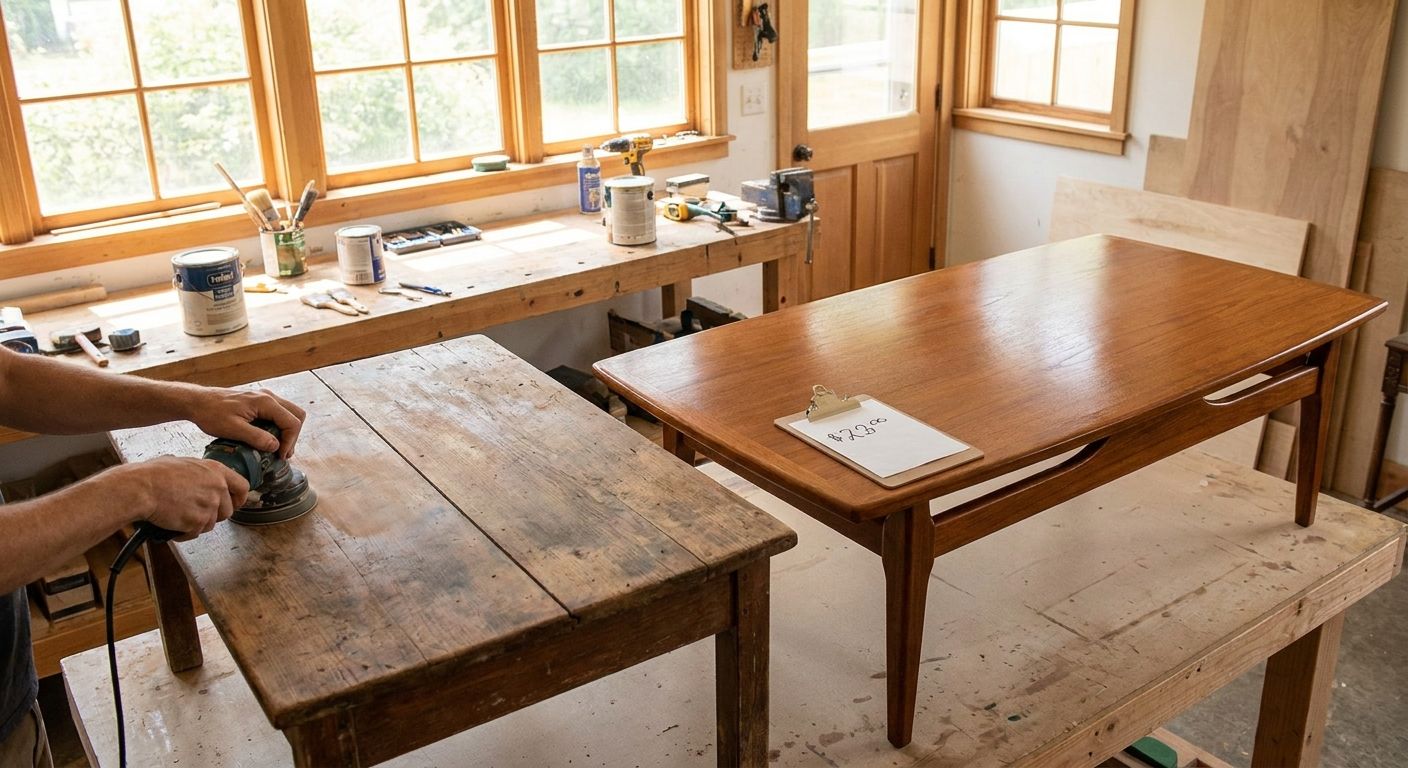
Coffee tables are the on-ramp for furniture flipping: light enough to move solo, common enough to find every week, and priced low enough that buyers don't haggle you into a loss. Flipping coffee tables for profit in 2026 works best when you know which styles hold value and which ones just take up trunk space.
TL;DR
Coffee tables move faster than sofas and cost less to acquire than dressers, which makes them a low-risk starting point for anyone testing furniture resale as a side hustle in 2026. The margin isn't in the flashy pieces -- it's in knowing which plain wood table nobody else bothered to photograph well.
Retailers process thousands of returned and open-box furniture pieces every month, and coffee tables land in that stream constantly because they ship in one box and damage easy in transit. Reps who pick up items retailers return that you can resell for profit see coffee tables show up with cosmetic scuffs, not structural failures -- which is exactly the condition that makes flipping coffee tables for profit repeatable.
This guide is for the side hustler with a hatchback or minivan, thirty minutes a week to scan Facebook Marketplace and retailer return lots, and no interest in learning upholstery. If you already flip dressers, dining tables, or bookshelves, coffee tables slot into the same route with less lifting and a faster turnaround.
Mid-century and modern-farmhouse silhouettes dominate Marketplace searches in 2026, while ornate carved wood and glass-and-brass 1980s styles sit unsold for weeks. Search the style name plus "coffee table" before you buy -- if listings in your area are stale past 30 days, that style isn't moving locally regardless of condition.
A wobbly leg, a cracked joint, or delaminating veneer costs real time and often can't be fixed cleanly, while a scratched top or faded stain is a 20-minute fix. Press down hard on each corner before you buy -- any give in the frame means the table isn't worth the trip home.
Solid wood takes stain and paint evenly and forgives sanding mistakes; laminate and veneer chip and peel the moment you touch them with a sander. Budget 2 to 3 hours for a full sand-and-refinish on a solid wood coffee table -- if a piece needs more than that, the math on flipping coffee tables for profit stops working.
Most coffee tables run 20 to 60 pounds depending on material, and anything past that turns a solo pickup into a two-person job that eats your time margin. Stone-top and reclaimed timber slabs look impressive in photos but punish you on every load and unload.
Before you buy, check what similar condition and style tables are actually closing at, not just listed at, in your area over the past 30 days -- pricing used furniture before you resell it is where most new flippers lose money by anchoring to asking price instead of sold price. If a table costs $50 to acquire and comparable sold listings top out at $70, walk away.
Mid-century solid wood -- the safe pick. Tapered legs, walnut or teak tone, simple rectangular or oval tops. These typically acquire for $10 to $30 secondhand and resell in the $75 to $150 range once cleaned and oiled. Buy whenever you find one under $40, no exceptions.
Glass-top with chrome or metal legs -- the fast mover. Sells quickly in apartment-heavy markets because it visually opens up small living rooms. The catch is a single crack during transport kills the whole piece, so it needs blankets and flat transport, not a stack in the trunk. Consider it only if you have padded transport ready; otherwise skip.
Storage and lift-top tables -- the premium play. Buyers pay extra for hidden storage or a top that raises to laptop height, especially in studio apartments. Test the hinge and lift mechanism before buying -- a stuck mechanism is a repair job most flippers can't fix cheap. Buy if the mechanism moves smoothly and the price reflects a working unit.
Farmhouse reclaimed wood -- the steady earner. Distressed wood tops with black metal or X-frame legs sell consistently to buyers redoing a living room in 2026's continuing farmhouse trend. These run heavier than mid-century pieces, often 40 to 55 pounds, so factor that into your route. Buy at acquisition prices under $35.
Live-edge or rustic slab -- the wildcard. A genuine live-edge slab table can resell for $150 or more, but the category is flooded with cheap laminate imitations trying to pass as the real thing. Check the edge grain closely -- if it's printed texture over MDF, it's not a live-edge table no matter what the seller calls it. Consider only after confirming solid wood by weight and grain pattern; skip anything you can't verify in person.
Turn retailer returns into flips
Sharetown reps pick up returned furniture and resell it locally for profit.
Mid-century solid wood
Glass-top chrome
Storage/lift-top
Farmhouse reclaimed
Live-edge slab (verified)
Laminate/particleboard
What's the best type of coffee table to flip for profit in 2026?
Mid-century solid wood coffee tables hold resale value best in 2026 because the style stays in steady demand and solid wood refinishes cleanly. Farmhouse reclaimed and working lift-top tables are close seconds.
How much can you make flipping a coffee table?
Most flippers net $40 to $100 per table after acquisition cost, cleaning supplies, and gas, depending on style and condition. Live-edge and storage tables in good shape push profit higher when sourced under $35.
Is flipping coffee tables better than flipping dining tables?
Coffee tables are lighter and cheaper to acquire, making them better for solo flippers, while flipping dining tables for profit generally pays more per piece but demands more storage and lifting help. Many flippers run both side by side.
Where do reps find coffee tables to flip?
Facebook Marketplace, estate sales, and retailer return pickups are the three most consistent sources in 2026. Retailer returns often arrive with cosmetic-only damage, which shortens refinish time considerably.
How much does it cost to refinish a coffee table before reselling?
A basic sand, stain, and seal job on a solid wood coffee table costs under $20 in materials if you already own sandpaper and a brush. Glass and metal pieces typically need only cleaning, which costs close to nothing.
How long does it take to flip a coffee table?
Simple cleaning-only flips move in a day or two once listed, while a full sand-and-refinish job adds 2 to 3 hours of work before listing. Total turnaround from pickup to sold is usually 1 to 2 weeks depending on local demand.
Do glass-top coffee tables sell well secondhand?
Yes, glass-top coffee tables sell quickly in apartment-dense markets in 2026 because they visually open up small rooms. The tradeoff is transport risk -- a cracked glass top kills the resale value entirely.
What condition issues should you avoid when buying a coffee table to flip?
Skip any table with a wobbly frame, cracked joints, or delaminating veneer, since those repairs cost more time than the table is worth. Cosmetic scratches and faded stain are fine -- those are quick fixes, not deal-breakers.
The most overlooked flip in 2026 isn't the live-edge slab everyone hunts for -- it's the plain mid-century table sitting in a listing with one bad phone photo and a seller who priced it like particleboard. Buyers searching for that style scroll past bad photos and undersell themselves constantly, which is exactly the gap flipping coffee tables for profit depends on.