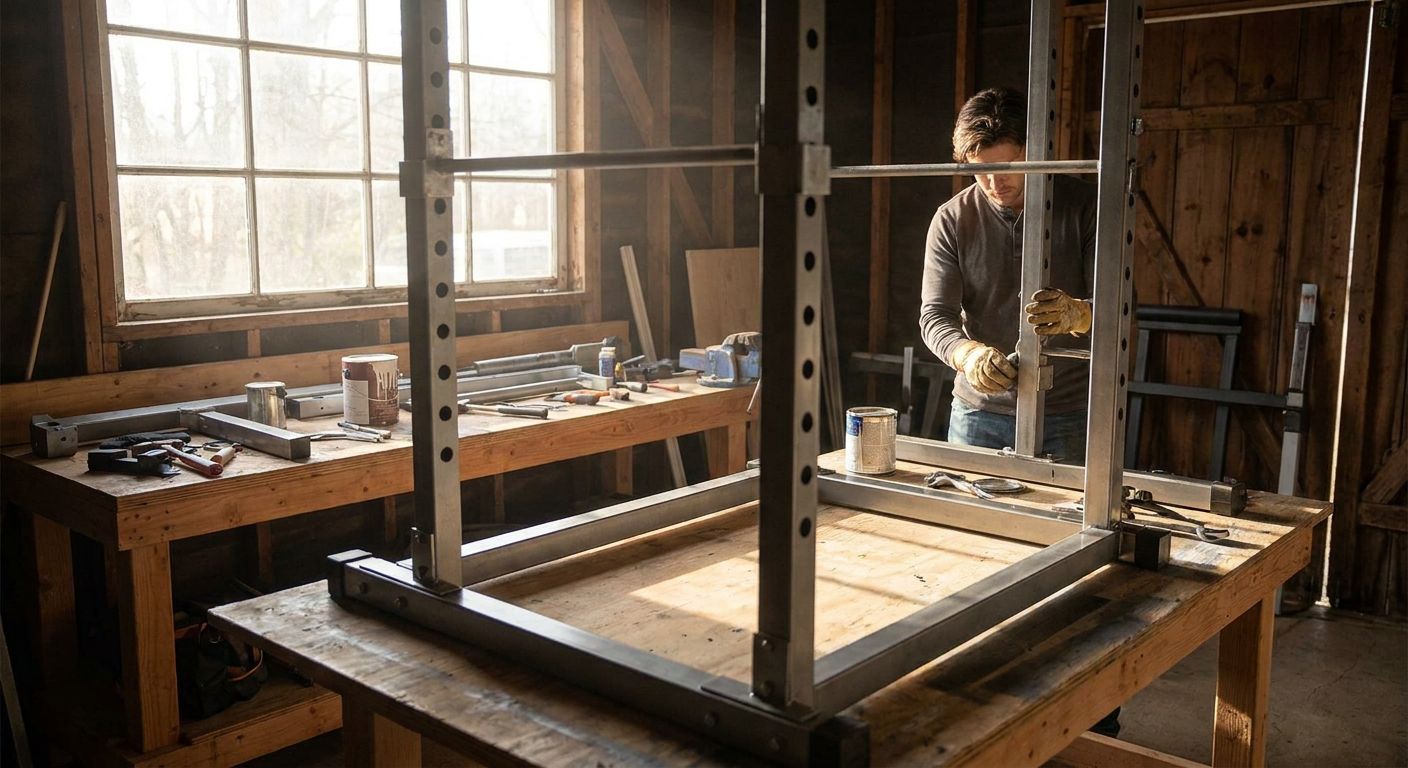
Power racks are some of the heaviest, highest-margin items you'll ever flip out of a garage, and 2026 is a good year to know the difference between a rack that sells in three days and one that sits until spring.
TL;DR
Home gyms didn't slow down after 2021 - they just got quieter. People still want a rack in the garage, and retailers still process a steady stream of returned or overstocked strength equipment every month.
A power rack is bulky, intimidating to move, and priced high enough that most casual resellers walk past it. That's exactly why it's profitable: less competition, higher ticket price, and a buyer pool that already knows what a rack is worth. Flipping power racks for profit in 2026 rewards people who can move heavy steel, not people who know the most about weightlifting.
This guide is for anyone already picking up bulky returns or estate finds and deciding whether a power rack is worth the truck space - side hustlers with a trailer or cargo van, gym-adjacent resellers, and reps sourcing fitness gear alongside furniture and mattresses. If you're coaching clients during the day, the crossover with side hustles for personal trainers is direct - you already know rack quality by feel, which is half the battle here.
You don't need a warehouse. You need a flat driveway, a hand truck rated for a few hundred pounds, and a buyer list that isn't just Facebook Marketplace lowballers.
Most consumer power racks are rated between 700 and 1,000 lbs of static load, and that number is the first thing a serious buyer asks about. A rack under 500 lbs reads as "beginner" and sells slower and cheaper - stick to mid-range or higher capacity when you have a choice.
A full cage typically needs a 4x4-foot to 5x5-foot footprint plus clearance for the barbell path. In markets full of small garages and condos, that footprint kills demand fast, no matter how clean the rack looks.
Racks with j-hooks, a pull-up bar, dip bars, and band pegs already attached sell faster than a bare frame because the buyer isn't shopping for parts afterward. Missing hardware is a repair job you're pricing into your offer, not a bonus feature.
Surface rust on tube steel is cosmetic and cleans up with a wire brush and rust converter. Cracked welds or stripped bolt holes are structural - those racks get returned or refunded by retailers for a reason, and you shouldn't be the one absorbing that risk.
A recognizable brand name stamped on the upright shortens your sales cycle because buyers trust it without asking twenty questions. Generic off-brand racks still sell, just slower and at a bigger discount off retail.
Racks that bolt together in under an hour move faster through your inventory than ones needing two people and a Saturday afternoon. If you're loading and reassembling solo, favor racks with fewer connection points even if the sticker price is slightly lower.
The safe pick - full power cage. Four uprights, a full cage structure, 700-1,000 lb rated capacity. This is the rack most serious lifters search for by name, and it holds resale value better than any other category. If you're also moving strength gear like flipping weight benches for profit, pair the two on the same listing - buyers furnishing a home gym almost always want both. Buy whenever the frame is straight and the price leaves room for a real margin.
The space saver - half rack. Two uprights instead of four, smaller footprint, same j-hook and pull-up functionality for most home users. It trades some stability for a rack that fits in a two-car garage without eating the whole bay. Consider this pick when your buyer pool skews toward condos and townhomes.
The small-garage wildcard - folding or wall-mounted rack. Folds flat against the wall when not in use, ideal for renters and small spaces. The catch: lower weight capacity, usually a smaller price ceiling, and a buyer who's comparing you against cheaper online options. It moves fast in the right zip code but won't be your highest-margin flip. Consider, don't lead with it.
The premium flip - multi-station combo rack. Adds a lat pulldown, low row, or plate storage to the base cage. These arrive as retailer returns more often because assembly confusion drives return rates up, which means you can source them cheap and resell at a real markup once you verify every cable and pulley works. Buy if you can test the cable system before loading it - Skip if you can't check functionality on pickup.
The one to think twice about - Smith machine combo rack. Looks impressive in a listing photo, but experienced lifters avoid the guided-bar-path design, which narrows your buyer pool to beginners and home-gym dabblers. Assembly is longer, the footprint is bigger, and resale price rarely justifies the truck space it takes up. Skip unless you're getting it close to free.
Pick up gym equipment returns near you
Sharetown routes bulky retailer returns to local reps who resell for profit.
Before you commit truck space to any rack, run it against how to find profitable items to resell near you so you're pricing against actual local demand, not guesswork.
Full power cage
Half rack
Folding/wall-mount
Multi-station combo
Smith machine combo
Once a rack sells, don't let the storage space sit empty. Check best places to sell used gym equipment to line up your next buyer channel before your current inventory clears.
Is flipping power racks for profit worth it in 2026?
Yes, when you buy racks rated 700 lbs or higher with all hardware intact - the ticket price and lower reseller competition make margins better than most furniture flips in 2026.
How much can you make flipping a used power rack?
Margins depend heavily on condition and local demand, but a clean full power cage with intact attachments commands a real premium over a bare or damaged frame.
What weight capacity should a resale power rack have?
Look for 700 to 1,000 lbs of rated static capacity. Anything under 500 lbs reads as entry-level and sells slower at a lower price.
Are Smith machine combo racks a good flip?
Generally no - experienced lifters avoid the guided bar path, which shrinks your buyer pool and slows the sale compared to a standard power cage.
Do power racks need to be assembled to sell fast?
Not always, but racks with attachments pre-installed - j-hooks, pull-up bar, dip bars - sell faster because the buyer isn't shopping for missing parts.
Where do resellers source power racks to flip?
Retailer returns, liquidation pallets, and estate or moving sales are the most consistent sources heading into 2026, often at a fraction of original retail.
Is rust on a used power rack a dealbreaker?
Surface rust on the tube steel is cosmetic and cleans up with a wire brush and rust converter. Cracked welds or bent frames are structural and should be skipped.
What's the best footprint for a resale power rack?
A 4x4 to 5x5-foot full cage sells well almost anywhere, while anything larger than 6x6 feet narrows your buyer pool to bigger garages and homes.
The rack itself rarely sells alone in the strongest flips - buyers furnishing a home gym in 2026 are shopping for a bench, plates, and a rack in the same week, so bundling a clean bench with your cage listing consistently pushes the total sale price higher than selling either piece solo.