Returned and open-box TV stands move fast when you know which styles hold value and which ones sit in your garage until 2027 rolls around. This guide breaks down what to buy, what to pass on, and how flipping TV stands for profit fits into a bulky-item resale side hustle in 2026.
TL;DR
TV stands are one of the most common oversized items retailers process as returns — wrong size for the TV, shipping damage, or a customer who just changed their mind about the finish. Those units get marked down or pulled from the floor, and that's the gap flipping TV stands for profit lives in.
The category rewards people who move fast and know their weight classes. A solid wood console holds value through 2026 and beyond; a $60 particleboard stand loses most of its value the moment the box gets opened. Knowing the difference before you load the van saves you a wasted pickup.
This guide is built for side hustlers already flipping furniture, gig workers picking up bulky retailer returns through Sharetown, and beginners looking for a low-cost entry point into resale. If you've got a garage, a dolly, and a couple hours on weekends, TV stands are one of the easier categories to learn on — they're lighter than sectionals, less fragile than mattresses, and priced fast on any local marketplace.
A stand rated for TVs up to 65 inches matches what most households already own, so it sells to the widest pool of buyers. Anything built for an 80-inch screen is a niche buy — fewer homes have the wall space, and the resale pool shrinks fast.
Solid wood and engineered hardwood hold their shape after a move; laminate and particleboard chip at the corners and warp near water damage. Weight is your fastest field test — a real wood console in the 60-90 lb range signals quality before you even check the joinery.
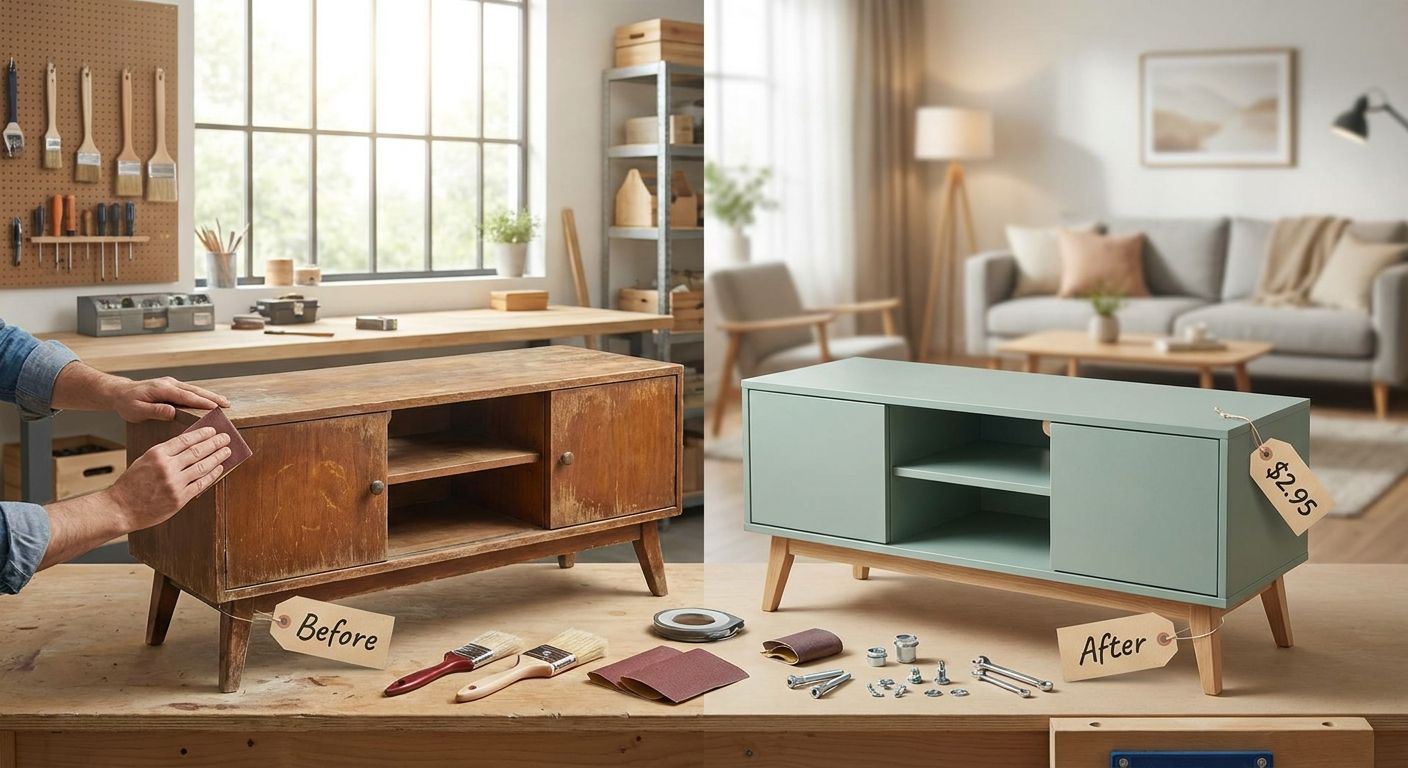
Most returned TV stands come back for one of three reasons: shipping damage, missing hardware, or a customer who assembled it wrong and gave up. Damage to the back panel or a scuffed base is cosmetic and cheap to fix; a cracked side panel or stripped cam-lock holes usually isn't worth the labor.
Buyers pay more for stands with built-in cable routing, closed cabinets, or drawers — clutter is the number one complaint on used furniture listings. A stand with open cubbies and no cord management sits longer even at the same price point.
Mid-century two-door consoles and electric fireplace media units are the two styles holding the strongest demand through 2026. Glass-top and chrome-frame stands from the early 2010s have mostly fallen out of favor and price accordingly.
Before you commit to a number, check comparable local listings — see how to price used furniture before you resell it for the specifics on pulling three comps and pricing to sell in under two weeks.
Pick up returned furniture for profit
Sharetown Reps get first access to bulky retailer returns near them.
Solid Wood Console Stands — the safe pick. Built for TVs up to 65 inches, these run 50-60 inches wide and hold real weight without sagging. Damage is almost always cosmetic — a scratch, a scuff, nothing structural. Buy.
Electric Fireplace TV Consoles — the high-margin pick. These units run heavier, typically 70-90 lbs, and buyers pay a premium for the built-in heater even when it's untested. They flip in the same weight class as case-good furniture — check the dresser and nightstand flipping playbook for handling and hauling tips that carry over directly. Buy.
Mid-Century Two-Door Credenzas — the wildcard. Retro joinery and tapered legs are getting harder to find secondhand, and collectors search for this style by name. Condition varies wildly, so inspect the veneer before you commit. Consider.
Assemble-Yourself Particleboard Stands — the volume play. Light at 20-30 lbs, easy to transport, and cheap to acquire in bulk from returns. Margins per unit are thin, but turnaround is fast if you're moving several a week. Consider.
Glass-Top and Chrome Stands — skip this. Glass chips and cracks in transport, and buyers discount hard for even a hairline flaw. Demand has faded since the style peaked, so holding cost outweighs the payoff. Skip.
For a broader read on which returned categories are worth the trip, check the best items retailers return that you can resell for profit before you commit a pickup slot.
Solid Wood Console
Electric Fireplace Console
Mid-Century Credenza
Particleboard Stand
Glass-Top / Chrome
Is flipping TV stands for profit worth it in 2026?
Yes, when you focus on solid wood and electric fireplace consoles — these hold value and sell within days rather than weeks. Particleboard and glass-top stands are the categories that tie up storage space without paying off.
What TV stand size sells fastest?
Stands built for screens up to 65 inches sell fastest because they match the size of TV most households already own. Anything designed for an 80-inch screen appeals to a much smaller buyer pool.
Where do resellers find TV stands to flip?
Retailer returns, curbside pickups, and liquidation lots are the three most common sources. Sharetown Reps get access to bulky retailer returns, including TV stands pulled for shipping damage or shopper remorse.
How much does it cost to start flipping TV stands?
Startup cost is low compared to other furniture categories since most stands weigh under 90 lbs and don't require special equipment beyond a dolly and a vehicle that fits the piece. Your main cost is time spent inspecting and cleaning before resale.
Should I repair a TV stand before reselling it?
Cosmetic fixes like scuffs, scratches, and loose cam locks are worth the time; structural cracks or warped particleboard usually aren't. Weigh the repair time against the resale ceiling for that specific style before you invest labor.
Are electric fireplace TV stands a good flip?
Yes — they carry a price premium over standard consoles even when the heating unit isn't tested, because buyers value the feature on sight. They're heavier to move, so factor that into your pickup planning.
What condition issues should I watch for on returned TV stands?
Water damage along the base, missing assembly hardware, and cracked side panels are the three most common issues on returned units. Cosmetic scuffs and scratches are normal and don't significantly affect resale value.
Can flipping TV stands turn into a full side hustle?
Yes, especially when paired with other bulky furniture categories like dressers and dining tables to keep a resale route full every week. Many resellers start with one category and expand once they've built local buyer demand.
A single photo of the back panel showing clean cord routing often does more for a listing than three photos of the front. Buyers hate rewiring a media setup, and a stand that visibly solves that problem gets messages faster than one that doesn't — even at the same price, in the same neighborhood, in 2026's crowded resale market.