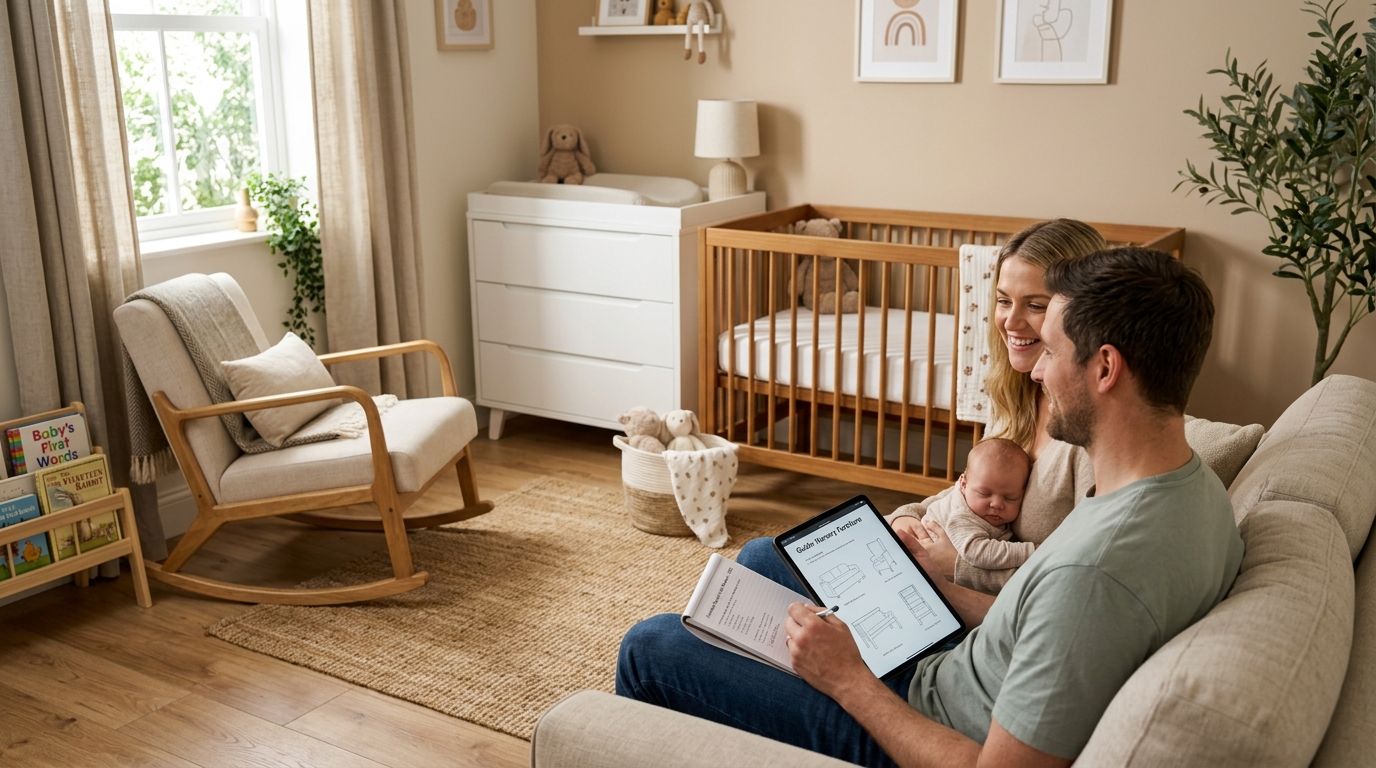
Furniture buying for new parents in 2026 comes down to one split: a short list of safety-critical items you buy new, and a much longer list of furniture you can safely buy secondhand without cutting a single corner. Get that split right and a full nursery costs a fraction of what a matched retail set runs.
TL;DR
- Furniture buying for new parents in 2026 splits into must-buy-new safety items and safe-to-buy-secondhand furniture.
- A crib mattress and car seat should always be new; a dresser, glider, or changing table can be resold.
- Federal crib rules from 2011 banned drop-side designs — check any secondhand crib against that standard.
- Resold retailer returns often reach local markets at a steep discount to new retail within weeks of the return.
- Skip any used crib or dresser until you've checked its recall status — that one step prevents most nursery mistakes.
Why furniture buying matters for new parents
New parents furnish a nursery on a compressed timeline, usually inside a single trimester, with a fixed list of items that need to work correctly the first time. A crib sees roughly two to three years of use before a toddler bed replaces it, which means paying full retail for every piece rarely makes sense. The furniture also clears safety bars that adult furniture doesn't touch — crib slat spacing, mattress fit, and drop-side mechanisms are all federally regulated in ways a nightstand isn't.
That's why furniture buying for new parents looks different from furnishing any other room in the house. Roughly half the list is safety equipment. The other half — dressers, gliders, bookshelves, changing tables — is exactly the kind of furniture that shows up in open-box and returned inventory throughout 2026, often in near-new condition because babies don't scuff up a dresser the way a moving crew does.
Separate safety-critical items from everything else
Start the list by drawing a hard line between what has to be new and what doesn't.
- Buy the crib mattress new — there's no reliable way to verify a secondhand mattress's internal support or hidden damage.
- Buy the car seat new unless you personally know its full crash and expiration history.
- Confirm any crib, new or used, meets the CPSC's 2011 standard banning drop-side designs.
- Run the two-finger test: no more than two fingers should fit between the mattress and the crib frame.
- Check the car seat's expiration date — most manufacturers set it at six to ten years from the manufacture date, not the purchase date.
Set a nursery budget before you shop
Price the room out on paper before you fall for anything in a showroom.
- Split the budget into a "must be new" column and a "fine used" column before browsing.
- Price the big four first: crib, mattress, dresser, glider or rocker.
- Leave a buffer for delivery or hauling — bulky furniture rarely ships free.
- Set your ceiling on the one item you're most tempted to overspend on, usually the glider.
Buy secondhand for the furniture that doesn't touch safety standards
Dressers, changing tables, bookshelves, and gliders hold up fine used and cost a fraction of new retail. Local resale listings and retailer-return inventory move through networks of independent resellers who pick up returned furniture from retailers and resell it locally, often at a steep discount to new retail. That includes items like used cribs that were returned unopened or lightly used before ever leaving a store's warehouse.
- Check local resale networks and retailer-return listings before pricing anything new.
- Browse Facebook Marketplace and OfferUp for nursery furniture from families who upgraded early.
- Check estate sales and consignment shops for solid-wood dressers that outlast the particleboard versions sold new today.
- Ask sellers directly whether an item came from a retailer return — returned furniture is often cleaned and inspected before resale.
Inspect any used piece before it enters the nursery
A good price doesn't matter if the piece fails on delivery day.
- Check for recalls on the exact model and manufacture date at cpsc.gov before buying.
- Look for water stains, soft spots, or mold on any upholstered glider or mattress.
- Test drawer slides and shelf brackets under load, not just by eye.
- Do a smell test for smoke or pet odor that won't come out with a wipe-down.
- Ask for the item's history: how long it was owned, how it was used, and why it's being sold.
Time big purchases around return and clearance cycles
Retailers process returned furniture and mattresses in batches, and that inventory often reaches resale markets within weeks at a discount to shelf price.
- Buy the crib and mattress early — those are the two items you don't want to rush in week 38.
- Watch for post-holiday and back-to-school clearance windows on new nursery sets.
- Hold off on "nice to have" upgrades, like a second glider, until you know your actual routine.
- Check retailer-return listings on a rolling basis rather than once — inventory turns over constantly.
Plan for the furniture to outgrow the nursery
Buy pieces that survive the nursery phase instead of furniture that only works for one year.
- Choose a dresser that doubles as a changing station now and a regular dresser later.
- Pick a crib that converts to a toddler bed instead of buying two separate pieces of furniture.
- Buy a glider without infant-specific attachments so it stays useful past year one.
- Skip theme-specific furniture that only works for a nursery, not a kid's room down the line.
Where to buy: comparing your options
New retail (big-box baby store)
- Best for: Parents who want warranty coverage and one-stop delivery
- Cost level: High
- Key limitation: Full markup applies even to furniture with no safety requirement
Registry bundle
- Best for: First-time parents who want everything matched
- Cost level: High
- Key limitation: Locks you into one style before you know what you'll actually use
Local marketplace listings
- Best for: Budget-focused parents willing to inspect items themselves
- Cost level: Low to moderate
- Key limitation: No vetting — condition and history vary listing to listing
Resold retailer returns
- Best for: Parents who want inspected, cleaned furniture without new-retail pricing
- Cost level: Low to moderate
- Key limitation: Selection depends on what retailers returned that month
Estate sales and consignment
- Best for: Parents who want solid-wood pieces built before particleboard was standard
- Cost level: Low to moderate
- Key limitation: Requires patience — good pieces don't show up on a set schedule
Verdict: buy the crib mattress and car seat new every time, and buy everything else — dresser, glider, changing table, bookshelf — from a resale channel first. That single rule cuts nursery spend without touching safety.
Common mistakes new parents make when buying furniture
- Buying the crib before checking the mattress fit. A crib that passes safety standards still fails the two-finger gap test with the wrong mattress.
- Assuming a "like new" secondhand car seat is safe. Expiration dates and undisclosed crash history make car seats the one item worth buying new every time.
- Overbuying furniture for month one. A wipe warmer, dedicated changing table, and matching nightstand rarely get used before the baby outgrows the newborn stage.
- Skipping the recall check on used cribs and dressers. Dresser tip-over recalls are common in 2026, and a five-minute search at cpsc.gov catches most of them.
- Not budgeting for delivery or hauling. Bulky furniture like dressers and cribs rarely ships free, and that line item gets missed in most nursery budgets.
Find resold nursery furniture near you
Browse locally resold retailer returns instead of paying full price for every piece.
Explore Sharetown
FAQ
What furniture should new parents buy new versus secondhand?
Buy the crib mattress and car seat new — both carry safety and expiration concerns that make history hard to verify. Everything else, including the crib frame, dresser, glider, and changing table, is safe to buy secondhand once checked for recalls and structural condition.
Is it safe to buy a used crib in 2026?
Yes, as long as it meets the CPSC's 2011 standard banning drop-side designs and passes the two-finger mattress-gap test. Check the exact model and manufacture date against the CPSC recall list before buying.
Are secondhand car seats ever safe to buy?
Only if you know the seat's full crash and ownership history, which is rare with resale listings. Most car seats also expire six to ten years from manufacture, so buying new avoids both risks.
What is the two-finger crib mattress test?
It's a fit check where no more than two fingers should slide between the mattress edge and the crib frame. A larger gap creates an entrapment risk regardless of how new the crib itself is.
Where can new parents find affordable resale furniture?
Local marketplace listings, estate sales, consignment shops, and retailer-return networks all carry nursery furniture at a discount to new retail. Retailer-return inventory tends to be cleaned and inspected before resale, which reduces the guesswork.
How do you check if a used crib or dresser has been recalled?
Search the exact model number and manufacture date at cpsc.gov before buying. Dresser tip-over recalls in particular are common enough that this check should happen before every used furniture purchase.
Does a full nursery need to be furnished before the baby arrives?
No — the crib, mattress, and car seat should be ready early, but furniture like a dedicated changing table or a second dresser can wait until after you know your actual routine. Buying those pieces later also gives resale inventory more time to turn over.
One last thing
The dresser you buy for diaper storage in month one is very likely the dresser your kid uses for actual clothes at age eight. Buy solid wood over a trendy finish, and it won't need replacing before elementary school — that's the single best money-saving call in this whole guide.
Related guides