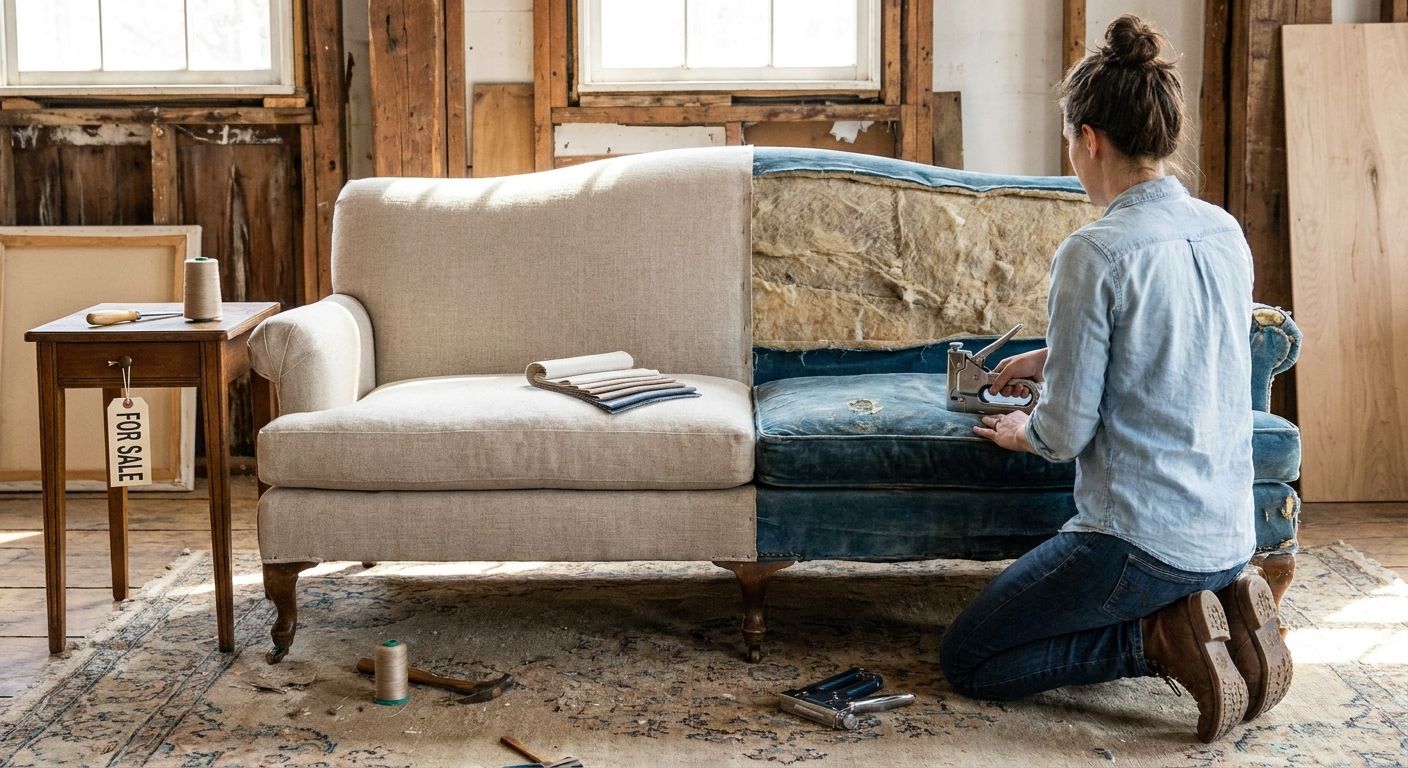
Reupholstering a couch before reselling it only pays off when the frame and springs are solid and the damage is cosmetic — stains, sun fade, pet claws, a worn armrest. If the frame creaks, a corner block is cracked, or the springs sag past the seat rail, spend your yardage on a different piece instead.
TL;DR
Fabric condition is the single biggest thing that tanks a couch listing price, ahead of style and even brand. A structurally sound frame wrapped in stained or dated fabric photographs poorly and sells for a fraction of what the same frame in clean upholstery brings.
Sharetown reps picking up retailer returns see this constantly in 2026 — a couch gets sent back for a torn cushion cover, not a broken frame, and the frame underneath is worth saving. Reupholstering that piece, or flipping the sectional sofa as-is with a slipcover, is often the difference between a $60 flip and a $300 one.
The catch: reupholstery eats time and fabric cost. Know which couches earn that investment before you cut a single yard.
Full reupholstery
Slipcover
Steam clean + spot repair
A standard 3-seat sofa takes 15 to 20 yards of upholstery fabric; a loveseat or armchair takes less. Buy a durable, tightly woven fabric — performance fabric or heavy canvas over delicate chenille — because resale buyers ask about fabric durability more than color in 2026.
This path suits couches with a solid hardwood frame and tied springs, where the bones justify the labor. Skip it on particleboard-frame couches or anything with a broken corner block — the fabric cost won't come back at resale.
Most retailer returns don't need new fabric at all — they need a steam cleaner and a spot-dye kit. A standard sofa steam clean and spot treatment runs under 3 hours and handles surface stains, light sun fade, and pet odor without touching a staple gun.
This is the right call for the bulk of what comes through a furniture resale route: cosmetic wear on structurally sound pieces that don't need a fabric overhaul to sell.
Before committing fabric budget to any couch, check it for water damage hidden under cushions or along the frame base — hidden moisture damage ruins new fabric from the inside just as fast as it ruined the old.
Turn Returned Couches Into Profit
Sharetown connects reps with retailer returns ready to clean, repair, and resell.
Reupholstering a structurally sound couch is almost always cheaper than sourcing and flipping a new piece, since you're paying for fabric and foam, not a frame, springs, and joinery. The math only works when the frame is solid — a broken frame under new fabric is still a broken frame.
Yes — a staple gun handles most of a standard reupholster job, since fabric panels get stapled to the frame rather than sewn into seams. Piping, skirts, and boxed cushions are the exceptions that usually need a sewing machine or a seamstress.
Reupholstering increases resale value more than a slipcover on higher-end frames, because buyers pay more for permanent new fabric than for a cover they know sits over old material. On lower-value pieces, a slipcover often returns a better profit margin for the time invested.
How much fabric does it take to reupholster a couch?
A standard 3-seat sofa takes 15 to 20 yards of upholstery fabric in 2026; a loveseat or armchair takes noticeably less. Buy extra for pattern matching on striped or patterned fabric.
Is reupholstering a couch worth it before reselling?
Reupholstering is worth it when the frame and springs are solid and the fabric damage is cosmetic. Skip it on any couch with a cracked frame, broken corner block, or collapsed springs.
What tools do I need to reupholster a couch?
A staple gun, fabric shears, a flathead screwdriver or staple remover, and a steam cleaner cover most reupholster jobs. A sewing machine is only needed for piping, skirts, or boxed cushion covers.
Can I steam clean instead of reupholstering?
Steam cleaning and spot repair fix most surface stains and light fading in under 3 hours without new fabric. Save full reupholstery for tears, holes, or fabric that's worn through to the padding.
Do slipcovers hurt resale value compared to reupholstery?
Slipcovers sell fine on lower-value couches flipped fast, but reupholstery brings a higher price on solid, higher-end frames. Match the fix to the frame quality, not just the fabric damage.
What fabric holds up best for a resale flip?
Performance fabric and heavy canvas outlast chenille and other delicate weaves on a couch that will change hands again. Durability questions come up more than color in 2026 resale listings.
How do I know if a couch frame is worth reupholstering?
Rock the couch side to side and press on each arm — any creak, wobble, or give at the joints means the frame isn't worth new fabric. A solid, silent frame under torn fabric is the ideal reupholster candidate.
Most retailer returns that reach a furniture resale route don't need a staple gun at all — they need a steam cleaner and 3 hours. Save the full 15-to-20-yard reupholster job for the handful of solid-frame pieces where the math actually pays off, and check profit margin before buying fabric, not after.