Water damage hides behind clean upholstery and shiny finishes, and buying a piece with hidden rot turns a $150 flip into a return you can't resell twice. This guide walks through exactly where water damage hides, how to test for it in under ten minutes, and when to walk away from a piece entirely.
TL;DR
Water-damaged furniture doesn't always look damaged. Veneer can hide swollen particleboard underneath, and a quick wipe-down conceals stains that reappear once a buyer gets the piece home under different lighting.
For anyone reselling items retailers return, water damage is one of the top reasons a return gets flagged in the first place. Spotting it during pickup or inspection saves you from a refund fight later, and it protects the reputation you're building as a reseller in 2026.
The stakes are higher on upholstered pieces and case goods than most people assume. Mold can start developing on wet wood or fabric within 24 to 48 hours, according to EPA guidance on indoor moisture — by the time you smell it, the damage is already inside the material, not just on top of it.
If you're picking up furniture through Sharetown, bring this kit to every pickup. Reps who skip inspection are the ones who eat the cost when a piece won't move.
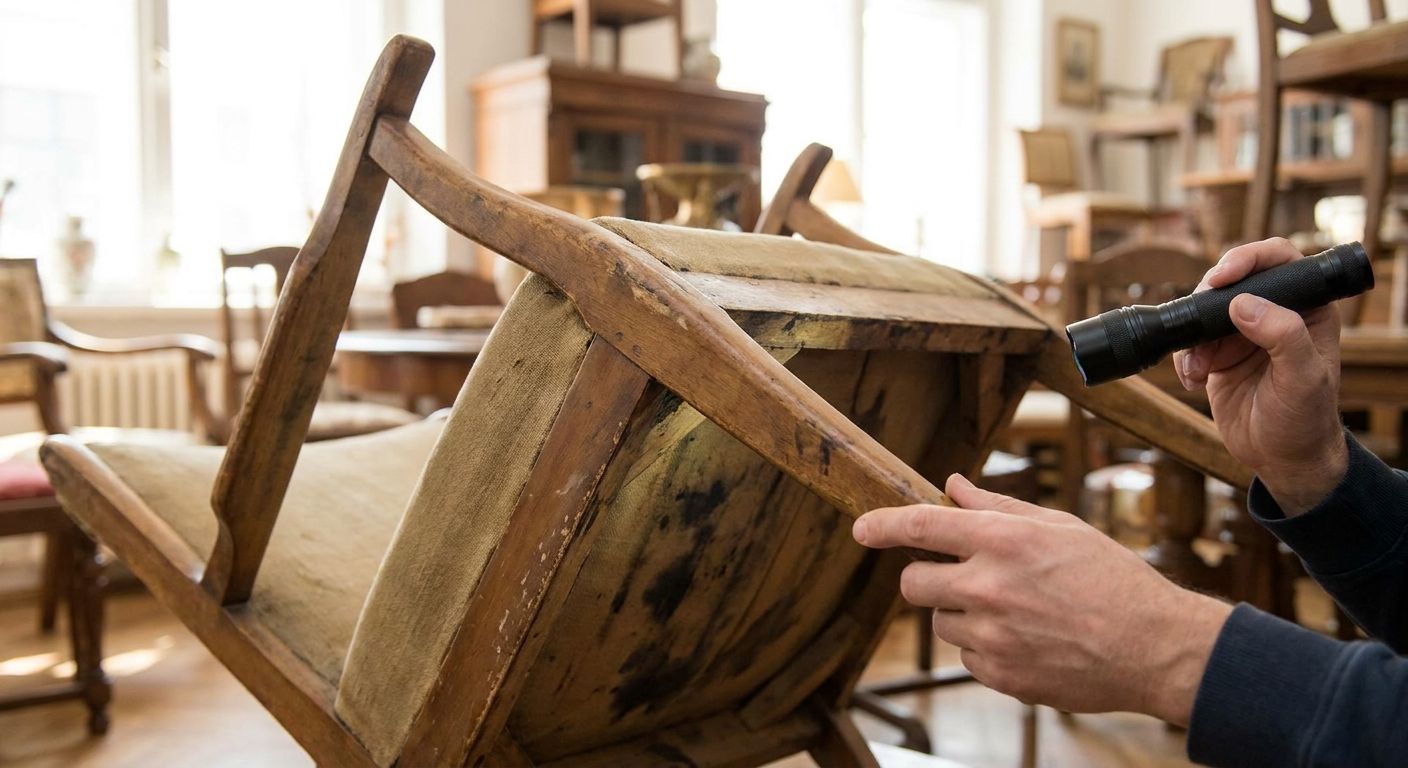
Flip the piece or get a flashlight under it before you touch anything else. Water damage in furniture almost always shows up first on the underside of tabletops, the bottom of dresser drawers, and the base of cabinet legs, because that's where moisture pools and takes longest to dry.
Look for discoloration rings, dark staining, or a chalky white bloom on the wood. On upholstered furniture, check the dust cover fabric stapled to the bottom frame — a water stain there means the piece sat in standing moisture at some point.
Common mistake: inspecting only the visible top and sides, then missing damage that's already spread through the frame.
Push firmly on any flat wood surface, especially tabletops, drawer bottoms, and shelf panels. Solid wood that's been water-damaged often feels slightly spongy or gives more than it should; particleboard and MDF that's absorbed water swells and stays swollen even after it dries.
A piece that springs back under firm pressure is probably fine. One that leaves a slight dent or feels soft underneath has already failed structurally, even if the surface still looks acceptable.
Common mistake: confusing normal wood flex with water softening — test a known-dry section of the same piece for comparison before you decide.
Set a pin or pinless moisture meter against bare wood (remove finish coating if you can get to an unfinished edge, like the underside of a drawer). Readings under 12% are normal for indoor furniture; 12-16% suggests recent exposure worth investigating further; anything above 16% means active moisture is still present.
Test at least three spots per piece — legs, the widest flat panel, and any area with visible staining. A single high reading near a stain confirms the damage; a high reading with no visible sign at all means the piece may have dried recently after a leak you can't see yet.
Common mistake: testing only one spot and assuming the whole piece reads the same.
Open every drawer and door, then lean in close for 5-10 seconds. Musty, sour, or mildew-like smells don't go away with a wipe-down or an air freshener — that smell means moisture got into the material, not just the surface.
This matters even more on mattresses and upholstered furniture, where padding and foam trap moisture far longer than solid wood does. If you're inspecting a mattress specifically, the used mattress inspection checklist covers the smell test in more depth, since foam and coil layers hide moisture differently than wood does.
Common mistake: assuming a strong cleaning-product smell means the piece was properly dried, when it often means someone tried to mask a mildew problem.
Screws, hinges, drawer slides, and any exposed metal brackets rust when they've been wet, even if the wood around them dried out fine. Surface rust on hardware is a strong signal the piece sat in moisture at some point, even months ago.
Rust bleeding into the surrounding wood grain, leaving orange-brown streaks, confirms standing water contact rather than just ambient humidity.
Common mistake: replacing rusted hardware and assuming that fixes the underlying moisture issue in the wood around it.
On upholstered pieces, look for concentric rings or watermarks in the fabric, especially on cushion undersides and along seams where water would have wicked in. Press the cushion firmly — foam that's been wet and dried loses its bounce and stays compressed in a way dry foam doesn't.
Unzip removable cushion covers if possible and check the foam directly. Discoloration inside the cover that isn't visible from outside is one of the most common ways water damage gets missed at pickup.
Common mistake: judging cushion condition from the outside fabric alone without checking underneath.
Turn inspection skills into income
Pick up returned furniture, mattresses, and gear near you and resell it for profit.
Problem: The moisture meter reads normal, but I still smell mildew. Trust the smell over the meter reading on a single spot. Test three more locations, including inside drawers and under any padding, since surface wood can dry faster than the material underneath it.
Problem: Veneer looks fine, but the piece feels heavier than it should. Water-logged particleboard weighs noticeably more than dry material. If the piece feels off relative to its size, press-test every flat surface before buying it, not just the top.
Problem: A seller says the water damage happened years ago and is fully dried. Dried does not mean structurally sound. Particleboard that swelled from water damage stays swollen permanently — it doesn't shrink back to original dimensions even after full drying, so soft or warped spots are a Skip regardless of how long ago the exposure happened.
Problem: I can't tell if a stain is water damage or just discoloration from age. Water stains usually show a visible ring or halo edge; age discoloration tends to be uniform across the whole surface. When in doubt, moisture-meter test directly on the stain — a normal reading with a ring-shaped mark likely means old, fully-dried damage that's cosmetic rather than structural.
Problem: The piece passed every test, but I'm still unsure about pricing it. Minor cosmetic water marks that pass the press test and moisture meter can still sell — just price accordingly. The furniture pricing guide covers how to discount for cosmetic flaws without undervaluing a structurally sound piece.
Once a piece passes inspection, the next decision is pricing it correctly for its actual condition, not its original retail value. Cosmetic flaws that passed the moisture and press tests still affect what buyers will pay, and pricing too high on a piece with any history of water exposure is one of the fastest ways to sit on inventory into 2027.
How to spot water damage in furniture before buying it?
Check the underside for staining, press-test flat wood surfaces for sponginess, and run a moisture meter reading above 16% signals active or recent exposure. Combine that with a smell test inside drawers and cabinets for a complete check.
What does water damage look like on wood furniture?
Water damage on wood shows as dark rings, white chalky bloom, swelling that doesn't flatten back out, or a soft spot that gives under firm pressure. Veneer can hide swollen particleboard underneath, so surface appearance alone isn't reliable.
Is a musty smell always a sign of water damage?
Yes, a persistent musty or mildew smell means moisture reached the material, not just the surface, and won't disappear with cleaning alone. Air fresheners or cleaning products can mask it temporarily, but the smell returns once conditions get humid again.
Can water-damaged furniture be safely resold?
Minor cosmetic water marks on furniture that passes the press test and moisture meter check can be resold at a discounted price. Structural swelling, soft particleboard, or active mold growth means the piece should be a Skip rather than refurbished for resale.
How much does a moisture meter cost for furniture inspection?
A basic pin or pinless moisture meter suitable for furniture inspection costs between $20 and $40 as of 2026. It pays for itself after avoiding one bad purchase, since it catches damage a visual check alone misses.
Does water damage affect mattresses differently than wood furniture?
Yes, foam and coil layers trap moisture longer than solid wood and often show water damage through odor and compressed foam rather than visible staining. Mattresses need a separate inspection process focused on the foam layers and dust cover fabric.
How long does it take for mold to grow on wet furniture?
Mold can begin developing on wet materials within 24 to 48 hours according to EPA indoor air quality guidance. That short window is why a smell test during inspection catches problems a visual check alone would miss.
What's the biggest mistake people make inspecting furniture for water damage?
The biggest mistake is checking only the visible top and sides while skipping the underside, drawer bottoms, and hardware, where damage shows up first. A five-minute flashlight check underneath the piece catches most water damage before it becomes a resale problem.
The six-step process above takes under ten minutes once it's routine, but the piece most resellers skip checking is the one they've already decided to buy. Confirmation bias is real at pickup — if you've mentally committed to a dresser before you flip it over, you'll rationalize a soft spot as "probably fine." Run the full check on every piece, especially the ones you already want, not just the ones that look suspicious.