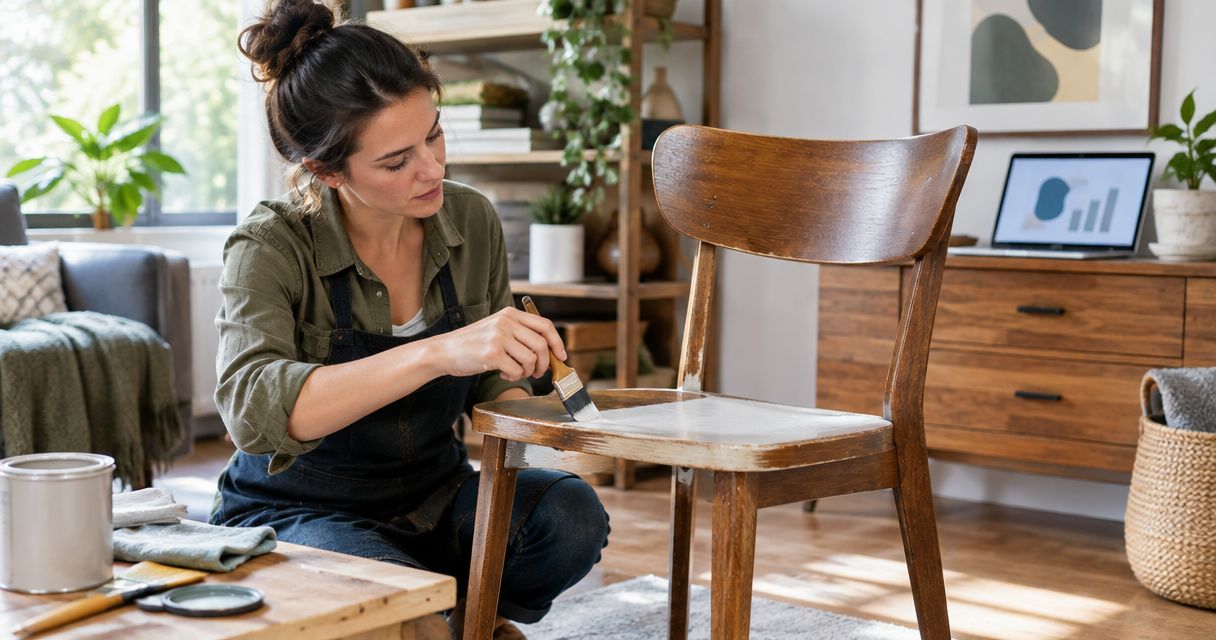
Flipping furniture is worth it in 2026 if you treat sourcing as a weekly habit and already have a way to haul pieces home — the profit sits in the gap between what a piece costs you and what it sells for locally, not in one lucky find. The part most beginners skip: cleaning, minor repairs, and photographing a piece eats real hours, and that time cost is the hidden expense that decides whether a flip actually pays off.
TL;DR
Furniture flipping gets pitched as easy money because the sourcing looks free — a curbside dresser, a garage sale nightstand. What actually determines whether it pays is what happens between pickup and sale: cleaning, minor repair, photos, and how long the piece sits before someone buys it.
People who pick up returned furniture through Sharetown skip the hunting step entirely — inventory gets dispatched to them from retailers instead. That changes the math on time invested per piece, which is the variable most flippers underestimate in 2026.
The answer depends almost entirely on your sourcing channel and how fast you resell. Here's how the common options compare:
Curbside & giveaways
Thrift stores & estate sales
Retailer returns via Sharetown
Auction & liquidation pallets
Curbside and thrift sourcing win on cost but lose on consistency — you're at the mercy of what shows up. Retailer returns ranked by profit margin tend to score better for people who want a repeatable process instead of a treasure hunt.
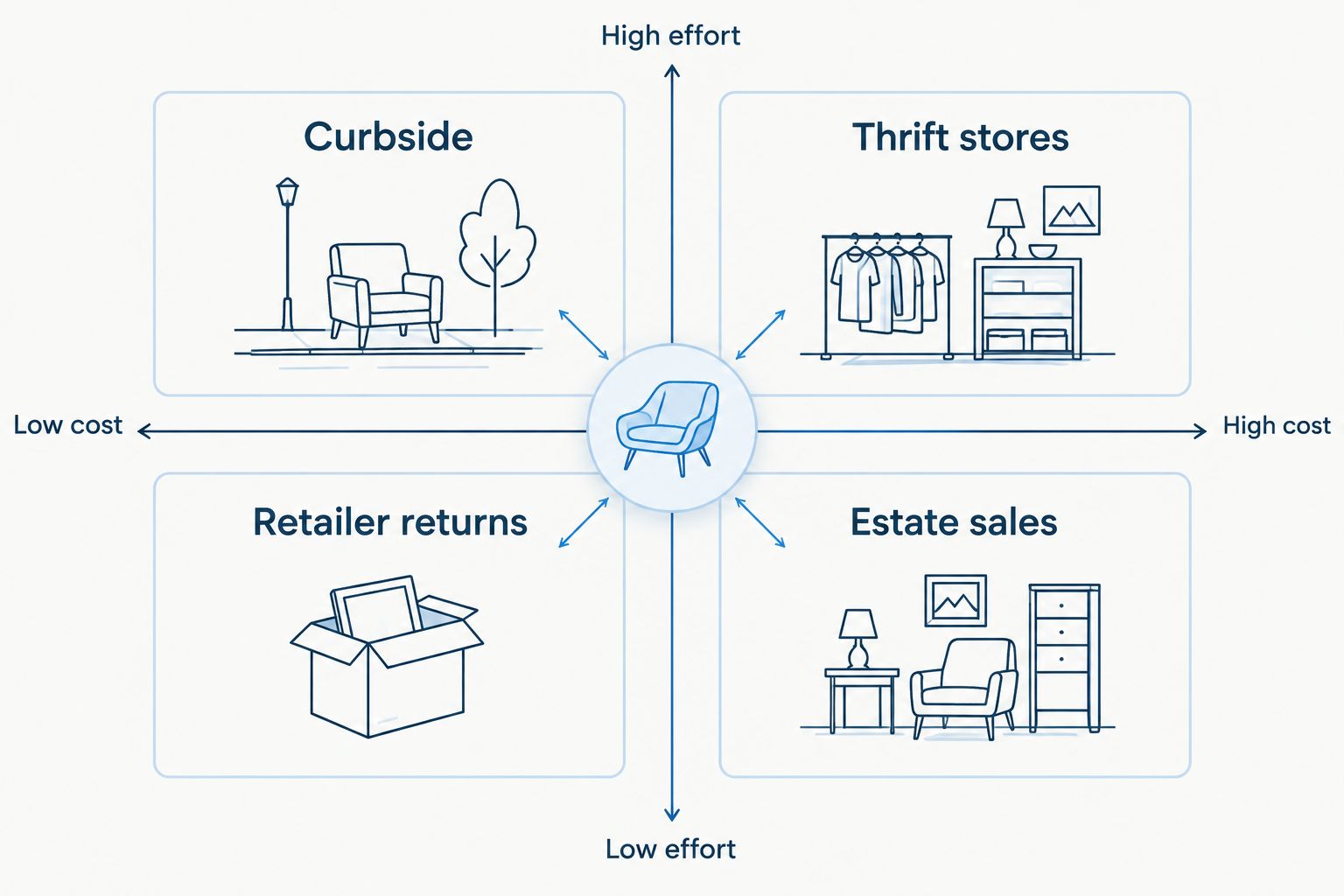
Retailer returns sit in the low-effort, mid-cost quadrant — steady supply without the hunting.
No two flips return the same margin, and it's rarely the sourcing price alone that explains why. The factors that move the needle:
Furniture flipping earns money for people who treat sourcing as a routine, not a hobby.
Furniture flipping is profitable in 2026 when the item is sourced for little to nothing and resold within days — the model breaks down once a piece sits in storage for weeks or needs paid repairs. Speed matters more than the size of the original discount.
Money made flipping furniture in 2026 depends on how cheaply you source pieces and how fast you turn them around locally. Flippers who calculate cost-per-item before buying — rather than after selling — keep more of each sale.
Becoming a Sharetown rep is worth it in 2026 for people who want retailer-return inventory dispatched to them instead of hunting curb alerts and garage sales. Reps pick up bulky returns like furniture and mattresses from premium retailers, then clean, sanitize, and resell them locally for profit.
Ready to source furniture without the hunt?
Sharetown dispatches retailer returns to local reps who resell for profit.
Is flipping furniture worth it in 2026?
Flipping furniture is worth it in 2026 for people who source cheap and resell within days, not weeks. The margin comes from turnaround speed, not from the size of the original discount.
Is furniture flipping profitable in 2026?
Furniture flipping is profitable in 2026 when sourcing cost stays near zero and the piece sells fast. Profit disappears once a piece sits in storage or needs paid repairs.
What furniture sells fastest when flipping?
Sectional sofas, dressers, and bed frames sell fastest because demand for them is constant in most local markets. Niche or oversized statement pieces take longer to find the right buyer.
Do you need a truck to flip furniture?
You need reliable hauling capacity to flip furniture, though it doesn't have to be a full-size truck. An SUV or minivan handles smaller pieces like dressers and nightstands without extra trips.
Is flipping furniture illegal or does it need a license?
Flipping furniture is legal in the U.S. without a special license for casual reselling. Some states require a resale certificate once you buy wholesale or sell at higher volume.
Where do furniture flippers find inventory?
Furniture flippers find inventory through curbside finds, thrift stores, estate sales, liquidation pallets, and retailer-return programs. Retailer returns give the most consistent supply since inventory gets dispatched rather than hunted.
How long does it take to sell a flipped piece of furniture?
A well-priced, well-photographed piece typically sells within a week on local marketplaces. Pieces that sit longer usually have a pricing or photo problem, not a demand problem.
Is Sharetown legit for sourcing furniture to flip?
Sharetown works by dispatching returned furniture, mattresses, and fitness equipment from premium retailers to independent reps, who clean and resell locally for profit. It's a sourcing model built around retailer returns rather than curb hunting.
Most furniture flippers underprice the piece that took the least cleaning and overprice the piece that took the most restoration time — buyers price by what they see, not by how many hours you put in. Set the listing price by condition and local comps, then track the hours separately so you know which categories are actually worth repeating in 2026.